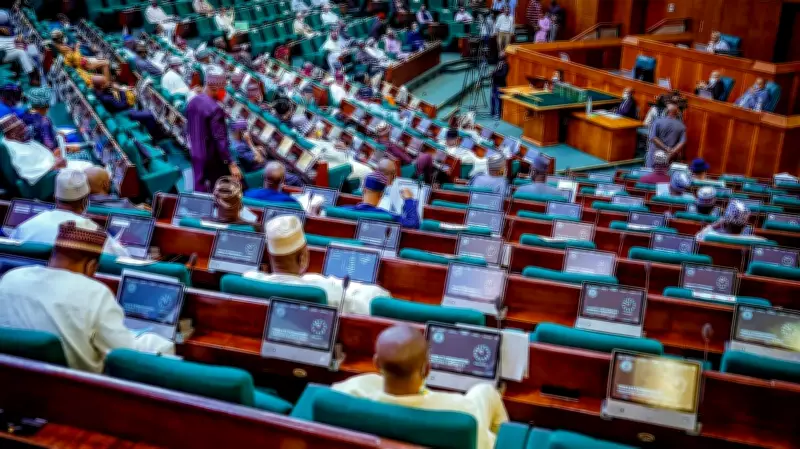
House of Representatives Approves Major Financial Relief for Power Sector
The House of Representatives Public Accounts Committee has given its approval to a comprehensive financial relief package and a 10-year debt restructuring plan for the Kano, Jos, and Ikeja Electricity Distribution Companies (DisCos). This significant move by the Green Chamber is aimed at stabilizing Nigeria's troubled power sector and alleviating the burden of legacy debts that have plagued the industry for years.
Background and Committee Findings
The decision followed the adoption of a detailed report by a technical subcommittee established to review findings from the 2021 Auditor-General for the Federation's report on the mounting liabilities of electricity distribution companies. These liabilities were escalated by the Nigeria Bulk Electricity Trading Company Plc (NBET), highlighting the urgent need for legislative intervention to prevent further strain on the electricity market.
Under the approved framework, the three DisCos will benefit from a restructuring of their historical obligations, alongside a waiver of accrued interest on debts accumulated over the past decade. The combined liabilities, covering both principal and interest, had risen significantly over the years, prompting this critical step to ensure the sustainability of the sector.
Key Recommendations and Regulatory Actions
Chairman of the technical subcommittee, Hon. Mark Chidi Obetta, stated that the recommendation forms part of broader efforts by the National Assembly to address longstanding financial distortions in the sector. He noted that unresolved legacy debts and disputed interest charges have continued to weaken the operational capacity of distribution companies, hindering their ability to provide reliable electricity services.
Findings presented to the committee revealed that the total indebtedness of the eleven DisCos under review had grown substantially within a short period, driven largely by accumulating interest and persistent non-settlement of market invoices. The investigation was designed to verify the Auditor-General's claims, determine the current debt profile of the companies, and identify the factors responsible for their continued inability to meet financial obligations.
A key issue that emerged during the hearings was the disagreement over the legitimacy of interest charges on outstanding invoices. The Jos, Ikeja, and Kano DisCos argued that the prevailing Market Rules did not explicitly provide for such charges, raising concerns about the transparency and fairness of the billing framework.
Regulatory Directives and Debt Waiver
In response, the Nigerian Electricity Regulatory Commission (NERC) issued a directive in January 2026 instructing NBET not to apply interest on outstanding invoices covering the period between 2015 and 2020, while permitting interest charges only from 2021 onward. The regulator also directed that any interest linked to delays involving MERISTEM, a financial intermediary introduced to manage liquidity challenges in the sector, should be disregarded.
Following this directive, NBET was asked to recompute the liabilities of the affected DisCos, including previously accrued interest. The committee subsequently endorsed a waiver of these interest obligations and approved a structured repayment plan for the outstanding principal over a period not exceeding 10 years.
Additional Recommendations and Sector Challenges
The report further highlighted that a significant portion of Kano DisCo's liabilities was incurred during periods of government intervention and receivership. It recommended that such obligations be reviewed and transferred to the Nigerian Electricity Liability Management Company (NELMCO), in line with existing precedents within the sector.
The committee emphasised that the current electricity market structure, where revenues are managed through escrow arrangements and prioritised for market settlements, limits the ability of DisCos to recover costs. This includes the inability to charge interest on unpaid bills to customers, particularly government agencies, which exacerbates financial challenges in the sector.
This approval marks a pivotal step towards addressing the financial woes of Nigeria's power distribution companies, with the hope of improving electricity supply and sector stability in the coming years.