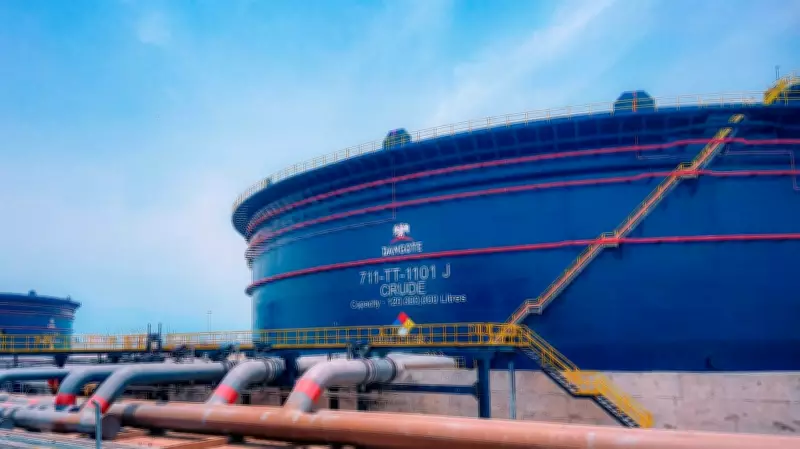
Chairman of the Alliance for Economic Research and Ethics LTD/GTE, Dele Oye, has stated that the Dangote Petroleum Refinery has the capacity to save Nigeria more than N15 trillion annually in fuel import costs. He also noted that the refinery could generate approximately $11 billion in foreign exchange through local refining and petroleum exports. Oye called on the Nigerian National Petroleum Company Limited (NNPCL) to support local refineries rather than expose them to foreign competition, following the company’s legal dispute with Dangote Refinery.
Oye Criticizes NNPCL's Stance on Fuel Imports
In a statement, Oye criticized NNPCL’s continued defense of fuel import licenses, arguing that this position undermines Nigeria’s push for energy self-sufficiency and economic sovereignty. He highlighted that Nigeria spent about N15.42 trillion on petrol imports in 2024, describing this as a major drain on foreign exchange reserves and evidence of a weak energy structure.
Dangote Refinery Capacity and Potential Impact
According to Oye, the Dangote refinery, with a capacity of 650,000 barrels per day, can meet over 90 percent of Nigeria’s domestic fuel demand if fully integrated into the national supply system. He added that greater reliance on local refining could save the country up to $11 billion yearly in foreign exchange outflows, ease pressure on the naira, and improve macroeconomic stability.
Oye also faulted NNPCL’s claim that continued fuel imports were necessary to sustain competition. He argued that this approach only deepens Nigeria’s dependence on foreign refineries while discouraging local industrial growth. “NNPCL’s insistence on maintaining import licenses for foreign-sourced products while a domestic facility can meet demand is tantamount to penalizing the player who built the stadium while rewarding those who merely show up to play,” Oye said.
Legal and Policy Framework
Oye maintained that the Petroleum Industry Act 2021 and the Nigerian Oil and Gas Industry Content Development Act both prioritize domestic refining and local value addition. He stressed that imports should serve only as a temporary measure when local refining capacity is insufficient.
Questioning NNPCL’s position on monopoly concerns, Oye noted that the company still relies heavily on foreign supply chains to meet local fuel demand, despite raising concerns about a private refinery dominating the market.
Interview and Broader Implications
In an interview on Arise News, Oye said NNPCL’s responsibility should be to strengthen domestic refining capacity and remove obstacles facing Nigerian investors in the oil sector. The dispute followed NNPCL’s opposition to Dangote Refinery’s attempt to challenge import licenses issued to rival fuel marketers. NNPCL argued in court filings that limiting imports could create monopoly risks and threaten supply stability. However, Oye said the argument against Dangote Refinery was misplaced, insisting that the refinery had instead broken NNPCL’s dominance in fuel importation.