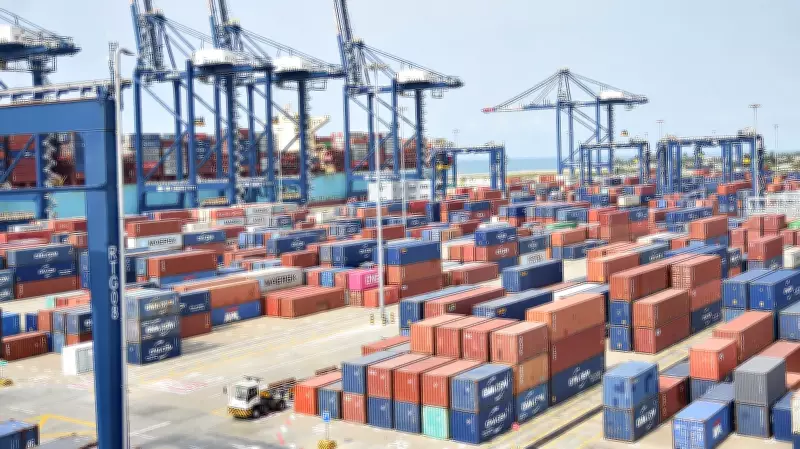
Nigeria's ongoing Federal Government maritime reforms, port infrastructure upgrades, and rising export activities are beginning to yield positive results, with the sector posting strong growth performance in trade in the first quarter of 2026. This reinforces Nigeria's ambition to position its ports as a major trade hub under the African Continental Free Trade Area (AfCFTA), as reported by Adaku Onyenucheya.
In August 2023, President Bola Tinubu created the Federal Ministry of Marine and Blue Economy to diversify Nigeria's revenue away from crude oil by harnessing vast maritime resources, aiming to unlock an estimated $296 billion in untapped economic potential. For decades, Nigeria's ports handled the bulk of the country's international trade but struggled with congestion, poor infrastructure, operational inefficiencies, slow cargo clearance, insecurity in the Gulf of Guinea, lack of modernization, and bureaucratic bottlenecks. These issues made the maritime domain costly, weakened competitiveness, and diverted cargo traffic to neighboring countries, largely because the sector lacked a dedicated ministry and was neglected under the Federal Ministry of Transportation.
According to industry data, persistent maritime inefficiencies, misaligned policy priorities, and poor execution cost the country an estimated N7.97 trillion yearly loss. Burdened by these challenges, the President initiated bold sectoral reforms aimed at revitalizing the economy and ensuring the maritime sector aligns with the $1 trillion economy vision of the Renewed Hope Agenda.
Positive Results in Q1 2026
The reforms have begun to yield positive results, posting strong growth in the first quarter of 2026. The Nigerian Ports Authority (NPA) recorded higher cargo throughput, rising export activity, and increased vessel tonnage across the nation's ports. Despite fewer vessel calls, Gross Registered Tonnage (GRT) for ocean-going vessels rose by 19.5 percent to 46.75 million, reflecting a shift toward larger and more efficient ships. Stronger cargo and container exports reinforced the growing role of Nigerian ports in driving trade and economic activity.
The first-quarter performance reflects early outcomes of Nigeria's broader maritime reform agenda under President Bola Tinubu's administration, which is increasingly focused on repositioning the country's ports to compete aggressively under AfCFTA.
Transformation Strategy
At the center of that strategy is a coordinated effort to modernize port infrastructure, improve cargo handling efficiency, deepen digital transformation, strengthen maritime security, and position Nigeria as the leading maritime logistics hub in West Africa. NPA Managing Director Dr. Abubakar Dantsoho recently warned that Nigeria risks losing regional cargo opportunities if its ports fail to match the speed, efficiency, and reliability required in a rapidly integrating African market.
“The time has come for a paradigm shift in the structure of Nigeria’s economy towards the full utilization of our marine resources. Our port system, if properly harnessed, can serve as a major driver of economic growth,” Dantsoho said while addressing stakeholders in Lagos. Despite accounting for over 60 percent of West Africa’s Gross Domestic Product (GDP), Nigeria currently handles only about 25 percent of the region’s cargo traffic—a disparity Dantsoho described as evidence that the country has not fully optimized its maritime potential. Under AfCFTA, competition for cargo dominance across Africa is expected to intensify, making efficiency and infrastructure increasingly critical. “Nigeria’s geographical advantage alone is no longer sufficient. Efficiency, speed, innovation, and reliability will define leadership in this new era,” Dantsoho added.
Necessary Reforms
Early in the Tinubu administration, the creation of the Federal Ministry of Marine and Blue Economy signaled a major institutional shift designed to consolidate maritime governance and unlock what the government estimates to be a $3 trillion blue economy opportunity. Since then, the administration has pursued an aggressive mix of policy reforms, infrastructure upgrades, financing initiatives, and digitalization programs aimed at transforming the country’s maritime architecture. The improving operational figures recorded in Q1 2026 suggest some of those reforms may already be yielding results.
Perhaps the clearest sign of transformation is the sharp rise in Gross Registered Tonnage during the quarter. Although Nigerian ports handled 1,092 ocean-going vessels in Q1 2026, slightly lower than the 1,102 vessels recorded during the same period in 2025, vessel tonnage surged significantly from 39.11 million GRT to 46.75 million GRT. This indicates that Nigerian ports are increasingly attracting larger-capacity vessels capable of moving greater cargo volumes more efficiently. This shift aligns with global maritime trends where ports compete not merely on the number of ships they receive, but on their ability to accommodate deeper-draft vessels, improve turnaround efficiency, and support larger-scale cargo operations.
The emergence of the Lekki Deep Sea Port is playing an increasingly important role in that transition. The NPA operational report specifically linked the rise in vessel tonnage partly to the impact of Lekki Port, which has significantly expanded Nigeria’s ability to receive larger international vessels. The development also reflects improved economies of scale, stronger shipping line confidence, and growing cargo demand. Across the continent, deep seaports are becoming critical infrastructure in the race for AfCFTA-related trade flows. Countries capable of handling larger vessels efficiently are likely to capture a greater share of intra-African commerce as regional trade barriers continue to fall.
Cargo Throughput and Expanding Trade Activities
Beyond vessel tonnage, cargo throughput figures further demonstrate the growing scale of maritime trade activity. Total cargo throughput excluding crude oil terminals rose by 11.6 percent to 32.38 million metric tonnes during Q1 2026, compared with 29.02 million metric tonnes during the corresponding period of 2025. The increase reflects rising trade volumes, stronger import and export activity, improved port productivity, and sustained demand for maritime services.
Import cargo traffic rose moderately by 3.3 percent to 18.11 million metric tonnes, supported by continued demand for industrial inputs, machinery, consumer goods, and raw materials. But the more striking growth came from export cargo movement. Outward cargo traffic surged by 23.7 percent to 14.13 million metric tonnes, highlighting stronger export competitiveness and deeper integration into regional and international supply chains. For a country seeking to reduce dependence on oil revenues, the rise in exports through Nigerian ports carries major economic significance. The report linked the increase to expanding industrial and agricultural production, improved trade facilitation, and stronger export logistics. These developments align closely with the federal government’s broader economic diversification strategy and AfCFTA ambitions. If sustained, stronger export performance could help strengthen foreign exchange earnings, stimulate local production, and improve Nigeria’s position within continental trade networks.
Export Containers Growth
Container operations during the quarter also revealed important shifts within Nigeria’s trade ecosystem. Although total container traffic remained largely stable at 541,229 TEUs, outbound container movement expanded dramatically. Outward laden container traffic jumped from 61,332 TEUs in Q1 2025 to 102,803 TEUs in Q1 2026, representing an extraordinary growth of 67.6 percent. Compared with the previous quarter, outbound container traffic more than doubled. The surge reflects growing expansion in containerized exports and improving terminal efficiency.
Containerized exports are particularly important because they are often associated with processed goods, manufactured products, and higher-value agricultural exports. Growth in this segment therefore suggests gradual strengthening of Nigeria’s non-oil export economy. The report also highlighted a major decline in empty container traffic, which dropped by 44.7 percent. Operationally, this is considered positive because it indicates improved container utilization and more balanced cargo flows. Inward laden container traffic also increased by 5.2 percent during the quarter, reflecting continued import demand across multiple sectors.
Surge in Vehicle Traffic
Another major highlight was the sharp increase in vehicle traffic across Nigerian ports. Vehicle handling rose by 67 percent to 58,870 units during Q1 2026, compared with 35,262 units recorded during the same period in 2025. Compared with Q4 2025, vehicle traffic rose even more sharply by 76.9 percent. The growth reflects increasing commercial and automotive logistics activity within the economy and underscores the expanding role of ports in supporting domestic commerce and supply chains.
Transshipment Growth
The report also revealed growing transshipment activity, further reinforcing Nigeria’s emerging regional maritime relevance. Transshipment container traffic increased by 83.1 percent during the quarter. Transshipment operations occur when cargo arriving at one port is transferred to another vessel for onward shipment to different destinations. As Nigerian ports improve operational efficiency and cargo capacity, the country could increasingly position itself as a regional cargo redistribution hub within West Africa. This possibility is central to the government’s broader maritime vision under AfCFTA.
Infrastructure Modernization
Behind many of the operational gains lies an ongoing infrastructure modernization campaign. The Federal Government recently secured legislative approval for a $1 billion loan requested by President Tinubu for the rehabilitation of the Lagos Port Complex and Tin Can Island Port. According to the President, the project aims to address decades of infrastructure deficiencies while improving operational efficiency, safety, and competitiveness. Beyond Lagos, procurement processes are already underway for upgrades in Warri, Port Harcourt, Onne, and Calabar ports. The Minister of Marine and Blue Economy, Adegboyega Oyetola, has repeatedly insisted that the maritime reform program is not Lagos-centric but part of a nationwide effort to improve connectivity and stimulate regional economic growth. New deep seaports are also being developed across coastal states, including Bayelsa, Cross River, Akwa Ibom, and Ondo.
Digitalization and Logistics Integration
The government is simultaneously pursuing aggressive digitalization reforms aimed at reducing bottlenecks associated with manual port processes. Key initiatives include the deployment of the Port Community System and the National Single Window platform, both designed to streamline documentation, integrate stakeholders, improve transparency, and reduce cargo clearance times. Industry operators believe such systems could significantly reduce the cost of doing business and improve Nigeria’s competitiveness within Africa’s logistics environment. Rail integration, inland dry ports, barging operations, and dedicated export corridors are also being expanded to strengthen cargo evacuation and inland connectivity. Dantsoho has repeatedly stressed that port efficiency cannot be sustained without efficient hinterland logistics systems.
Maritime Security and Investor Confidence
Another critical factor supporting the sector’s growth is improving maritime security. Nigeria has now recorded over four years without piracy incidents, largely attributed to the Deep Blue Programme and enhanced surveillance systems. The improved security environment has strengthened investor confidence and supported maritime infrastructure development across the country. Private sector participation is also expanding as the NPA increasingly adopts project financing models to bridge infrastructure funding gaps. “We are open to private sector participation through project financing. This approach is already improving efficiency and providing access to funding for critical infrastructure,” Dantsoho said.
Looking Ahead
The Q1 2026 performance reflects a maritime sector gradually transitioning toward higher-value operations, stronger export competitiveness, and increased regional relevance. Although operational challenges remain, including infrastructure gaps, bureaucratic inefficiencies, and logistics constraints, the ongoing reform momentum suggests a determined effort to reposition Nigeria within Africa’s evolving trade landscape. Under AfCFTA, the countries that dominate regional trade will likely be those with the fastest, most efficient, and most technologically advanced ports. For Nigeria, the race is no longer simply about maintaining geographic advantage. It is increasingly about building a maritime ecosystem capable of competing on a continental scale. The early signs from Q1 2026 suggest the country may finally be moving in that direction.