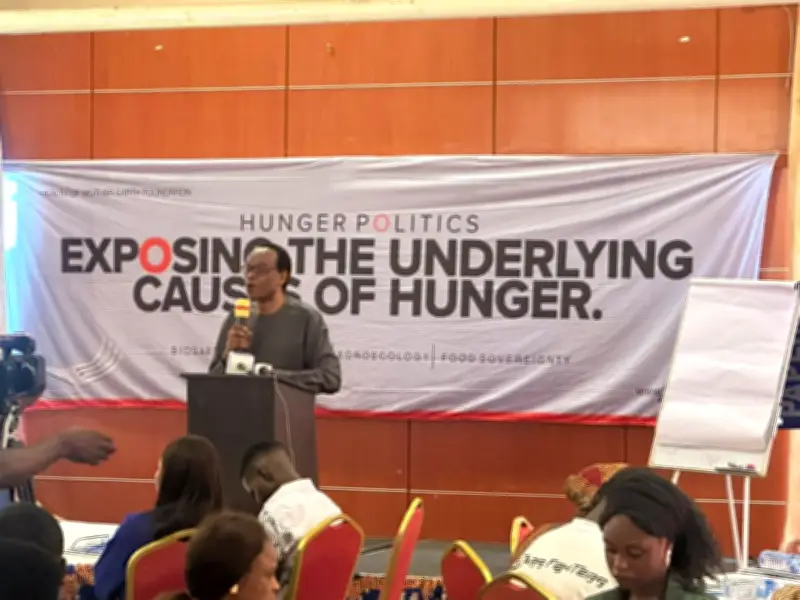
A coalition of environmental, agricultural, and civil society organizations has called on the Nigerian government to suspend new approvals of Genetically Modified Organisms (GMOs) and conduct an independent review of existing approvals, citing concerns over biosafety, public health, biodiversity, and farmers' rights. The call was contained in a communiqué issued at the end of the National Conference on Biosafety and Agroecology held on Monday in Abuja.
The conference was convened by the Health of Mother Earth Foundation (HOMEF) in collaboration with Corporate Accountability and Public Participation Africa (CAPPA), Kebetkache Women Development and Resource Centre, the GMO-Free Nigeria Alliance, and other partners. Participants included representatives of federal ministries, regulatory agencies, farmers, researchers, civil society organizations, legal practitioners, youth groups, traditional institutions, and media practitioners.
Review of GMO Approvals
The gathering reviewed the increasing approval and commercialization of genetically modified crops in Nigeria, including Bt Cowpea, TELA Maize, and recently registered transgenic cotton varieties. According to the communiqué, participants expressed concerns about the potential implications of GMOs for biosafety, environmental protection, food sovereignty, public health, and farmers' rights.
GM Concerns in Nigeria
The adoption of GM crops has remained contentious among food system experts in Nigeria, creating two divides. GM proponents argue that the technology can boost food production and enhance food security. Many critics of the technology have raised concerns about environmental and health risks, weak regulatory enforcement, and inadequate labeling. Meanwhile, according to the International Service for the Acquisition of Agri-biotech Applications (ISAAA), more than 30 major food crops have been genetically modified globally. Nigeria has approved four crops—maize, cowpea, cotton, and soybean—for commercialization and is among six African countries leading in biotech crop adoption. In 2024, the government approved four varieties of Tela maize, further intensifying debates over GM crop safety and transparency.
Concerns also persist over farmers' limited knowledge of GM seed characteristics, potential dependence on seed companies, and the broader impact on traditional farming systems. An investigation by Premium Times and international partners in 2024 revealed how the US government, through the now-defunct USAID, funded pesticide and GM-related advocacy campaigns in Nigeria, including efforts that profiled critics of GMOs. Amidst these concerns, Premium Times reported that the National Biosafety Management Agency (NBMA), in March, ordered the suspension of four new transgenic cotton hybrid varieties in Nigeria. The varieties are MIC 561 BGII, MIC 563 BGII, BIOSEED-FIYAH CH1001, and BIOSEED-FIYAH CH1002. They were allegedly registered by the National Committee on Naming, Registration and Release of Crop Varieties, Livestock Breeds and Fisheries on 26 March 2026 without the requisite approval of NBMA. The agency said its regulatory surveillance and compliance-monitoring mechanisms identified “serious compliance abnormalities” in the varieties. As debates continue, the suspension of the new cotton varieties underscores ongoing challenges around biosafety compliance and regulatory oversight in Nigeria’s biotechnology sector.
Concerns Over Food Security Approach
The conference noted that Nigeria’s food security challenges require “holistic, people-centred and sustainable solutions” rather than relying solely on technological interventions. Participants also raised concerns about biodiversity loss, genetic contamination of indigenous seed varieties, monoculture farming systems, dependence on pesticides, and the absence of sufficient long-term ecological studies on GM crops. The communiqué stated that proprietary seed systems could undermine farmers’ rights to save, exchange, and improve seeds, with implications for rural livelihoods and local food systems. It further noted that existing biosafety governance frameworks require greater transparency, accountability, scientific rigour, and meaningful public participation. The participants also highlighted concerns about the continued use of highly hazardous pesticides, warning that they pose risks to human health, biodiversity, soil fertility, and water resources.
Agroecology Promoted as Alternative
The conference endorsed agroecology as a viable pathway to sustainable agriculture, noting that it has demonstrated potential to improve soil health, biodiversity, climate resilience, and farmer livelihoods. Participants said structural barriers, including limited access to land, finance, information, and technology, continue to affect farmers, particularly women and young people. They resolved to advocate a comprehensive review of GMO approvals and biosafety governance mechanisms, while promoting transparency, public participation, and independent risk assessment in biosafety decision-making. The stakeholders also pledged to support research, innovation, and public education on agroecology and sustainable food systems.
Demands
Among the key demands outlined in the communiqué, participants urged the federal government to place a moratorium on new GMO approvals pending independent, long-term, and peer-reviewed assessments, including feeding trials, environmental impact assessments, and social impact studies. They also called for an independent review of existing approvals, including Bt Cowpea, TELA Maize, and transgenic cotton varieties, to ensure compliance with the National Biosafety Management Act and the precautionary principle. The conference further urged the government to review the National Biosafety Management Agency (NBMA) Act to strengthen transparency, accountability, and public disclosure requirements. Other recommendations included strengthening public agricultural research and extension services, protecting indigenous seed systems, supporting community seed banks, phasing out highly hazardous pesticides, and increasing investment in agroecological research and training.
Call for Sustainable Food Systems
Participants said ecological sustainability, food sovereignty, public accountability, social justice, and the well-being of present and future generations should guide Nigeria’s food and agricultural policies. They urged government institutions, policymakers, development partners, and other stakeholders to work collaboratively towards building a resilient and equitable food system that prioritizes people, biodiversity, environmental integrity, and national food security. The communiqué was signed by HOMEF, CAPPA, Kebetkache Women Development and Resource Centre, the GMO-Free Nigeria Alliance, Organic and Agroecology Initiative (ORAIN), Environmental Rights Action, Women and Youth in Agriculture, Be the Help Foundation, Urban Rural Environmental Defenders, Nigeria Women Agro Allied Farmers Association (NIWAAFA), Cassava Growers Association, Ecosteward Foundation, and Cal-Maji Foundation.