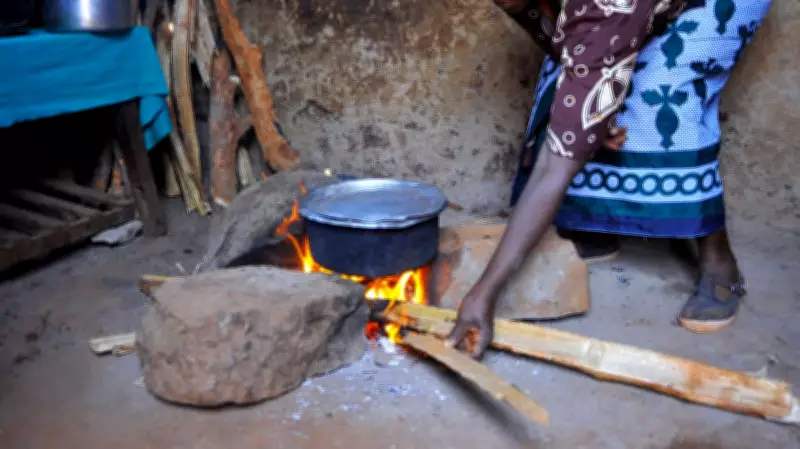
Despite technological advancements, millions of Nigerian households continue to rely on traditional firewood cooking methods, exposing themselves to significant health and environmental risks. The Executive Vice Chairman of the National Agency for Science and Engineering Infrastructure (NASENI), Khalil Suleiman Halilu, raised this concern, highlighting the devastating implications, particularly for children and women in low-income homes.
Halilu noted that many families still depend on firewood, which is not only time-consuming but also harmful due to smoke inhalation. He spoke during the launch of NASENI’s Sustainable Empowerment Programme in Kano, which aims to provide clean energy solutions to 2,000 households. The programme includes the distribution of clean cookstoves and solar home systems, targeting rural and semi-urban communities.
The initiative is part of NASENI’s Zero Carbon (ZeCo) Project, designed to reduce carbon emissions, promote cleaner energy, and improve the quality of life for Nigerians. Over 2,000 beneficiaries received clean cookstoves, solar power systems, and other tools to support their daily energy needs and small-scale businesses.
Government Commitment to Clean Energy
The Minister of Industry, Trade and Investment, Dr Jumoke Oduwole, described the initiative as a practical demonstration of the Federal Government’s commitment to translating economic policies into tangible benefits for citizens. She stated that the programme aligns with the Renewed Hope Agenda of President Bola Tinubu, particularly in the areas of industrialization, job creation, and inclusive economic growth.
Scale of the Challenge
Special Adviser to Lagos State Governor on Climate Change, Titilayo Oshodi, disclosed that 950 million Africans lack access to clean cooking, with over 180 million Nigerians affected. Speaking during a roadmap presentation and manufacturing agreement signing for 24 million clean cookstoves in Lagos, she noted that women bear the greatest burden. This dependence on firewood contributes to indoor air pollution, deforestation, greenhouse gas emissions, and lost productive time for households.
Oshodi emphasized that clean cooking adoption is not just a technical rollout but a social diffusion process. When communities see real, tangible improvements in health, cost, and convenience, adoption becomes organic.
Private Sector Investment
President & Group Chief Executive Officer of Greenplinth Africa, Olawale Akinwumi, announced the signing of a manufacturing agreement with Allgreen Energy NV for the first 24 million clean cookstoves. He also revealed that Allgreen Energy NV and its partners will support the 80 million Clean Cookstoves Project in Nigeria with an investment of $10 billion within the next 18 months. The provision of free clean cookstoves and briquettes as fuel aims to transform the lives of millions of Nigerians, particularly women and children, who are disproportionately affected by traditional cooking practices.