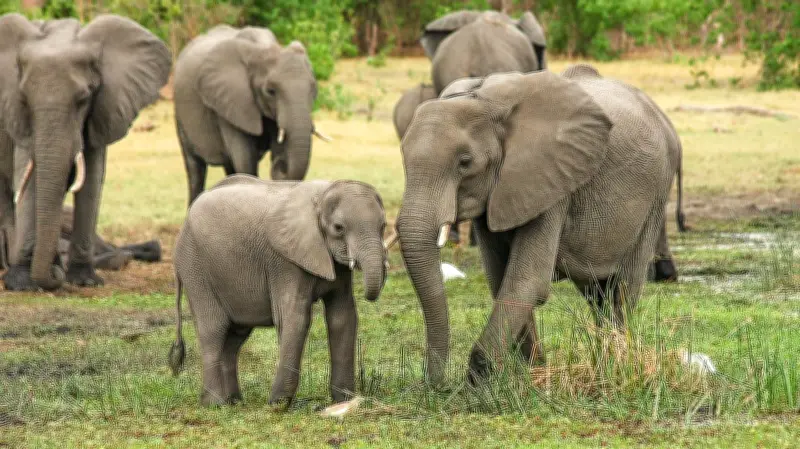
Nigeria has warned that habitat loss, poaching, illegal logging, and human encroachment are pushing the country's elephant population to critically low levels, with only about 400 elephants remaining nationwide.
Minister calls for urgent action
Speaking at a high-level webinar on Nigeria's Forest Elephants organised by the Elephant Protection Initiative (EPI) Foundation, the Minister of Environment, Balarabe Lawal, renewed calls for urgent action to save the country's remaining forest elephants from extinction through stronger conservation policies and stakeholder collaboration.
Lawal said Nigeria remains one of the few countries hosting both forest and savannah elephants, noting that the animals play a critical role in maintaining ecological balance and strengthening climate resilience.
According to him, elephants help sustain biodiversity by creating pathways through dense forests, dispersing seeds, providing access to underground water sources during dry seasons, enhancing carbon sequestration, and enriching soils through nutrient recycling.
Key habitats under threat
The minister identified key elephant habitats in Nigeria as Okomu National Park and Cross River National Park, with occasional sightings reported in communities across the Niger Delta. However, he warned that increasing pressure from habitat destruction, poaching, and human activities continues to threaten the survival of the species.
Lawal said Nigeria's conservation efforts are guided by the Endangered Species Act, the National Forest Policy, and the National Elephant Action Plan, while the country also actively participates in the Elephant Protection Initiative and the African Elephant Coalition.
He urged participants and stakeholders to contribute practical solutions that would strengthen elephant conservation efforts across Nigeria and the continent.
“Protecting elephants is not just about saving a species. It is about preserving biodiversity, strengthening ecosystem resilience, and securing a sustainable future for generations to come,” he said.
EPI Foundation highlights critical situation
Also speaking, Chair of the Board of Trustees of the EPI Foundation, Sharon Ikeazor, described the situation facing Nigeria's elephants as critical, revealing that only about 400 elephants remain in the country.
She said documentary footage presented during the webinar highlighted the scale of threats confronting elephant populations, including illegal logging, poaching, encroachment into protected areas, and increasing human-elephant conflicts.
Despite the challenges, Ikeazor expressed optimism that ongoing conservation initiatives could reverse the decline. She commended conservation organisations working in forest communities, particularly efforts aimed at creating alternative livelihoods and promoting community participation in wildlife protection.
Ikeazor also called on businesses and industries to play a more active role in environmental conservation, noting that Nigeria could not afford to lose its forests and remaining elephant populations.
“We need our forests for rain, climate regulation and soil protection. We also need our last few elephants because of the ecological, socio-cultural and economic benefits they provide. They are an important part of our natural heritage,” she added.
EPI Foundation CEO speaks on conservation progress
Earlier, Chief Executive Officer of the EPI Foundation, John Scanlon, said Nigeria's elephant population was facing an urgent conservation crisis, with only a few hundred forest and savannah elephants remaining.
Scanlon noted that the EPI, an alliance of 26 African countries dedicated to elephant conservation, had worked closely with Nigeria since it joined the initiative in 2018. He highlighted key achievements, including the securing and destruction of ivory stockpiles and the development of Nigeria's 10-year National Elephant Action Plan in 2024.
According to him, the webinar was aimed at drawing attention to the plight of Nigeria's forest elephants while encouraging wider public participation in conservation efforts.
ANI Foundation's role in protecting biodiversity
Also, Executive Director of the ANI Foundation, Tunde Morakinyo, said the organisation was leveraging ranger-led conservation, community partnerships, and private sector funding to protect some of Nigeria's most important biodiversity hotspots.
Morakinyo explained that the non-profit conservation organisation, established in 2018, works with the National Park Service under long-term management agreements aimed at protecting national parks while creating economic opportunities for surrounding communities.
According to him, the ANI Foundation has signed two 30-year partnership agreements with the National Park Service covering Gashaka-Gumti National Park and Okomu National Park. He said the organisation's long-term goal is to transform both parks into leading ecotourism destinations while restoring degraded ecosystems through rewilding initiatives and wildlife conservation.
“We aim for these parks to become engines of development for local communities and Nigeria as a whole. It is important that communities benefit directly through jobs and economic opportunities so that they are incentivised to protect nature,” he said.
Okomu National Park: A critical habitat
Describing Okomu National Park as one of the last remaining stretches of intact rainforest in southwestern Nigeria, Morakinyo said the park harbours one of the country's few surviving populations of critically endangered African forest elephants.
He estimated that only about 200 forest elephants remain in Nigeria, while the park is also home to West Africa's largest population of African grey parrots and the endangered white-throated guenon monkey. However, he warned that illegal logging, poaching, and agricultural encroachment continue to threaten the park's ecological integrity.
Morakinyo disclosed that since commencing operations in Okomu in 2022, the ANI Foundation and the National Park Service have recruited and trained 66 rangers who have significantly reduced illegal logging activities and improved security within and around the park.
“The rangers have brought security to the region by helping to curb kidnapping and banditry, making it safer for residents to pursue their livelihoods,” he said.
He added that the foundation has also invested in education and microfinance programmes for local communities to strengthen support for conservation efforts.
Rescued baby elephant symbolises hope
Morakinyo further recounted the rescue of a baby elephant discovered wandering alone in an oil palm plantation near Okomu National Park in November last year, describing the incident as a powerful symbol of both the vulnerability and resilience of Nigeria's remaining elephant population.
The rescued calf, he noted, has become a rallying point for conservation efforts aimed at securing the future of Nigeria's critically endangered forest elephants.