Nigeria's renewable energy sector is witnessing a transformative wave of investments and policy support, positioning the country to achieve its industrial and $1 trillion economic ambition. The Rural Electrification Agency (REA) is leading this charge in partnership with private investors and development partners, backed by an enabling policy environment.
Major Solar Projects Underway
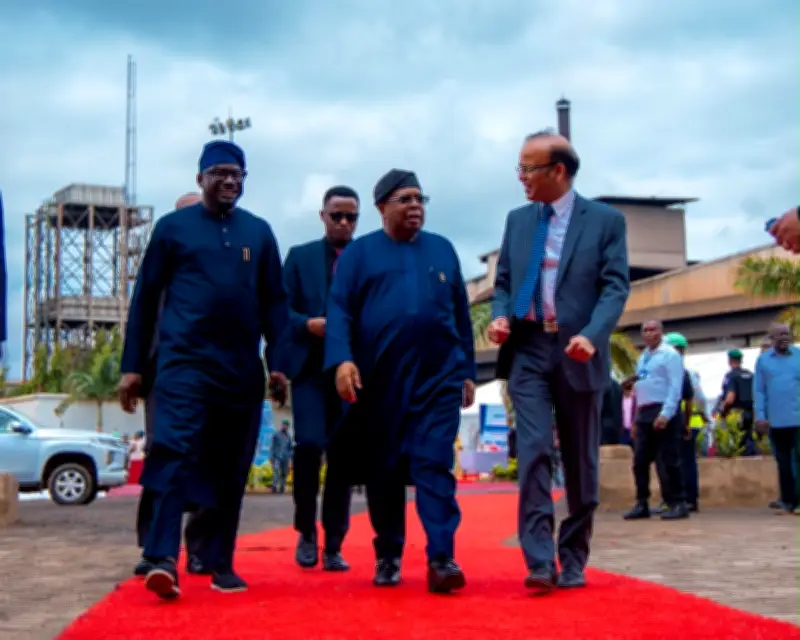
A 505kWp interconnected solar mini-grid was recently commissioned in Eredo, Epe, Lagos State by the REA in partnership with the European Union, the German Government through GIZ/NESP, and private sector developers. In Niger State, the government officially handed over 500 hectares of land for the development of a 200MW solar power project that will power Abuja Steel Mills. This project aims to create a model for how renewable energy can directly support industrial growth, local manufacturing, job creation, and economic transformation.
International Funding and Partnerships
The United Nations Development Programme (UNDP), under its Africa Minigrids Program (AMP) with funding from the Global Environment Facility (GEF) and in partnership with RMI, the African Development Bank, and the REA, has invested over $5.9 million across 23 separate sites in Nigeria. This funding specifically aims to support women as leaders in sustainable energy. The investment is expected to mitigate approximately 74,000 metric tons of CO2 over the lifetime of the mini-grid investments by replacing diesel and fuelwood with solar energy. It has transformed the lives and businesses of over 20,000 people.
The International Finance Corporation (IFC), a member of the World Bank Group, in partnership with Norfund, is backing five Renewable Energy Service Companies (RESCOs) with up to $83.2 million to expand last-mile power access in off-grid communities. This funding includes $35.3 million in concessional debt from the IDA Private Sector Window Blended Finance Facility and IFC’s Concessional Capital Window. Together, these initiatives represent an estimated capital expenditure of $271 million, funding the deployment of 315 solar hybrid mini-grid sites and connecting 2.9 million people to clean electricity.
Private Sector Engagement
In the private sector, Sun King secured an $80 million fully Naira-denominated loan facility in May 2025, in partnership with the IFC and Stanbic IBTC Bank, to scale off-grid solar energy access in Nigeria. The investment aligns with Nigeria’s Country Partnership Framework with the World Bank Group and contributes to Mission 300, a joint initiative with the African Development Bank. Anish Thakkar, Co-Founder of Sun King, said, "Off-grid solar provides the fastest and most scalable pathway to universal electrification across Africa."
First City Monument Bank (FCMB) launched a $188 million Green Finance Facility alongside the REA to support sustainable infrastructure. FCMB earlier launched a ₦100 billion dual currency funding to support energy access expansion. Lotus Bank partnered with the REA to launch a ₦100 billion interest-free renewable energy financing facility to ensure underserved communities receive market-tailored credit.
Future Plans and Strategic Focus
WeLight, Africa’s largest rural electrification company, announced it will invest in Nigeria by 2027, backed by €27 million from the IFC. This reinforces an earlier Memorandum of Understanding with the REA to deploy and operate 400 mini-grids and 50 MetroGrids in Nigeria by 2030.
The REA is prioritizing locations where reliable power can quickly translate into productivity and revenue, focusing on "Electricity Growth Zones" where electricity supply, economic demand, infrastructure investment, and private capital are deliberately aligned. Dr. Abba Aliyu, Managing Director of the REA, stated at the LCCI Renewable Energy Outlook Conference, "If Nigeria creates predictable pipelines of mini-grids, public-sector solarization, embedded generation, industrial solar systems, and large renewable projects, manufacturers will have the confidence to invest." He added, "If manufacturers invest, projects become cheaper, supply chains become stronger, jobs are created, and the economy captures more value."
Under Dr. Aliyu’s leadership, the REA is evolving from a vehicle for lawmakers’ constituency projects into a market-enabling institution, building data, standards, project pipelines, demand aggregation models, and financing partnerships to allow the private sector to scale.