
Ogun State's Agricultural Revolution: Empowering Youth with Modern Farming and Substantial Grants
Miss Lara Mafe's story exemplifies a dramatic shift in Ogun State's agricultural landscape. Five years ago, as a fresh graduate with limited prospects, she would have been classified as unemployed. Today, she stands as a successful participant in Governor Dapo Abiodun's transformative agricultural initiatives, having turned a pilot programme into substantial profit.
From Unemployment to Agricultural Entrepreneurship
Mafe was among over 70,000 young people who applied for agricultural opportunities through the Ogun State job portal, revealing both the severity of youth unemployment and a surprising openness to farming under the right conditions. Selected for the Ogun State Broiler Business Model pilot in December 2019, she underwent six weeks of intensive training at the Odeda Farm Institute in Eweje, mastering commercial poultry production.
Her first cycle yielded ₦200,000 in profit, representing a remarkable 566% increase over Nigeria's minimum wage. Now, at the Magboro Rice Farm developed under the Abiodun administration, Mafe joins 200 young farmers in an operation generating ₦1 billion in revenue every three months. This translates to ₦4 billion annually, with each farmer earning approximately ₦5 million quarterly.
Infrastructure as the Game-Changer
The transformation of Ogun State's agriculture didn't occur through motivational rhetoric alone. Governor Abiodun's administration fundamentally altered the financial equation by investing in critical infrastructure that young farmers couldn't afford independently.
The Magboro Rice Farm illustrates this transformation clearly. Producing 1,400 metric tonnes of rice per harvest—equivalent to 20,000 bags of milled rice—the farm's productivity stems from mechanized equipment that eliminates backbreaking manual labor, irrigation systems enabling year-round cultivation, storage facilities preventing post-harvest losses, and secured markets guaranteeing buyers before planting begins.
This infrastructure works in tandem with comprehensive knowledge transfer. Training programmes teach modern techniques that significantly boost yields beyond traditional methods. Through the World Bank-sponsored Ogun State Economic Transformation Project, 8,000 youth receive annual training in greenhouse farming, hydroponics, and commercial crop production. An additional 40,000 have been empowered as cassava agripreneurs, transforming a traditional crop into a viable commercial enterprise.
Financial Barriers Overcome Through Strategic Support
Before 2019, capital requirements presented formidable barriers to agricultural entry. Starting a farm demanded land, equipment, inputs, and working capital that most graduates lacked. Banks viewed agriculture as high-risk, demanding collateral that young people couldn't provide.
Governor Abiodun addressed this challenge immediately upon taking office. In August 2019, just months into his administration, 200 unemployed youth received ₦74.4 million in loans through the FADAMA III programme, averaging ₦372,000 per recipient. The support package extended beyond financing, including free land with certificates of occupancy, land clearing at no cost, seedlings, fertilizer, extension services, single-digit interest rates, and pre-arranged produce buyers.
By 2024, support had expanded exponentially. The Ogun Youth Empowerment and Entrepreneurial Programme now offers grants ranging from ₦500,000 to ₦10 million for business-oriented youth, complemented by interest-free digital loans. For aspiring poultry farmers or cassava cultivators, the ₦10 million ceiling represents genuine startup capital sufficient to build infrastructure, purchase inputs, and sustain operations through initial harvests.
Modern Techniques Attracting Educated Youth
Traditional farming methods involving cutlasses, hoes, and manual weeding under harsh sunlight held little appeal for educated youth with alternative options. Governor Abiodun recognized that attracting this demographic required modernization alongside subsidies.
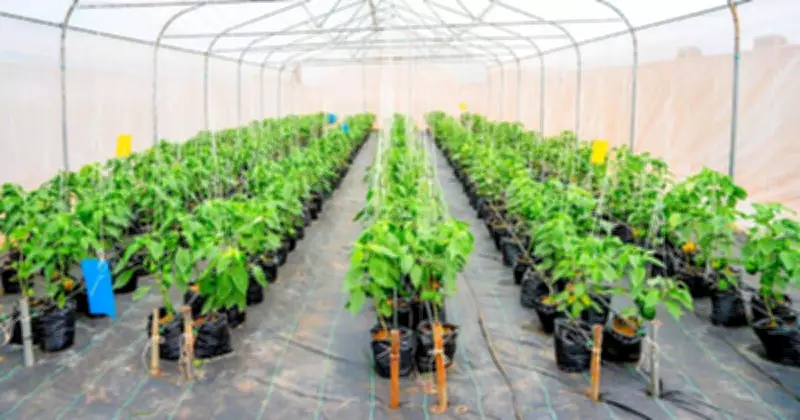
At the Soilless Farm Laboratory in Awowo, Ewekoro Local Government Area, established under his administration, this modernization is evident. Inside greenhouses, vegetables grow in white PVC pipes with roots suspended in nutrient-rich water—eliminating soil, weeds, and strenuous outdoor labor. Over 1,000 young people have graduated with training in soilless farming techniques like greenhouse cultivation and hydroponics, which reduce water usage by up to 90% compared to conventional methods.
Farmer Samson Ogbole, team lead at Soilless Farm Lab, explained the comprehensive approach: "We taught them how to build a greenhouse from scratch; they know basic bricklaying, plumbing, electrical works, farm management, financial management, budgeting, and human management."
The training extends beyond classrooms, with graduates receiving farmlands, seedlings, and tools for immediate practical application. The programme trains 2,000 youths every three months and is being replicated statewide. Through the broader Youth Agricultural Programme, 8,000 youth receive annual training in greenhouse and hydroponics farming, covering both technical agricultural skills and business management principles.
A Fundamental Rethinking of Youth Engagement
The shift from 60 youth receiving ₦7,000 monthly stipends in 2018 to 8,000 trained annually with access to ₦10 million grants and modern infrastructure represents a fundamental rethinking of youth engagement in agriculture. Governor Abiodun's systematic approach addresses financial constraints through grants and low-interest loans, eliminates labor intensity through mechanization, provides modern training appealing to educated youth, and secures markets to ensure production translates to income.
The results are substantial. At Soilless Farm Lab alone, over 12,000 young farmers have been trained under Abiodun's administration, with 960 greenhouses currently producing vegetables. Dr. Adeola Odedina, former Commissioner for Agriculture, noted that after initial successful cycles, "we have on our table more than 9,000 applicants, who are mostly youths and have shown interest in becoming a part of the Ogun Broiler project."
For Ogun State, this agricultural transformation extends beyond employment statistics. Agriculture contributes 30% to the state's GDP—exceeding the national average of 21%—and employs 70% of the workforce. By making the sector attractive to young people, the administration isn't merely reducing unemployment; it's building long-term food security and economic resilience.
The transformation is visibly underway. Agriculture in Ogun State has shifted from something young people avoided to something they actively pursue. Miss Lara Mafe's ₦200,000 profit in six weeks, achieved through programmes Governor Dapo Abiodun championed, clearly illustrates this change.
The question is no longer whether young people will choose agriculture. With over 70,000 applications on the state's agricultural job portal, they've already answered affirmatively. The current challenge involves scaling infrastructure, capital, and training rapidly enough to meet this substantial demand. Governor Abiodun's administration is expanding capacity from 8,000 trained annually to systems accommodating thousands more awaiting their opportunity.
For Ogun State's youth, farming is no longer a fallback option. Under Governor Dapo Abiodun's leadership, it's becoming a first-choice career path with genuine economic potential.




