
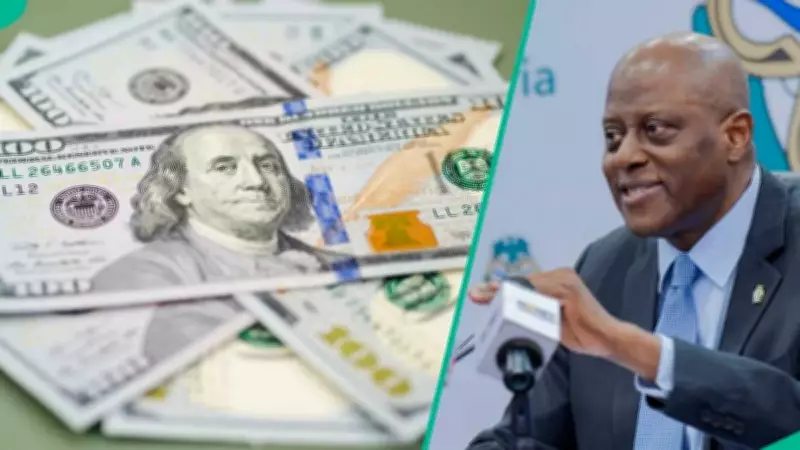
CBN Opens Official Forex Market to BDC Operators with New Weekly Limits
The Central Bank of Nigeria has implemented a significant policy shift by granting licensed Bureau De Change operators direct access to purchase United States dollars from the official Nigerian Foreign Exchange Market. This strategic move aims to enhance foreign currency availability in the retail segment while establishing clear operational boundaries for market participants.
New Weekly Transaction Cap and Market Access Rules
Under the freshly issued circular from the CBN's Trade and Exchange Department, each properly licensed BDC operator can now source up to $150,000 weekly from any Authorised Dealer Bank at prevailing market rates. This represents a substantial policy adjustment that removes previous restrictions on supply channels, providing operators with greater flexibility while maintaining regulatory oversight.
The circular, officially released on Tuesday, February 10, and signed by Director Dr. Musa Nakorji, explicitly states that this measure seeks "to ensure the availability of adequate foreign exchange liquidity in the retail segment of the foreign exchange market to meet the legitimate needs of end users." This development comes as part of broader efforts to stabilize the national currency and address persistent foreign exchange challenges.
Enhanced Compliance Requirements and Transaction Protocols
To prevent potential market abuse and ensure transparency, the Central Bank has instituted several critical compliance measures. Authorised Dealer Banks must conduct comprehensive Know-Your-Customer verifications and due diligence checks before selling foreign exchange to BDC operators. Additionally, all licensed BDCs must submit accurate electronic returns and resell any unused foreign currency within twenty-four hours of acquisition.
The CBN has further established specific transaction settlement protocols that mandate all foreign exchange dealings to occur exclusively through settlement accounts with licensed financial institutions. Notably, the central bank has prohibited third-party transactions entirely while limiting cash payments to a maximum of twenty-five percent of any transaction's total value. These safeguards aim to maintain market integrity while facilitating legitimate retail foreign exchange activities.
Industry Response and Economic Implications
Aminu Gwadabe, President of the Association of Bureau De Change Operators of Nigeria, has enthusiastically welcomed this regulatory development. In an exclusive discussion, Gwadabe described the policy as "highly commendable and a clear statement of the CBN's commitment to enhancing financial inclusion." He further emphasized that increased access to the official market would help "increase liquidity at the critical retail end of the market and reduce the wide margin between the NFEM and the unregulated market."
This policy announcement coincides with positive economic indicators, including Nigeria's external reserves recording a modest increase of $66 million to reach $46.11 billion at January's conclusion. The 1.6 percent month-on-month gain from December 2025's $45.45 billion provides renewed support for the country's foreign exchange buffers. These developments occur as the naira experiences its most robust performance in nearly two years, suggesting potential stabilization in the currency market.
The Central Bank's strategic decision to integrate BDC operators more directly into the official foreign exchange framework represents a calculated effort to bridge market segments, enhance transparency, and support the national currency's value through improved retail dollar availability.




