
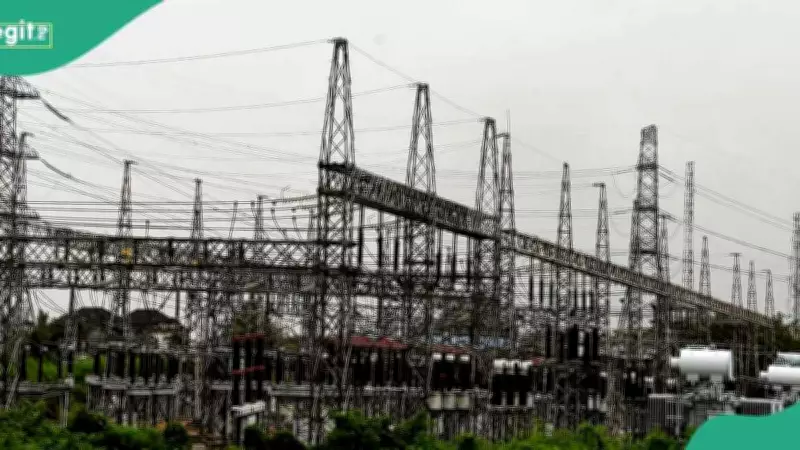
Nigeria's Persistent Power Failure: Four Administrations and ₦7 Trillion Later
Nigeria has expended an estimated ₦7 trillion on its electricity sector following the privatization initiative launched in 2013. Despite this colossal financial commitment, millions of Nigerian citizens continue to experience erratic power supply and recurrent national grid collapses. The situation has persisted across four presidential administrations, raising serious questions about governance, accountability, and the effectiveness of reform efforts in Africa's most populous nation.
The Broken Promise of Privatization
The foundation for power sector reform was established through the Electric Power Sector Reform Act of 2005, which transformed the defunct National Electric Power Authority (NEPA) into the Power Holding Company of Nigeria (PHCN). This entity comprised 18 successor companies, including:
- Six generation companies (GenCos)
- One transmission company
- Eleven distribution companies (DisCos)
In 2013, PHCN was fully unbundled and its assets transferred to private investors, with expectations that this move would usher in efficiency and growth. However, more than a decade later, electricity generation has at times plummeted to as low as 1,800 megawatts, while transmission and distribution networks continue to struggle with obsolete infrastructure and inadequate capacity.
Failed Promises Across Four Administrations
Every administration since Nigeria's return to democracy in 1999 has declared power sector reform a priority, recognizing electricity as vital to economic development. Yet each has fallen short of delivering reliable power to the nation.
Under President Olusegun Obasanjo, Nigeria's first Minister of Power, the late Chief Bola Ige, pledged in 1999 to make power outages "a thing of the past" within six months. This promise was never realized, and grid collapses became increasingly frequent during this period.
Subsequent ministers, including Dr. Segun Agagu, Dr. Olu Agunloye, and Senator Liyel Imoke, introduced ambitious initiatives such as:
- The National Integrated Power Projects
- The Mambilla Hydropower Project
Many of these projects became mired in delays, allegations of corruption, and weak coordination between government agencies.
During President Umaru Musa Yar'Adua's tenure, power generation targets of 6,000 megawatts by 2009 were missed due to persistent gas shortages and poor maintenance of existing infrastructure.
The Jonathan, Buhari, and Tinubu Eras
President Goodluck Jonathan oversaw the actual privatization of the power sector, with then Minister of Power, Professor Barth Nnaji, assuring Nigerians that private ownership would deliver stable electricity. Instead, the process was widely criticized as rushed, leaving under-capitalized operators and creating a deep liquidity crisis that continues to plague the sector.
Under President Muhammadu Buhari, billions of dollars were borrowed to upgrade transmission infrastructure, while the 2018 Siemens power deal promised to expand capacity to 25,000 megawatts by 2025. This project has achieved only a fraction of its ambitious target. Former Minister of Power, Saleh Mamman, later faced corruption charges linked to power projects, highlighting ongoing governance challenges despite changes in leadership.
President Bola Ahmed Tinubu, who assumed office in 2023, pledged during his campaign to prioritize constant electricity supply, warning that he should not be re-elected if he failed to deliver. His administration is currently supervising a $500 million World Bank-backed Distribution Sector Recovery Programme (DISREP), even as generation companies demand payment of over ₦4 trillion in outstanding debts.
Expert Analysis: Structural Flaws and Corruption
Industry experts have identified fundamental structural problems in Nigeria's power sector reform process. Kunle Olubiyo, President of the Nigeria Consumer Protection Network, argues that Nigeria's critical mistake was failing to fully privatize the entire electricity value chain.
"The federal and state governments still hold about 40 percent stakes in the DisCos and own the transmission company outright. That is why subsidies have continued," Olubiyo explained. He warned that without full privatization and strict performance monitoring, "even if you invest $1 trillion, the results will be the same."
Energy consultant Bode Fadipe similarly contends that weak political will and policy inconsistency have undermined reform efforts. "We have moved one step forward and several steps backward since privatization. Some investors are only milking government interventions rather than fixing the system," Fadipe stated.
The Human Impact: Daily Struggles for Nigerians
For ordinary citizens, grid collapses translate into tangible economic losses and daily frustrations. Ahmad Ibrahim, a resident of Abuja, reported that even brief blackouts often take hours to resolve at the local level. "Electricity flickers in a way that damages appliances. It is frustrating that such a basic service remains unreliable," he lamented.
Tailor Sodiq Omolaoye described how erratic power supply in Lugbe, Abuja, affects his ability to meet customer deadlines. "Electricity is not a luxury; it is essential for our livelihoods," he emphasized, highlighting how unreliable power undermines small businesses across Nigeria.
Calls for Comprehensive Reform
Former Managing Director of the Transmission Company of Nigeria, Aliyu Tambuwal, insists that grid stability can only improve if the government ensures adequate reserves and discipline across the entire value chain. "We need spinning reserves, gas security, and strict adherence to load allocations," Tambuwal advised.
Energy experts have called for multiple solutions to address Nigeria's power crisis:
- Implementation of modern technology across generation, transmission, and distribution
- Development of off-grid solutions and renewable energy alternatives
- Stronger state-level participation enabled by the Electricity Act 2023
- Full privatization of the entire electricity value chain
- Strict performance monitoring and accountability mechanisms
Despite trillions of naira spent and repeated reform initiatives, analysts agree that Nigeria's power crisis remains largely unresolved. The situation raises difficult questions about accountability, governance effectiveness, and the future direction of a sector fundamental to national development. As Nigeria continues to face frequent power outages and repeated grid collapses, the need for structural overhaul becomes increasingly urgent.




