Terrorist Commander Sadiku Unmasked as Architect of Kwara State Massacre
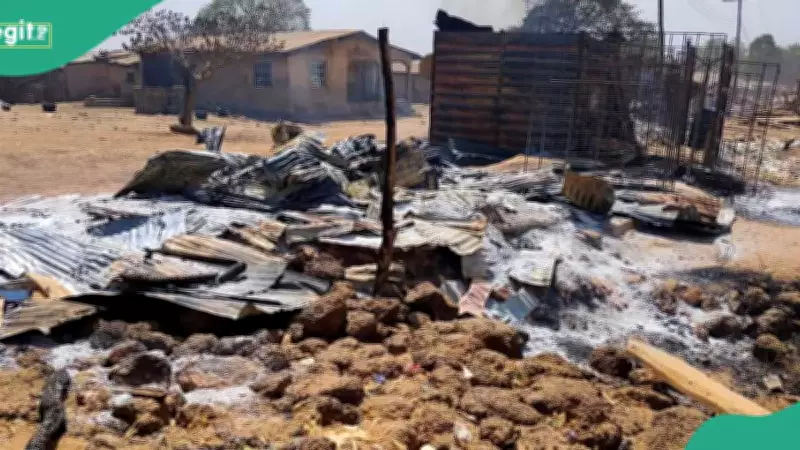
Security revelations have identified terrorist commander Abubakar Saidu, widely known by the alias Sadiku, as the mastermind behind the brutal attacks in Woro community, Kaiama Local Government Area of Kwara State. The devastating assault on Tuesday, February 3, 2026, resulted in the tragic deaths of an estimated 176 residents, marking one of the deadliest incidents in the region's recent history.
From Boko Haram Lieutenant to North-Central Terror Kingpin
Sadiku's journey into terrorism leadership represents a disturbing evolution in Nigeria's security landscape. According to verified reports, he began his extremist career as a handpicked lieutenant of the notorious late Boko Haram leader, Abubakar Shekau, back in 2014. Over a twelve-year period, he has transformed into what security analysts now describe as "the Shekau of the North-Central" region, demonstrating similar ruthless tactics and ideological commitment.
The terrorist commander migrated westward following sustained military pressure that weakened Boko Haram's traditional strongholds in Nigeria's North-East. He strategically embedded himself within the vast forest corridors spanning Niger and Kwara states, where he orchestrated a systematic campaign that crippled agricultural communities and displaced numerous families from their ancestral homes.
Strategic Alliances and Operational Evolution
Security intelligence reveals that Sadiku initially collaborated with other terrorist elements to expand his influence. A self-styled counterterrorism analyst operating under the handle MobilisingNigeria on platform X disclosed that Sadiku worked alongside Dogo Gide to penetrate North-Central territories and briefly collaborated with the Darul Islam terrorist group before Nigerian security forces dismantled that organization.
However, ideological disagreements eventually fractured the alliance between Sadiku and Dogo Gide, leading to violent internal clashes that claimed fighters from both factions. Following this split, Sadiku established an independent operational base within the Kainji Forest Reserve in July 2025, marking a significant turning point where he abandoned mere transactional banditry for a more rigid, ideologically driven campaign of terror.
Alarming Connections to International Terror Networks
Security experts have raised grave concerns about potential connections between Sadiku's faction and international terrorist organizations. Brandon Phillips, a West and East Africa security tracker, noted that the Woro attack occurred less than four kilometers from Nuku, where fighters of Jama'at Nusrat al-Islam wal-Muslimin (JNIM) – an Al-Qaeda affiliate operating in the Sahel region – claimed their first-ever attack on Nigerian soil in October 2025.
Phillips explained that this geographical proximity strongly suggests operational overlap between JNIM and Sadiku's Boko Haram faction, potentially indicating either an opportunistic alliance or a non-aggression pact between the groups. Such connections would represent a significant escalation in the threat landscape, potentially bringing international jihadist networks deeper into Nigeria's security challenges.
Community Impact and Security Failures
The human cost of these attacks extends beyond the immediate fatalities. Residents of Woro and Nuku communities disclosed that suspected jihadists had sent a letter requesting permission to preach in their areas before launching the deadly overnight assault. In addition to the 176 confirmed deaths, the attacks resulted in the abduction of at least 38 women and children, including family members of community head Umar Bio Salihu.
Both Amnesty International and local residents have pointed to significant security lapses, noting that warnings were issued and security troops made brief visits to the area, yet the devastating attack still occurred. This has raised serious questions about the effectiveness of intelligence gathering and rapid response mechanisms in vulnerable rural communities.
Political Responses and National Implications
President Bola Tinubu has broken his silence on the Kwara killings, vowing that Nigeria will resist terrorism and extremism while condemning the Kaiama massacre specifically. The President has pledged justice and enhanced security for affected communities, though public reactions remain divided regarding leadership effectiveness in addressing Nigeria's persistent security challenges.
The identification of Sadiku as the operational leader behind these attacks underscores the evolving nature of terrorist threats in Nigeria, with former lieutenants establishing independent fiefdoms and potentially forming dangerous alliances with international extremist networks. This development demands urgent reassessment of counterterrorism strategies and greater coordination between security agencies operating across state boundaries.