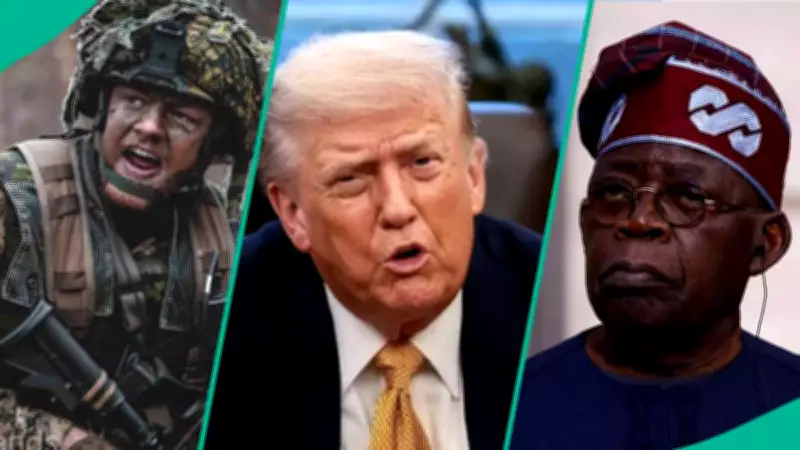
The United States has officially deployed a contingent of military personnel to Nigeria, marking a significant escalation in bilateral security cooperation aimed at addressing the West African nation's persistent terrorist threats. This development comes amidst heightened concerns over the activities of ISIS-linked militants and other armed groups operating within Nigeria's borders.
US Military Presence Confirmed by Top Officials
Dagvin Anderson, the general overseeing America's Africa Command (AFRICOM), publicly acknowledged the deployment during a press briefing held on Tuesday, February 3, 2026. This announcement represents the first formal confirmation of US ground forces in Nigeria since the controversial airstrikes conducted on Christmas Day 2025.
General Anderson emphasized that the decision to send troops followed extensive discussions between Nigerian and American authorities, who collectively determined that enhanced measures were necessary to combat the terrorist menace in West Africa. He stated, "That has led to increased collaboration between our nations to include a small US team that brings some unique capabilities from the United States."
Background of US Military Engagement
The current military cooperation traces its origins to December 2025, when former President Donald Trump authorized a series of airstrikes targeting Islamic State (ISIS) affiliates in northwestern Nigeria. Trump characterized these strikes as "a Christmas present" and justified them by citing allegations of religious persecution against Christians in the region.
Prior to these actions, the US had been conducting surveillance operations over Nigerian territory from bases in Ghana since at least late November 2025. The Christmas Day strikes reportedly targeted camps operated by terrorist organizations in Sokoto State, near the border with Niger, resulting in multiple casualties among militant ranks.
Nigerian Government's Response and Collaboration
Nigeria's Defence Minister, Christopher Musa, has confirmed the presence of the American military team within the country, though specific details regarding their operational scope remain undisclosed. The administration of President Bola Tinubu has expressed its commitment to working closely with US forces to eliminate terrorist networks across the West African region.
General Anderson praised Nigeria's cooperation, describing the nation as "a shining example among other African nations" leveraging American intelligence-gathering capabilities and advanced military assets to combat groups like Boko Haram and the Islamic State West Africa Province (ISWAP).
Controversy Surrounding Religious Persecution Claims
The US military intervention has unfolded against a backdrop of diplomatic tension regarding allegations of systematic persecution of Christians in Nigeria. While the Trump administration designated Nigeria as a "country of particular concern" over these allegations, the Nigerian government has consistently denied such claims.
Foreign Affairs Minister Yusuf Tuggar has characterized the joint operations as purely security-focused, asserting they have "nothing to do with a particular religion." Nigerian officials maintain that their counterterrorism efforts target all armed groups that threaten both Christian and Muslim civilians indiscriminately.
Security Landscape in Nigeria
Nigeria continues to grapple with multifaceted security challenges that complicate stabilization efforts:
- Boko Haram Resurgence: The homegrown extremist group, which initiated its insurgency in 2009, has demonstrated renewed operational capacity throughout 2025, overrunning military positions and attacking civilian communities.
- ISWAP Expansion: The ISIS-affiliated faction has established a concerning foothold in northwestern Nigeria, coordinating sophisticated attacks that have raised alarms among security analysts.
- Criminal Banditry: Rampant kidnapping-for-ransom operations and widespread looting by criminal gangs, commonly referred to as bandits, have created additional layers of insecurity across multiple regions.
These overlapping threats have generated fears of returning to the peak insecurity levels witnessed a decade ago, prompting both domestic and international security responses.
Intelligence Gathering and Operational Support
According to insights from former US officials, the American military team appears to be primarily engaged in intelligence collection and enabling Nigerian forces to conduct precise strikes against terrorist-affiliated groups. This support role aligns with General Anderson's reference to "unique capabilities" that the US contingent brings to the collaborative effort.
The deployment represents part of AFRICOM's broader strategy to expand counterterrorism operations across West Africa, with Nigeria serving as a pivotal case study for regional security partnerships.
Assessment of Previous Military Actions
While US military officials reported successful outcomes from the December 2025 airstrikes, independent analyses have presented more nuanced assessments. A January 2026 investigation by HumAngle characterized the attacks as "performative," with some conflict experts suggesting they largely failed to achieve their publicly stated objectives.
Nevertheless, the continued presence of US forces signals a sustained commitment to supporting Nigeria's security apparatus against evolving terrorist threats, even as debates persist regarding the effectiveness and implications of foreign military intervention in the region.