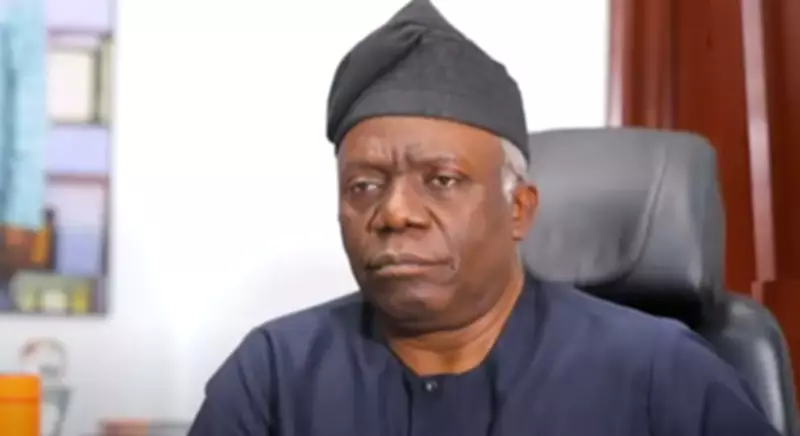
Femi Falana Insists Alleged Coup Plotters Must Face Civilian Courts, Not Military Tribunals
Senior Advocate of Nigeria (SAN) and renowned human rights lawyer Femi Falana has made a strong constitutional argument regarding the handling of military officers accused of plotting to overthrow President Bola Ahmed Tinubu's administration. Falana has categorically stated that under Nigeria's democratic system, such suspects cannot be subjected to trial by court-martial and must instead face prosecution in civilian courts as mandated by the Constitution.
Constitutional Mandate for Civilian Jurisdiction
Speaking during a recent appearance on national television, Falana addressed the growing public debate about how alleged coup plots should be properly handled within a democratic framework. "We are operating under a democratic government, and according to the constitution, we must take these suspects to a high court," Falana asserted. "The soldiers cannot be court-martialed because this is not an attempt to remove a military dictator. This represents an attempt to remove an elected government, a constitutional government, and to disrupt the established constitutional arrangement."
Falana provided detailed legal reasoning for his position, explaining that court-martial proceedings are specifically designed to address breaches of military discipline and offenses that occur strictly within the military hierarchy. However, when the alleged offense rises to the level of treason or an attempt to overthrow a democratically elected government, the matter transcends internal military discipline and becomes what he described as "a constitutional crime against the state itself."
Preserving Democratic Principles and Constitutional Supremacy
The prominent lawyer issued a stern warning that trying such significant cases in military tribunals would represent a serious violation of democratic principles and would fundamentally undermine the supremacy of Nigeria's Constitution. Falana emphasized that "treason and treasonable felony are offenses clearly defined under Nigerian law, and they fall squarely within the jurisdiction of civilian courts."
Falana's intervention comes at a crucial moment in Nigeria's democratic development, highlighting the tension between military justice systems and civilian constitutional authority. His arguments reinforce the principle that crimes against the constitutional order must be adjudicated through the regular judicial system established for all citizens, rather than through specialized military tribunals that operate under different rules and procedures.
The legal expert's position underscores the importance of maintaining clear boundaries between military and civilian jurisdictions in a democracy, particularly when allegations involve fundamental threats to the constitutional framework. This perspective emphasizes that protecting democratic governance requires consistent application of constitutional principles across all branches of government, including how alleged offenses against the state are prosecuted and adjudicated.