Nigerian Lawyers Stage Mass Protest at Finance Ministry Over Unpaid N4 Trillion Contractor Debts
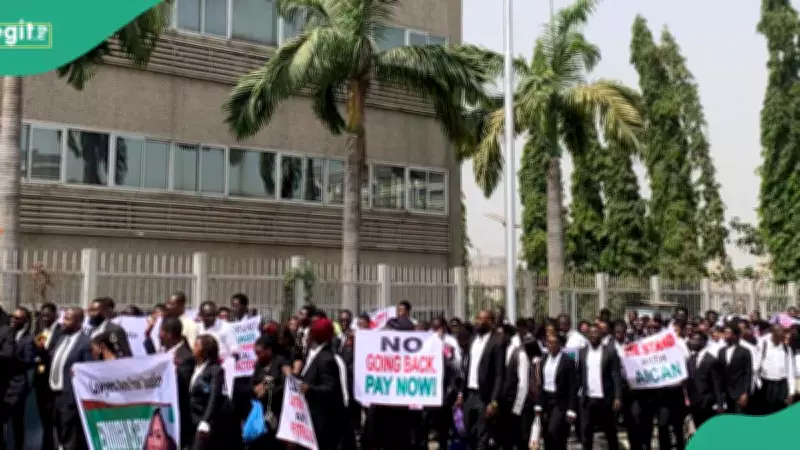
In a dramatic display of legal activism, approximately 500 Nigerian lawyers converged on the Federal Ministry of Finance in Abuja on Thursday to protest the non-payment of debts allegedly owed to indigenous contractors for completed capital projects. The protest, which added fresh pressure on the ministry, highlighted growing concerns over the severe economic toll of delayed government obligations to local businesses.
Coalition of Legal and Civil Society Groups Demands Accountability
The protesters marched under the banner of the Concerned Lawyers for Probity and Justice, acting in collaboration with the Enough is Enough Movement and the All Indigenous Contractors Association of Nigeria. These groups collectively claimed that indigenous contractors are owed an estimated N4 trillion for completed government projects. They leveled serious accusations against the ministry, alleging selective disbursement and favoritism in payment processes, which they argue exacerbates economic injustice.
This demonstration followed a series of earlier protests by contractors who complained that verified debts remained largely unpaid, with some actions reportedly disrupting ministry activities, including blocking access to offices. The lawyers emphasized that partial payments made after demonstrations in December 2025 had failed to resolve the wider systemic issue of delayed payments.
Human and Economic Toll of Unpaid Contracts
Speaking to journalists at the protest, the convener of the group, Barrister Precious Isi Okoh, painted a grim picture of the financial distress faced by contractors. He described how many contractors borrowed from banks at high interest rates to fund government projects and are now grappling with relentless loan defaults. "Banks are seizing homes, vehicles, and other assets, leaving families in despair," Okoh stated. He added that the situation has pushed some contractors to the brink of mental breakdown, with entire households uprooted and futures shattered due to unpaid earnings.
Okoh further warned that the unpaid contracts have triggered significant job losses across construction and allied sectors, weakening local economies and slowing national development. "These contractors employ thousands of workers—masons, engineers, labourers, and others—who depend on steady contracts for survival. When payments stall, jobs vanish, purchasing power drops, local markets suffer, and economic growth grinds to a halt," he explained, emphasizing that a nation that fails to pay its builders hampers its own progress.
Calls for Resignation and Legal Action
The protesting lawyers demanded the immediate resignation of the Minister of State for Finance, Dr. Doris Uzoka-Anite, accusing her office of failing to act on the payment issues. Okoh cited constitutional provisions to support their claims and called on President Bola Tinubu to intervene directly in the matter. He issued a stern warning that the lawyers would pursue legal action and other remedies if the funds were not released promptly, underscoring their commitment to justice and accountability.
This protest is part of an ongoing wave of unrest, with earlier reports indicating that tension flared at the ministry in January when protesting local contractors blocked the entrance and prevented Minister Uzoka-Anite from accessing the premises. The All Indigenous Contractors Association of Nigeria had barricaded the main gate to demand payment of debts owed by the federal government, highlighting the persistent and escalating nature of this crisis.
The collective action by lawyers and contractors signals a deepening frustration with government payment delays, which are seen as undermining economic stability and trust in public institutions. As the protest gains attention, it raises critical questions about fiscal responsibility and the impact of unpaid debts on Nigeria's economic landscape.