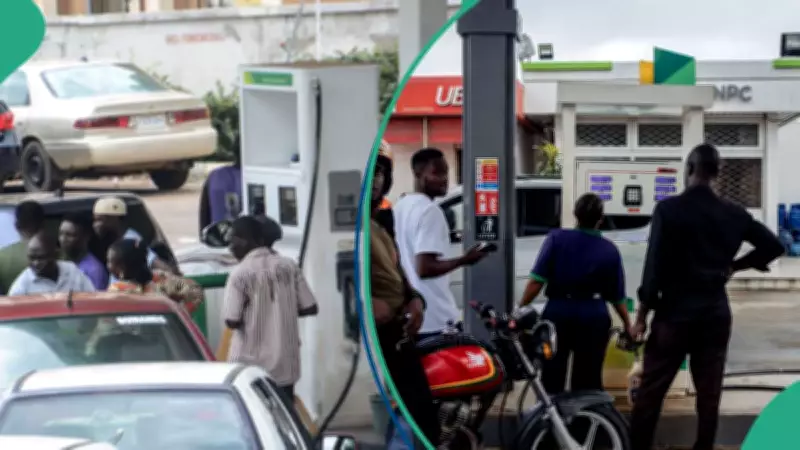
Fuel retailers across Nigeria have begun lowering petrol prices in a bid to attract more customers, with noticeable adjustments recorded in Abuja and surrounding areas. Market observations on Friday, April 24, 2026, showed pump prices dropping to about N1,295 per litre, compared to the previous average of N1,330. This represents a reduction of N35 per litre, signalling increasing competition among marketers, according to The Guardian.
Competitive Pricing Among Major Marketers
The revised pricing has already been implemented by several filling stations, including AA Rano, Ranoil, and Mobil outlets across Abuja. These adjustments bring their rates in line with other key players in Nigeria’s downstream petroleum sector, where companies such as the Nigerian National Petroleum Company Limited (NNPCL), MRS, AP (Ardova), and NIPCO have maintained pump prices within the N1,290 to N1,295 range for several weeks.
Price Dropped Across Other Major Cities
Similar pricing adjustments were recorded across several major cities in Nigeria, reflecting mixed trends in the downstream market. Legit.ng earlier reported that in Lagos, Rainoil slightly reduced its petrol price to N1,212 per litre, while ASCON and A.A Rano sold at N1,210, indicating modest competition among marketers. In contrast, Calabar experienced a slight increase, with stations such as Jenny and Wabeco raising prices to N1,228 per litre, while other outlets kept their rates unchanged. Meanwhile, in Warri, Matrix, Prudent, and Rainoil maintained steady pricing, selling Premium Motor Spirit (PMS) at N1,235 per litre.
Industry observers note that this pricing trend reflects a highly competitive environment, as marketers respond to consumer sensitivity and attempt to retain or expand their market share. The deregulated nature of the sector allows operators to adjust prices more frequently, depending on supply costs and demand patterns.
Stability Despite Global Oil Market Pressures
According to Abubakar Maigandi, president of the Independent Petroleum Marketers Association of Nigeria (IPMAN), the recent price cuts are primarily aimed at boosting customer patronage. He emphasised that marketers are strategically adjusting prices to remain attractive in a competitive landscape. Interestingly, these local price reductions come at a time when global crude oil markets are experiencing volatility. Since April 9, 2026, domestic petrol prices have remained relatively stable despite fluctuations in international oil benchmarks. On Friday, West Texas Intermediate (WTI) crude traded around $94 per barrel, while Brent crude stood at approximately $105 per barrel. These elevated prices have been influenced by geopolitical tensions, particularly uncertainties surrounding shipping routes in the Strait of Hormuz amid ongoing conflict involving Iran and the United States.
The contrast between stable domestic fuel prices and rising global crude costs highlights how local market dynamics, including competition and supply logistics, can temporarily offset international pressures.
Dangote Offers to Build East Africa’s Mega Refinery
Meanwhile, Legit.ng earlier reported that East African countries are planning a joint oil refinery in Tanga to process crude from regional producers. Aliko Dangote signalled willingness to lead the investment, saying a refinery similar to the Dangote Refinery could be delivered within four to five years. Kenya President William Ruto said the project would integrate oil from nations including the DRC, Kenya, South Sudan, and Uganda to improve energy security.