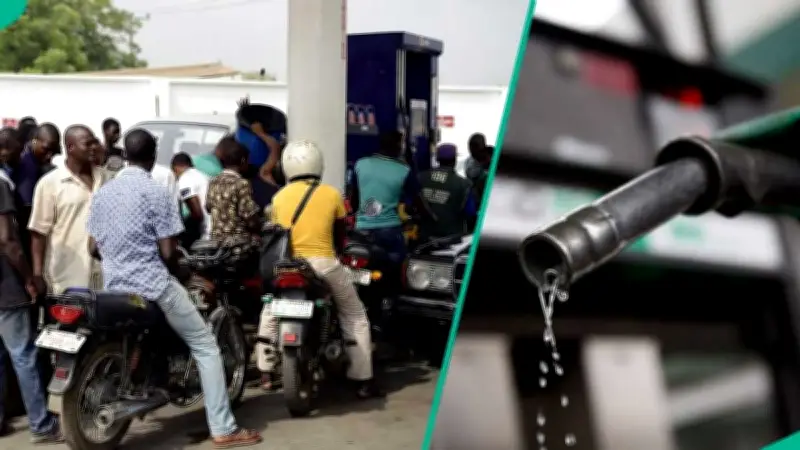
The National Bureau of Statistics (NBS) has reported that the average retail price of Premium Motor Spirit (PMS), commonly known as petrol, surged by 55.31% year-on-year to N1,596.25 per litre in May 2026, up from N1,027.76 per litre in May 2025. This represents a continued upward trend in fuel costs, placing additional pressure on transportation, logistics, and household spending across Nigeria.
Monthly Increase and State-Level Variations
According to the NBS petrol price watch report, petrol prices also rose by 4.13% month-on-month, climbing from N1,532.93 per litre in April 2026 to N1,596.25 per litre in May. The increase is attributed to higher supply expenses, market conditions, and distribution challenges nationwide.
State-level analysis revealed significant disparities. Edo State recorded the highest average retail price at N1,722.91 per litre, followed by Bauchi at N1,715.47, Benue at N1,698.57, Gombe at N1,686.37, Delta at N1,667.68, and Yobe at N1,665.91. Other high-price states include Abia (N1,653.91), Jigawa (N1,650.99), Taraba (N1,647.94), and Oyo (N1,639.97).
Conversely, Adamawa recorded the lowest average price at N1,469.83 per litre, with Katsina (N1,470.63), Sokoto (N1,489.33), Anambra (N1,519.72), and Niger (N1,538.33) also among the lowest.
Zonal Price Breakdown
Among Nigeria's six geopolitical zones, the South-South recorded the highest average retail price in May 2026 at N1,623.84 per litre, while the North-West recorded the lowest zonal average at N1,564.11 per litre. This widening price gap reflects regional differences in supply chains and distribution efficiency.
Impact on Consumers and Market Outlook
The NBS report highlights that the sustained increase in petrol prices continues to strain household budgets and business operations. Transportation costs have risen, affecting the prices of goods and services across the economy. Earlier reports indicated that petroleum marketers had begun reducing depot prices following a decline in the landing cost of imported fuel, suggesting potential relief for consumers. However, the May data shows that pump prices remained elevated.