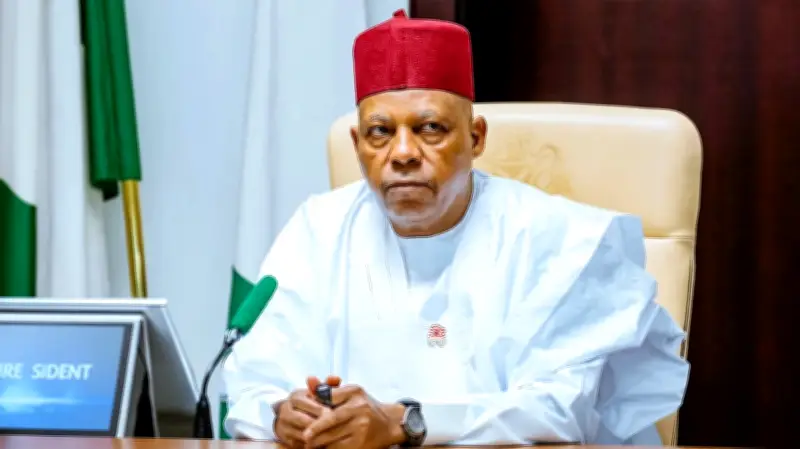
Vice President Kashim Shettima has stated that Nigeria requires stronger maritime governance, improved coordination, increased investment, and regulatory reforms to fully harness the $296 billion potential of its blue economy. He made this statement at a one-day high-level national workshop on ‘Border Security, Resilience and Cross-Border Cooperation’ organized by the National Boundary Commission.
Strategic Maritime Domain
Shettima, who also serves as the Commander of the Combined Maritime Task Force–Gulf of Guinea (CMTF-GoG), described the maritime environment as a strategic domain capable of reshaping Nigeria’s economic future when properly managed. He explained that Nigeria’s maritime jurisdiction includes an 853-kilometer coastline and about 240,000 square kilometers of maritime space, placing the country at the center of critical Gulf of Guinea trade routes, energy activities, and security operations.
Opportunities for Job Creation
According to him, sectors such as fisheries, maritime transport, ports, offshore energy, and coastal tourism offer huge opportunities for job creation and national development. However, these require improved coordination, investment, and regulatory reforms. “The maritime domain is a strategic domain that requires strategic-level engagement,” Shettima said, adding that when effectively harnessed, it could “change the fortunes of the people and nation for good.”
Progress in Maritime Security
The CMTF-GoG Commander further stated that sustained naval operations, legal reforms, and regional cooperation had significantly reduced piracy incidents in the Gulf of Guinea. He noted that Nigeria exited the International Maritime Bureau’s (IMB) list of piracy-prone countries in March 2026. However, he warned that threats including crude oil theft, piracy, illegal, unreported and unregulated fishing, drug trafficking, and arms smuggling continue to threaten maritime development and investment.
Coordinated Regional Framework
Shettima said the establishment of the Combined Maritime Task Force–Gulf of Guinea represents a historic move towards a coordinated regional maritime security framework. He noted that the initiative signals a shift from a security-only approach to one focused on maritime governance, economic growth, and sustainable use of ocean resources.