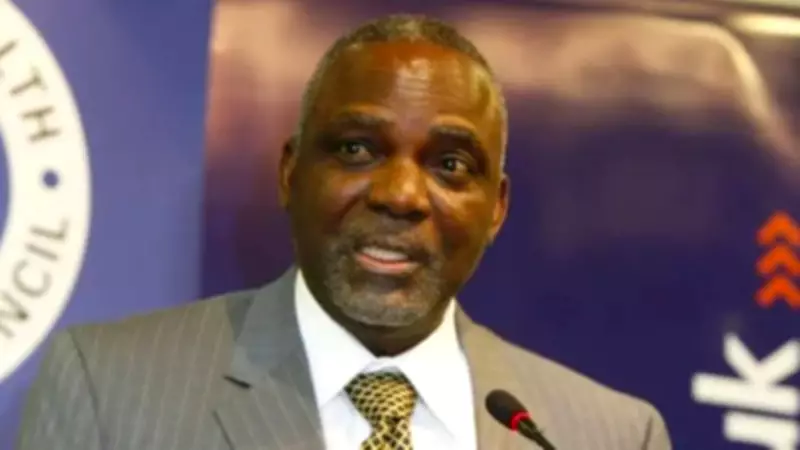
Prof. Barth Nnaji, former Minister of Power, has cautioned that Nigeria must adopt a pragmatic and resource-driven approach to energy transition, emphasizing that natural gas will remain central to powering the country's economy for decades, even as global dynamics shift. Speaking at the opening of the 19th annual conference of the Nigerian Association for Energy Economics (NAEE) in Lagos, Nnaji noted that recent global crises have exposed the limitations of an exclusive focus on renewables, pointing out that European countries reverted to coal during the Russia-Ukraine war despite earlier advocacy for cleaner energy.
Conference Theme and Objectives
The three-day conference, themed "Evolution of Energy Mix in Africa: The Role of Technology, Economics and Public Policy," aims to bring together policymakers, industry leaders, and academics to address the continent's evolving energy needs. Nnaji stated, "For the next 20 years, we will be relying on different forms of natural gas to power our economy, and that is a good thing. We have natural gas as the main ingredient for power production, and we must make good use of what we have."
Nigeria's Gas Reserves and Infrastructure Challenges
Nnaji stressed that Nigeria's comparative advantage lies in its vast natural gas reserves, projected at over 210 trillion cubic feet, which should be harnessed to drive electricity generation, industrialization, and economic growth. He attributed the country's failure to fully utilize its gas potential to inadequate infrastructure and weak policy support, which have constrained investment and expansion in the sector. "We have over 210 trillion cubic feet of natural gas proven reserves, but we are not harvesting these reserves, and we are not building enough infrastructure. The infrastructure and financing that will make this happen must be supported by government policy," he said.
While acknowledging the role of renewable energy, Nnaji emphasized that Nigeria must prioritize what is practical and scalable, noting that gas-fired power plants are cheaper and faster to deploy compared to alternatives such as coal. He also highlighted the importance of government-backed financing instruments, stable policies, and cost-reflective tariffs to unlock investments in the power sector, warning that policy inconsistency has stalled major projects for over a decade.
Keynote Address: Balanced Energy Mix for Africa
Delivering the keynote address, Managing Director of Dangote Refinery and Petrochemicals, David Bird, argued that Africa's energy future must be anchored on a balanced energy mix rather than a narrow transition agenda. He stressed that reliable, affordable, and on-demand energy remains critical to economic development and poverty reduction.
NAEE President Highlights Energy Paradox
In his welcome address, NAEE President Dr. Hassan Mahmud highlighted the scale of Africa's energy challenges, noting that over 600 million people on the continent lack access to electricity, while nearly one billion rely on biomass for cooking. "Africa contributes the least to the problem, yet faces the most binding energy constraints. This is the paradox we must confront as we plan for the continent's energy future," he stated. Mahmud added that despite contributing less than four percent to global carbon emissions, Africa faces severe energy constraints, describing this as a paradox that must be urgently addressed. He noted that the continent possesses vast energy resources, including natural gas, solar potential, and critical minerals, but continues to struggle with translating these into reliable and affordable energy.