With the recent incident in Delta State in mind, stakeholders said it is necessary for the government to focus on overhauling aviation regulation and security architecture, OLUSEGUN KOIKI reports.
When a business jet landed on an unfinished highway in Ogwashi-Uku, Delta State and later took off from the same location without regulatory clearance, the incident immediately gained attention beyond the aviation sector. The incident, which occurred on June 10, 2026, exposed serious vulnerabilities within Nigeria’s aviation security ecosystem, raising troubling questions about regulatory oversight, airspace monitoring, private aviation operations and national security.
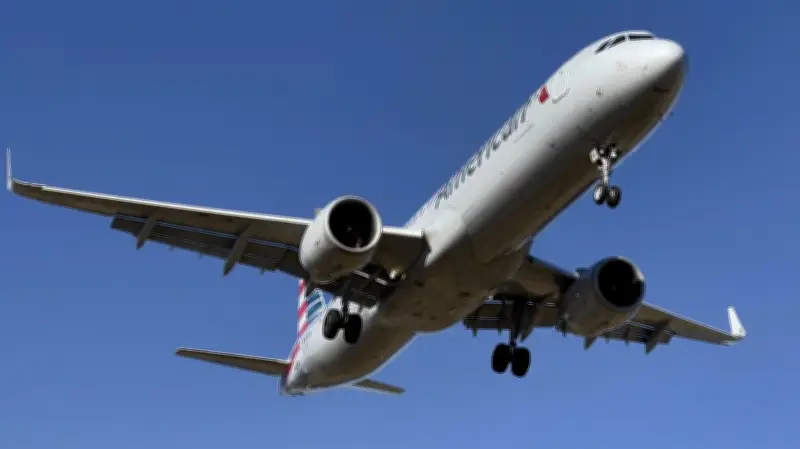
The incident involved a Bombardier Challenger CL-601 business jet with registration number N989BC, owned by the United States-based company Best Aircraft Deals and operated in Nigeria by VMO Aero Limited. While the Nigerian Civil Aviation Authority (NCAA) and the Nigerian Safety Investigation Bureau (NSIB) continue their investigations into the controversial incident, industry experts fear the event may negatively impact the country’s civil aviation sector. They said the matter should not be viewed merely as an emergency landing gone wrong; rather, it should be taken as a national wake-up call on the dangers posed by weak surveillance of private aircraft operations and the potential exploitation of the loopholes by some undesirable elements in the system.
Though there is currently no evidence of criminal activity during the Asaba incident and the identities of the passengers are still being kept under wraps by the authorities, The Guardian gathered that the jet had four passengers and three pilots at the time of the incident. Besides, it was learned that the jet’s captain, an American, is an experienced pilot with 16,000 hours of flying experience, including 6,000 hours in the type of aircraft. Aviation players insisted that investigators must establish every detail of the operation to eliminate doubts and reassure the public.
A report by the NCAA had said that the aircraft encountered difficulties while attempting to land at Asaba Airport at approximately 7:43 a.m. After executing a missed approach, the aircraft eventually landed on a 7,000-foot concrete roadway under construction in the Ogwashi-Uku area. The NSIB said it has commenced an investigation into the incident as the aircraft’s Cockpit Voice Recorder (CVR) and Flight Data Recorder (FDR) have been recovered and secured. Apart from the CVR and FDR, NSIB said its investigators were also obtaining relevant operational, maintenance and air traffic control records of the aircraft.
An emergency landing in the aviation industry would not necessarily have attracted the widespread alarm generated by this, but what made this different was the action taken by the crew, including the pilots on board. Information released by the Ministry of Aviation and Aerospace Development and the NCAA indicated that, rather than the pilot remaining at the location pending inspection and regulatory clearance, the aircraft departed the highway several hours later and flew back to Lagos without notifying air traffic control or even the regulatory agency for the necessary approvals. According to the NCAA, air traffic controllers were only informed of the departure after the aircraft was already airborne. This action triggered suspicion among industry experts, who raised a major concern about aviation safety and security.
A former pilot with the defunct national carrier, Mohammed Badamasi, told The Guardian that there were numerous unanswered questions surrounding the circumstances of the incident. According to him, if the aircraft genuinely experienced an emergency, the flight crew should have immediately contacted air traffic control and the relevant aviation authorities before taking any further action. Badamasi said that while roads and runways may sometimes appear similar to a layman, the two serve different purposes. According to him, runways are designed, inspected and secured for aircraft operations, while roads are designed for vehicles and pedestrians. He explained that a road that may appear suitable for landing an aircraft may be completely unsuitable for takeoff due to obstacles, traffic, uneven surfaces, utility installations, and surrounding structures. He, however, noted that the aircraft’s ability to land and later depart from the incomplete road without formal clearance had raised concerns about the actions of the crewmembers and the mission being conducted by the crew and onboard passengers.
He said: “Roads and runways are not the same. He’s just lucky that vehicles were not using the road. Runways are meant for aircraft, while roadways are meant for vehicles. It’s not normal. “There is something more to it. If he had landed in an emergency, the best thing for him to do now would be to contact the control towers, as he can still reach the tower from that location or use his phone to contact the authorities. I believe as a pilot, he has all this information. “That is why I said something was fishy. For a pilot to have landed there without clearance, it has to do with something we don’t understand yet in the industry. As I said earlier, the man should have contacted the air traffic control if he had missed the runway.” Badamasi insisted that the decision of the crew, especially the pilot, constituted a security breach, adding that the identities of the passengers onboard should also be made public. “The manifest will tell us the identity of passengers onboard. But what was their mission?” he queried.
Also, an aviation security consultant, Olufemi Adeniji, challenged the authorities to look beyond technical aviation issues and examine the wider security implications. According to him, a fixed-wing aircraft landing on a public roadway, discharging passengers and subsequently departing without clearance represents a serious breach of national security protocols. Adeniji observed that Nigeria currently faces multiple security challenges, including terrorism, kidnapping, arms trafficking, illegal mining and financial crimes. He pointed out that in such an environment, every unusual aviation occurrence must be treated with serious scrutiny. He added that the possibility of an aircraft arriving at an unsupervised location, unloading passengers or cargo, and departing without immediate intervention was a scenario that security agencies could not afford to ignore. Besides, Adeniji challenged the government to intensify vigilance on private airports and airstrips across the country to curb incessant security incidents.
He said: “All those private airstrips, airports should be monitored. There should be security people in those places. With the present situation in Nigeria, things should be taken more seriously. How can you land on a road and then take off from the same road? Who cleared you to take off? Who did you talk to? This is a sovereign nation that we are talking about. Nigeria is not a jungle. “I don’t want to say much because I know the investigation is still ongoing, but I want to see where this will end. This should not be taken by the Nigerian government as a little issue because I know the aircraft would be impounded in the United States. So, we should not allow friendship or politics to influence the investigation into this incident. “I tend to believe that the incident was intentional because even if the American captain did not know the airport, the copilot knew the airport. So, they need to investigate the passengers very well. What did they carry? What were they hiding? “The Department of State Security (DSS) needs to arrest them – the passengers and the crew. Then, they should be able to tell us what they were carrying or hiding from the public. Was it ammunition or money? This is not a matter that should be treated as a routine aviation occurrence. There are significant security implications.”
Also, an aviation analyst, Charles Amokwu, said the incident had become a test of the NCAA’s ability to enforce compliance among operators of private aircraft. According to him, commercial airlines operate under intense scrutiny, but he regretted that by contrast, private jets operate with a huge flexibility. He, however, maintained that legitimate business aviation plays a huge role in economic development, but warned that private aviation could become vulnerable to abuse if oversight mechanisms were not sufficiently robust. He added: “The Asaba incident has reignited discussions about whether Nigeria’s regulatory environment for private aircraft operations requires strengthening. We can’t allow this incident to lie low. The government, through its relevant agencies, must act fast on this to prevent further abuse.” Amokwu declared that aviation facilities could no longer be treated solely as transportation assets in Nigeria, stressing that they must also be viewed as critical national security infrastructure.