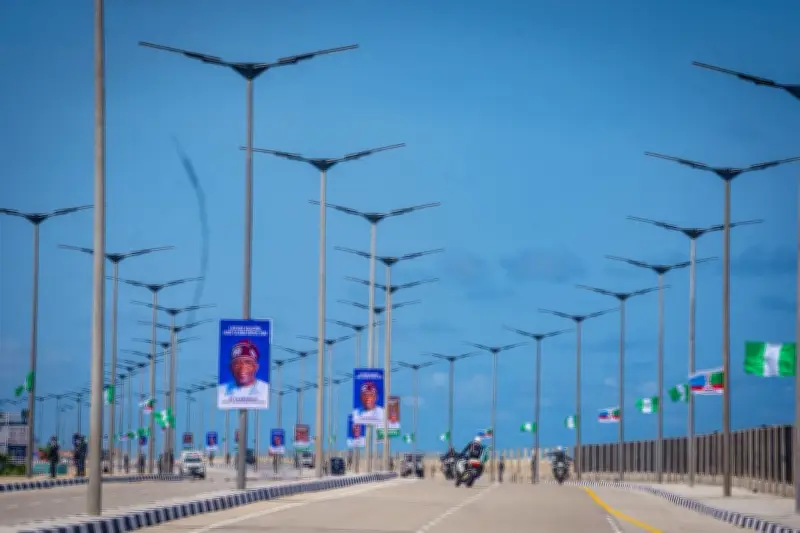
The Lagos-Calabar Coastal Highway has been officially renamed the Bola Ahmed Tinubu Coastal Highway, according to Nigeria's Minister of Works, Dave Umahi. The announcement was made on July 17, 2026, during a site inspection of the project in Lagos State.
Renaming Announcement and Rationale
Umahi stated that the renaming is in recognition of President Bola Tinubu's visionary leadership and commitment to infrastructure development. He emphasized that the project, which spans 700 kilometers along Nigeria's coastline, is one of the most ambitious infrastructure initiatives in the country's history. The minister said, "This highway is a testament to President Tinubu's dedication to transforming Nigeria's transport network and boosting economic integration."
Project Scope and Progress
The coastal highway, when completed, will connect Lagos in the southwest to Calabar in the southeast, passing through several states including Ogun, Ondo, Delta, Bayelsa, Rivers, and Akwa Ibom. Umahi reported that construction is ongoing in multiple sections, with the first phase covering 47 kilometers from Lagos to Lekki already at an advanced stage. He noted that the project is being executed under a public-private partnership model, with the federal government providing counterpart funding.
Economic and Social Impact
The highway is expected to significantly reduce travel time between Lagos and Calabar from the current 12 hours to approximately 6 hours. It will also facilitate trade, tourism, and regional development along the coastal corridor. Umahi highlighted that the project would create thousands of jobs during construction and operation. He added, "This highway will open up the coastal region, enhance connectivity, and stimulate economic growth."
Reactions and Criticisms
The renaming has drawn mixed reactions. Supporters argue it is a fitting tribute to a president who has prioritized infrastructure. Critics, however, view it as an unnecessary act of political sycophancy, especially given the high cost of the project, estimated at over $11 billion. Some stakeholders have also raised concerns about environmental impacts and compensation for displaced communities. Umahi assured that all environmental and social safeguards are being implemented.
Future Plans
Umahi confirmed that the highway will feature six lanes, with provisions for future expansion to eight lanes. It will also include pedestrian walkways, bicycle lanes, and solar-powered streetlights. The project is scheduled for completion by 2031. The minister urged Nigerians to support the initiative, emphasizing its long-term benefits for the nation's economy and infrastructure.