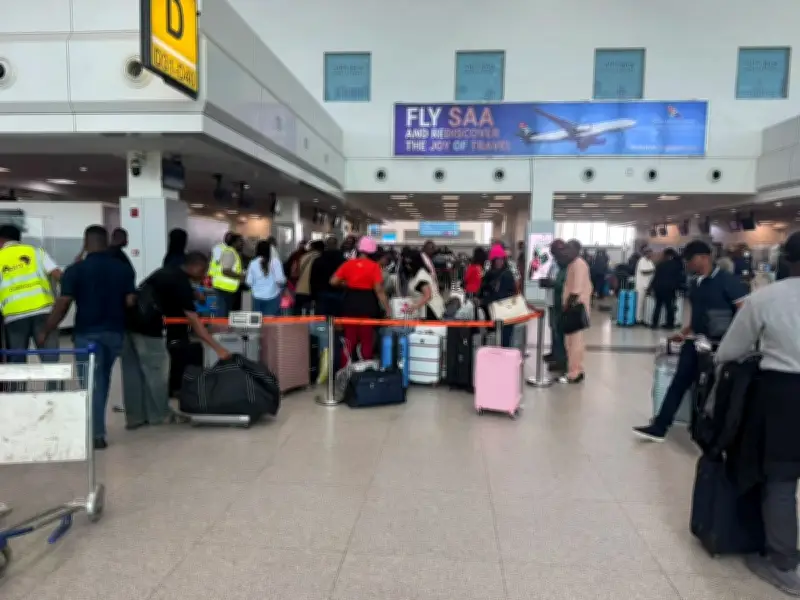
Flight operations have resumed at the Murtala Muhammed International Airport (MMIA) in Lagos following a fire incident that disrupted passenger processing on Sunday, August 2, 2026. The fire, which broke out within the terminal complex, was swiftly contained by emergency teams, allowing airlines to recommence check-in and boarding activities. The disruption lasted approximately two hours, according to operational sources at the airport.
The airport, which handles an average of 30,000 passengers daily, is the primary international gateway to Nigeria. The incident triggered immediate attention from federal aviation agencies and the management of the Federal Airports Authority of Nigeria (FAAN), who coordinated the response from the airport's operation room.
Details of the incident
The emergency was reported at approximately 9:20 a.m. local time on Sunday, with smoke observed in a technical room adjacent to the baggage handling area. The terminal building was partially evacuated, and the airport conducted an emergency dispatch of its fire trucks and rescue teams. The blaze was contained by 9:50 a.m., according to an official who requested anonymity because they were not authorized to speak to the media.
Initial findings indicate an electrical surge that overburdened an auxiliary power unit linked to the baggage system. "The fire was confined to a small technical space and did not reach passenger-accessible areas," said the FAAN official. "The rapid response door, which was activated automatically, helped to prevent the spread."
No passengers or staff were injured. The airport's disaster management unit also activated its emergency operations centre to ensure a coordinated multi-agency response, involving the Nigerian Air Force, the Airports Police Command and the Federal Fire Service.
Effect on airline operations
During the disruption, airlines were forced to pause check-in procedures for about 45 minutes. Immigration and security screening temporarily shifted to alternative counters, causing a temporary queue but no major bottlenecks. Data from the airport flight information display indicated that 14 flights, comprising eight international and six domestic departures, recorded delays averaging 58 minutes. Several inbound aircraft were placed in holding patterns for short durations before being cleared to land.
"We appreciate the patience of the travelling public," the spokesperson for FAAN said. "All airport systems are now fully functional, and airlines are working to clear the backlog."
Passenger experience
Passengers travelling to London, Dubai, Accra and many domestic destinations experienced the delay first-hand. One traveller, who identified himself as a businessman headed to Accra, said he had to wait two hours before his flight was rescheduled. Many passengers used the airport's Wi-Fi facilities to make alternative travel arrangements. Refreshments and seating areas were made available in lounges and the departure concourse.
Airline counter staff worked to rebook passengers on earlier flights where seats were available. Several international carriers issued travel waivers, allowing affected passengers to modify their itineraries without penalty.
Regulatory and government reaction
In Abuja, the Ministry of Aviation called on FAAN to conduct an audit of electrical infrastructure across all federal airports. A directive was issued for all terminals to review their fire safety and suppression systems. The ministry also emphasized the importance of keeping passengers informed during emergencies.
The Minister of Aviation, while not at the scene, was briefed on the situation. The presidency later issued a statement commending the swift response of emergency services and the professionalism of airport personnel.
Incident history and outlook
This incident was the third reported airport fire in Nigeria in 2026, following similar events in Abuja and Kano. Analysts say the frequency of electrical fires at airports points to systemic issues in the power distribution network and aging equipment.
Safety experts believe the airport's quick containment this time shows an improved standard of emergency preparedness. However, they stress the need for continuous investment in infrastructure and regular safety drills to mitigate future risks.
Practical advice for travellers
Travellers are being urged to monitor their flight status through their airlines' apps and the airport's official communication channels. FAAN has also reminded passengers not to tamper with electronic infrastructure and to report any suspected faults to airport authorities immediately.
The financial impact of the delay will likely be absorbed by airlines, which may face increased costs for passenger compensation under Nigerian aviation regulations. Domestically, the incident could prompt operators to reassess airport safety standards. Internationally, the incident may affect perceptions of the airport's reliability, which has been improving in recent years.