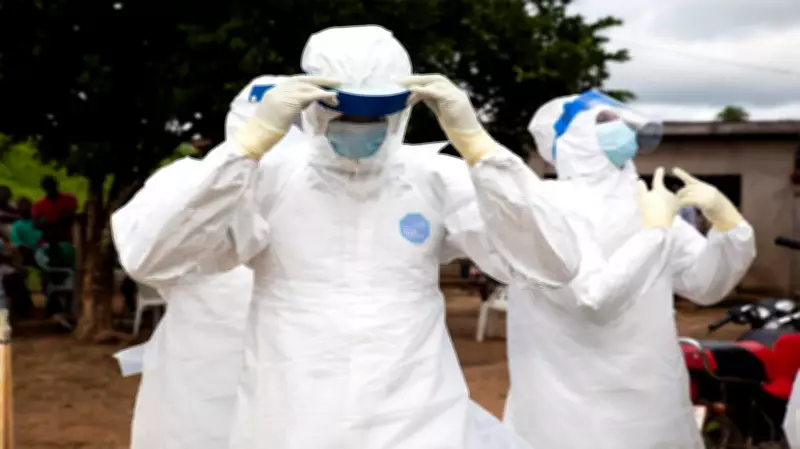
The Nigeria Civil Aviation Authority (NCAA) has placed airlines and airport authorities on high alert following the fresh outbreak of Ebola Virus Disease in parts of East and Central Africa. The aviation regulatory agency has directed operators – aviation agencies and airlines – to immediately strengthen health surveillance procedures at all international airports across the country.
WHO Declares Public Health Emergency
The directive followed the formal declaration by the World Health Organisation (WHO) of the Ebola outbreak in the Democratic Republic of Congo (DRC) and Uganda as a Public Health Emergency of International Concern (PHEIC). In a regulatory circular issued to domestic and international carriers operating into Nigeria, the NCAA said the move became necessary due to growing concerns over the possible cross-border spread of the disease through international air travel.
Bundibugyo Ebolavirus Strain
The outbreak is linked to the rare Bundibugyo ebolavirus species, described by health authorities as a highly severe strain for which there are currently no widely licensed vaccines or specific therapeutics. The WHO and regional health agencies had raised concerns after more than 300 suspected cases and dozens of deaths were reported within the East and Central African region.
Although no confirmed Ebola case linked to the outbreak has been reported in Nigeria, the NCAA said it was already collaborating with the Federal Ministry of Health, the Nigeria Centre for Disease Control (NCDC), Port Health Services, and other international health organisations to intensify monitoring and preventive measures.
Cluster Among Healthcare Workers
According to the NCAA, health officials in the DRC recently identified a cluster of severe illnesses among healthcare workers in the Bunia Health Zone in the northeastern part of the country. The circular read in part: “There is currently no licensed vaccine specifically approved for the Bundibugyo strain, while treatment remains largely supportive and symptom-based. Symptoms associated with Ebola Virus Disease include sudden fever, severe fatigue, persistent headache, vomiting, abdominal pain and bleeding manifestations such as nosebleeds or vomiting blood.”
Emergency Measures for Airlines
The agency insisted that the aviation sector is critical in preventing the international spread of communicable diseases, stressing that early detection and immediate reporting are essential in containing the outbreak. As part of the emergency measures, the NCAA directed all airlines to strengthen onboard disease surveillance and ensure full compliance with international public health protocols.
Pilots were further instructed to immediately notify Air Traffic Control (ATC) of any suspected communicable disease case onboard aircraft in line with the Nigeria Civil Aviation Regulations (NCARs). Flight crew members were also directed to complete Aircraft General Declaration forms for suspected cases, while airlines must ensure that passenger locator forms are properly filled and submitted to Port Health Services upon arrival.
Equipment and Training Requirements
The NCAA further ordered airlines to ensure that aircraft are adequately equipped with first-aid kits, universal precaution kits, and emergency medical kits. It further mandated operators to reinforce crew training on the identification and management of communicable diseases, while ensuring strict adherence to infection prevention and control measures.