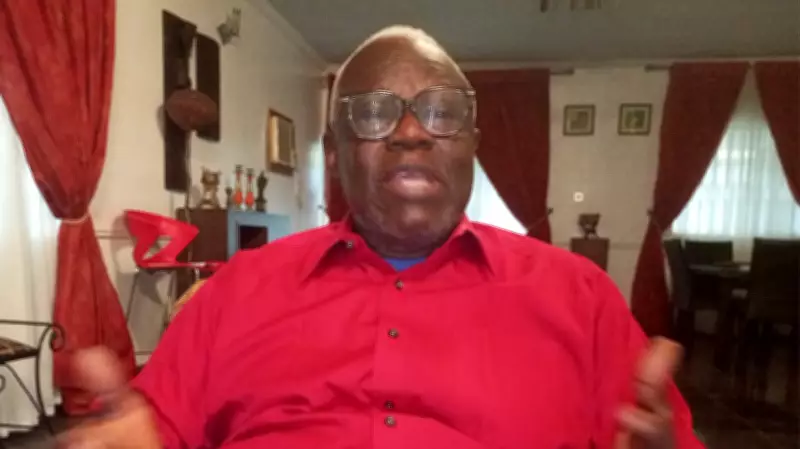
The Chief Executive Officer of United States-based aircraft brokerage, Nigame Aircraft Consultancy, Engr. Olufemi Adeniji, has stated that state governments venturing into the airline business is not in the economic interest of the country. In an interview with OLUSEGUN KOIKI, Adeniji examined the Nigerian aviation industry, touching on state-owned airports and airlines, poorly maintained infrastructure, the abandoned M.K.O. Abiola Airport in Osun State, and the debt dispute between the Nigeria Civil Aviation Authority (NCAA) and indigenous airlines.
State-owned airlines: A questionable investment
Adeniji argued that while airlines can drive economic development, states that cannot pay salaries or maintain basic services should not be investing in aviation. He noted that aviation requires billions of naira to generate millions, and without proper maintenance, such ventures are unsustainable. He described state involvement in airlines as a potential means to siphon limited resources, citing Nigeria's poor maintenance culture and the perception that aircraft maintenance in Nigeria is merely paper-based.
He suggested that states should collaborate to establish maintenance, repair, and overhaul (MRO) facilities before launching airlines. He questioned the sustainability of state-owned airlines like Enugu Air, given the high cost of operations and the current economic hardship faced by Nigerians.
Efficiency and passenger traffic
Adeniji questioned whether Nigeria needs its current number of airlines, given passenger traffic levels. He cited the closure of Spirit Airlines in the United States due to inefficiency, noting that similar discipline is lacking in Nigeria. He highlighted poor passenger experiences at airports, with travelers stranded for hours, and argued that a few efficient airlines would suffice. He also noted that airlines exploit security concerns to justify high airfares, as road travel remains risky.
State-owned airports: A priority issue
On state-owned airports, Adeniji said they could support industrial development but must be viable and well-maintained. He criticized the tendency for states to build airports without ensuring sustainability, using the Osun State Airport as an example. He recounted how a potential deal with Delta Air Lines for a hub in Osun fell through due to project abandonment and mismanagement of funds. He emphasized that states must be self-sufficient before undertaking such projects.
Implementation of West African aviation resolutions
Adeniji noted that transportation in Africa is poor, and implementation of resolutions to reduce taxes and charges has been slow. He compared airfares to Nigeria with those to China, highlighting the disparity. He argued that other West African countries see Nigeria as the primary beneficiary of improved connectivity and are therefore reluctant to implement changes. He called for Nigeria to take a leadership role in the region.
Resolving debt disputes between airlines and NCAA
Adeniji recommended a digital, single-pocket payment system with no human interaction to resolve debt allegations between airlines and the NCAA. He urged the NCAA to enforce laws and ground airlines that fail to pay, similar to the FAA in the United States. He dismissed claims by the Airline Operators of Nigeria (AON) that they do not owe the NCAA, stating that grounding would force compliance.
Multiple taxation and infrastructure
Adeniji acknowledged multiple taxation in the industry but said it can be eliminated with proper infrastructure, such as MRO facilities and digital systems. He argued that taxes are needed to pay airport workers' salaries and that a single-pocket system could streamline payments and reduce taxes.
Reconstruction of Lagos airport terminal
Regarding the N712 billion reconstruction of the old international terminal at Lagos airport, Adeniji stressed the need for a maintenance culture. He noted that the new terminal commissioned six years ago is already deteriorating due to lack of maintenance, citing stolen air conditioners and inaccessible toilets. He called for maintenance clauses in contracts to ensure long-term upkeep.