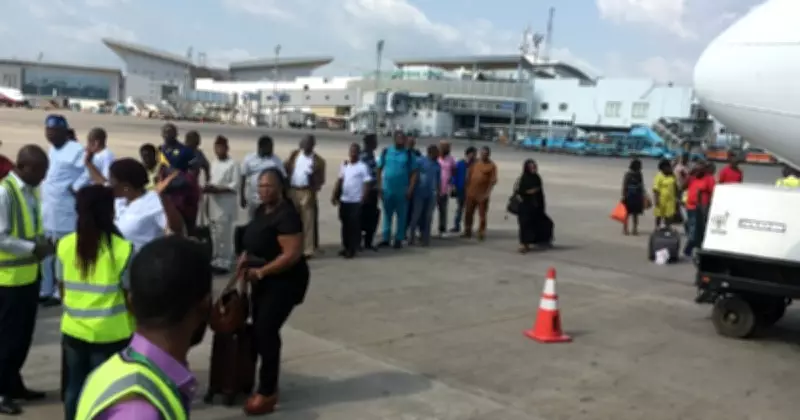
The International Air Transport Association (IATA) has confirmed that Nigerian air travelers pay some of the highest fares globally due to multiple government-imposed charges and taxes. At the Focus Africa Conference in Addis Ababa, IATA named Nigeria among five African countries where aviation-related fees exceed international norms, alongside Angola, Democratic Republic of Congo, Ghana, and Kenya.
Excessive Charges Drive Up Ticket Prices
According to IATA, aviation charges across Africa are approximately 15% higher than the global average. This burden inflates ticket prices, suppresses passenger demand, and weakens regional air connectivity. In Nigeria, over 50 separate charges, fees, and taxes are imposed by four government agencies: the Nigerian Civil Aviation Authority (NCAA), Federal Airports Authority of Nigeria (FAAN), Nigerian Airspace Management Agency (NAMA), and the Federal Inland Revenue Service (FIRS). Only six of these levies are visible to passengers.
Key Charges Identified
- A 5% Ticket Sales Charge collected by NCAA on every ticket sold, both domestic and international.
- A $31.50 Security Charge per international ticket, which includes an additional $11.50 levy under the Advance Passenger Information System effective December 1, 2025.
- API-PNR charges, flagged by IATA as above global norms, tied to passenger data systems used by governments as revenue streams.
- Landing charges, parking fees, en route charges, terminal navigation fees, and corporate income tax on profits above N100 million.
These charges can add up to $150 to $180 on international fares, making Nigerian tickets among the most expensive relative to income levels.
Government Policies Blamed
Contrary to popular belief, airlines are not the primary cause of high fares. Experts argue that government policies and multiple agency charges are the main drivers. IATA emphasizes that African governments treat aviation as a revenue source rather than economic infrastructure. The prosperity aviation generates, IATA argues, allows governments to drive development more sustainably than any tax collected from travelers.
Comparison with Ethiopia
Ethiopia offers a contrasting approach. The Ethiopian government treats Ethiopian Airlines as a strategic national asset, investing in infrastructure, keeping charges competitive, and allowing reinvestment into fleet expansion. The result is one of Africa's most profitable carriers, serving over 125 destinations and driving tourism and trade revenue.
ECOWAS Agreement and Implementation
In December 2025, ECOWAS agreed to eliminate certain aviation taxes and reduce select charges by 25%. Nigeria is a signatory. IATA stresses that full implementation at the national level without further delay is critical. Whether that happens remains uncertain.