
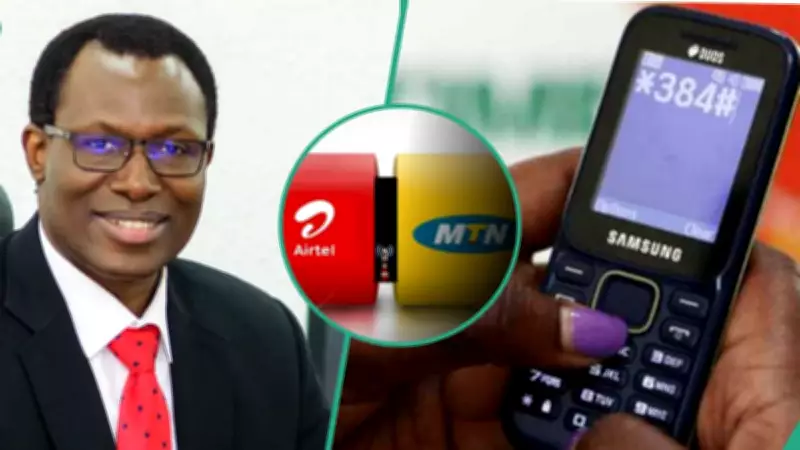
Nigerian Banks Clear N300bn USSD Debt, Ending 4-Year Crisis with Telecom Giants
Commercial banks and telecommunications companies in Nigeria have finally resolved their long-standing dispute over unpaid Unstructured Supplementary Service Data (USSD) charges, bringing closure to nearly N300 billion in outstanding obligations. This resolution marks the end of a four-year crisis that had threatened the stability of the country's digital finance ecosystem.
Regulatory Intervention Leads to Full Settlement
The breakthrough was announced by Gbenga Adebayo, chairman of the Association of Licensed Telecommunications Operators of Nigeria (ALTON), during a visit to the Nigerian Communications Commission (NCC). Adebayo described the settlement as a major achievement for both the telecom and banking sectors, confirming that the entire debt has now been cleared through coordinated engagement and regulatory leadership.
"Today, there is no outstanding USSD debt. The ecosystem has fully migrated to end-user billing. What was once a looming crisis has been converted into a sustainable framework," Adebayo stated emphatically.
Transition to End-User Billing Model
With the dispute settled, the industry has completely transitioned to an End-User Billing (EUB) model. Under this new arrangement, USSD transaction charges are deducted directly from customers' mobile airtime rather than being billed through banks. This fundamental shift occurred between June 3 and June 18, 2025, following partial repayments of N171 billion by banks that paved the way for final settlement.
Industry stakeholders have welcomed this new structure, noting it replaces what was once a lingering crisis with a more transparent and sustainable payment system. The migration ensures that customers bear the direct cost of USSD transactions, eliminating the previous billing disputes between financial institutions and telecom providers.
Escalation and Resolution of the Debt Crisis
The disagreement between banks and telecom operators dates back several years, with telecom firms repeatedly warning they could withdraw USSD services due to mounting unpaid fees. The crisis escalated through several key phases:
- 2019: Telecom operators proposed charging N4.50 per 20 seconds for USSD usage, arguing they could no longer sustain the service at no cost.
- March 2021: Operators threatened to suspend USSD services over N42 billion in unpaid debts, a move halted by then-Minister of Communications and Digital Economy Isa Pantami.
- 2022-2024: The debt ballooned from approximately N80 billion in November 2022 to between N250 billion and N300 billion at its peak in 2024.
Throughout this period, regulatory interventions by both the NCC and the Central Bank of Nigeria (CBN) proved crucial. The NCC threatened to blacklist and reclaim shortcodes assigned to owing banks if payments weren't settled, while both regulatory bodies pushed for the adoption of the end-user billing system that has now resolved the impasse.
Implications for Nigeria's Digital Economy
This resolution comes at a critical time for Nigeria's cashless policy implementation. USSD transactions remain vital for financial inclusion, particularly for users without internet access. The settlement ensures continued access to banking services through USSD codes while establishing a clear payment framework for future transactions.
The successful resolution demonstrates how regulatory coordination and industry cooperation can overcome significant financial disputes. It also provides a model for addressing similar challenges in Nigeria's rapidly evolving digital economy, where technology infrastructure and financial services increasingly intersect.
With the debt cleared and a sustainable billing model in place, both banks and telecom operators can now focus on expanding digital financial services to more Nigerians, supporting the country's broader economic development goals.




