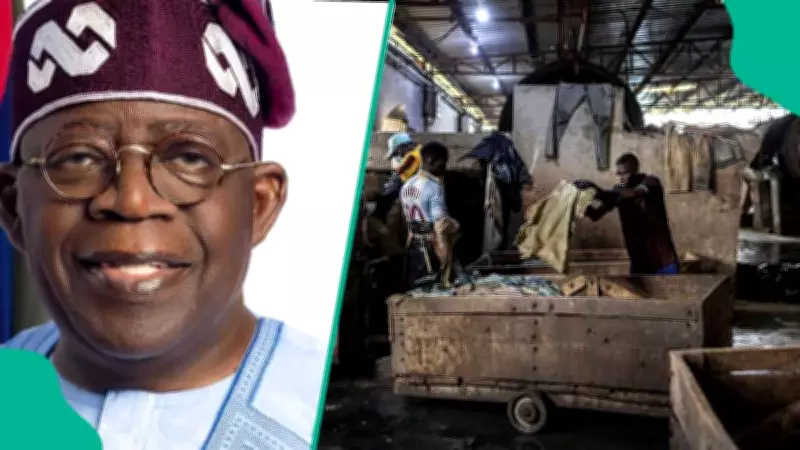
Federal Government Launches New Industrial Policy Framework
The Federal Government of Nigeria has officially unveiled a new industrial policy designed to revitalize inactive factories, strengthen domestic manufacturing capabilities, and position the country as a more competitive player in the global industrial landscape. The announcement was made by the Minister of State for Industry, John Owan Enoh, during an engagement with the Nigerian Guild of Editors.
Policy Aligned with Renewed Hope Agenda
Minister Enoh emphasized that the industrial policy framework is directly aligned with President Bola Tinubu's Renewed Hope agenda, particularly its focus on local content development, import substitution, and achieving greater self-reliance in production. The minister recently conducted tours of several dormant factories to assess their challenges and explore revival opportunities under this new strategic approach.
Industrialisation remains fundamental to Nigeria's long-term economic growth and sustainable prosperity, Enoh stated, noting that while trade and investment are important, true economic transformation depends on building productive industries that can compete internationally.
Structured Implementation and Accountability Mechanisms
Policy experts have highlighted that this new industrial strategy differs significantly from previous attempts due to its strong emphasis on structured implementation and clear accountability measures. The Director-General of the Nigerian Institute for Policy and Strategic Studies, Ayo Omotayo, pointed out that past industrial policies often struggled due to weak execution.
The new framework introduces a detailed implementation plan with specific targets, timelines, responsible actors, and measurable outcomes to ensure better results. It also seeks to strengthen enforcement of a 'Nigeria First' approach to promote greater use of locally manufactured products while reducing dependence on imported raw materials.
Key Policy Components and Financial Provisions
The industrial policy contains several major provisions designed to transform Nigeria's manufacturing sector:
- Bank of Industry Recapitalisation: A proposed recapitalisation of the Bank of Industry to N3 trillion to enhance its capacity to support industrial development
- Increased Funding: Annual industrial development spending equivalent to 3-5% of Nigeria's Gross Domestic Product, alongside expanding sector-specific intervention funds to N3 trillion
- Tax Harmonisation: Streamlining tax systems and incentives to create a more business-friendly environment
- SME Financing: Improving access to long-term, low-interest financing for micro, small and medium enterprises
- Industrial Clusters: Developing specialized industrial zones with shared infrastructure and reliable energy supply
John Uwajumogu, Special Adviser to the President on Industry, Trade and Investment, explained that the policy is designed to deliver rapid economic growth capable of keeping pace with Nigeria's expanding population. Achieving double-digit growth is necessary to meet our development goals, he stated, adding that an industrial revolution working group has been established to coordinate stakeholders and ensure proper execution.
Addressing Persistent Challenges
Participants at the policy engagement identified several ongoing challenges that must be addressed, including energy shortages, limited access to finance, bureaucratic bottlenecks, skills deficits, and weak patronage of locally produced goods. However, economists believe that with strong political commitment, structured financing, and robust accountability mechanisms, the policy could significantly advance Nigeria's industrial revival.
Industry observers have stressed the importance of skills development, noting that Nigeria's youthful population could become a major asset if adequately trained in modern manufacturing techniques. The government has indicated that the framework will integrate vocational training and partnerships with technical institutions to close existing skills gaps.
Officials further pledged closer collaboration with the private sector, stating that sustainable industrial growth requires joint efforts, including attracting foreign direct investment and encouraging technology transfer to strengthen Nigeria's manufacturing base.
Background: BOI's Recent Performance
The Bank of Industry disbursed N636 billion worth of loans to Nigerian businesses in 2025, with agribusiness receiving the largest allocation of N202 billion (32% of total funding). Infrastructure projects received N100 billion, while manufacturing accessed N79 billion. The extractive industries secured N77 billion, and services obtained N55 billion. President Tinubu has commended the bank's performance, noting that such funding strengthens productive capacity and reflects economic reform progress.