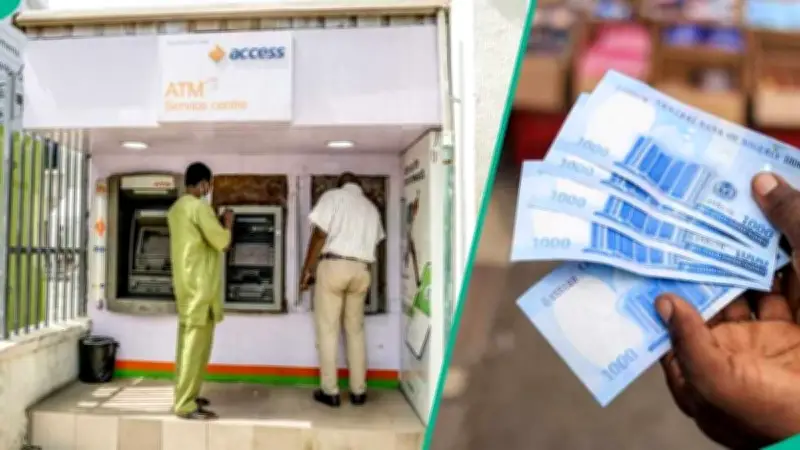
Six Nigerian banks have secured positions on Africa's list of the 20 largest lenders by total assets, a development that underscores the expanding scale of the country's financial sector following a comprehensive recapitalisation programme. The ranking, compiled using data from S&P Global Market Intelligence, company reports, African Business, The Banker and African Research, placed Access Bank as the continent's largest Nigerian lender, with roughly $36 billion in assets and an overall 12th-place position.
Access Bank Leads Nigerian Contingent
United Bank for Africa (UBA) came next among Nigerian lenders with $33.27 billion in total assets, followed by Zenith Bank at $32.01 billion. Stanbic IBTC Bank, with assets of about $24 billion, and First Bank of Nigeria, with $17.2 billion, also secured spots on the list. The strong showing came as Nigerian banks completed a two-year recapitalisation exercise aimed at meeting the Central Bank of Nigeria's revised minimum capital requirements.
Several banks raised fresh funds through rights issues, public offers and other instruments to bolster their balance sheets and widen their capacity to finance the broader economy. The ranking reflects the outcome of these efforts, with six lenders now featuring among Africa's 20 biggest banks by assets.

South African and Egyptian Banks Lead the Continent
South African and Egyptian institutions held firm at the top of the continental table. Standard Bank Group ranked first across Africa with $218 billion in total assets, while Egypt's National Bank of Egypt came second with $186 billion. South Africa's FirstRand followed in third place with $162 billion, Leadership reports. Absa Group ranked fourth with $135 billion, and Nedbank Group fifth with $99 billion.
Egypt's Banque Misr came sixth with $94 billion in assets. Morocco's Attijariwafa Bank placed seventh with $87 billion, followed by South Africa's Investec Group at $81 billion. Morocco's Banque Centrale Populaire, with $60 billion, rounded out the top 10.
Nigerian Banks Eye FTSE Russell Reinstatement
Analysts said the more immediate driver for Nigerian banking stocks could be Nigeria's scheduled return to the FTSE Russell Frontier Market Index on September 21. Nigeria was dropped from the index in 2024 after foreign investors ran into difficulties moving funds out of the country. The anticipated reinstatement is expected to prompt portfolio adjustments by index-tracking funds, potentially lifting demand for large-cap Nigerian equities.
Highly capitalised banks, given their market size and liquidity, are considered among the Nigerian stocks most likely to draw institutional investor interest when the change takes effect. UBA and Zenith Bank joined Access Bank among Nigeria's leading lenders ranked in Africa's top 20 by total assets.
South African Bank to Rival Access, UBA, Zenith in Nigeria
Earlier, Legit.ng reported that South African lender Absa Group is considering upgrading its Nigerian representative office to a full merchant banking operation, a step that would give the bank direct access to Africa's largest economy. Absa Group Chief Executive Officer Kenny Fihla disclosed the plans during an interview with Bloomberg TV, saying the bank was actively "exploring the possibilities of converting into a merchant banking licence" for its Nigerian office.
The push into Nigeria is driven by Absa's need to spread its earnings more evenly. The move could intensify competition in Nigeria's banking sector, which already features six lenders among Africa's top 20 by assets.