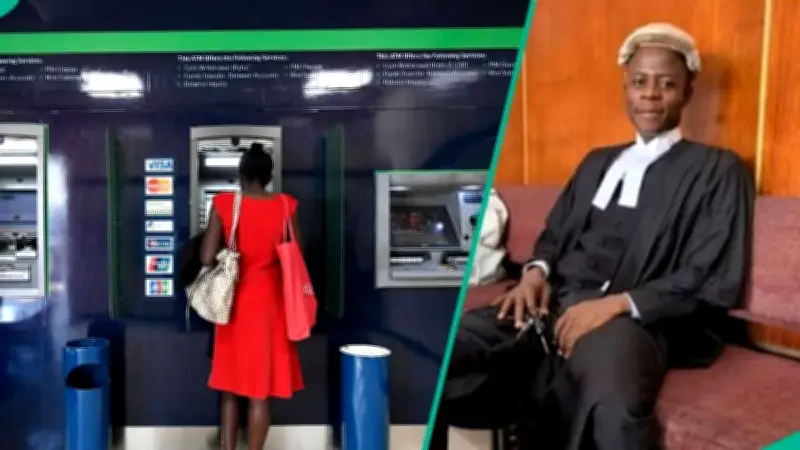
Sterling Bank has refunded a N50 stamp duty charge to a customer after his lawyer issued a formal legal demand, resolving the dispute within 24 hours. The customer, Abdulrauf Adedeji Kazeem, had attempted to transfer N25,000 from his Sterling Bank account, but the transaction failed. Although the bank reversed the N25,000 the following day, it did not initially refund the N50 stamp duty charge that had been deducted at the time of the transfer.
Legal Letter Triggers Swift Resolution
Unsatisfied with the partial reversal, Kazeem engaged his lawyer, Festus Ogun of Festus Ogun Legal, who wrote to Sterling Bank on September 7, 2026. The letter, titled "Re: Demand for immediate reversal of wrongfully withheld stamp duty on Mr. Abdulrauf Adedeji Kazeem's Alternative Bank account no:", demanded the immediate return of the N50 and warned that legal proceedings would follow if the bank failed to comply.
Sterling Bank responded on September 8, 2026, through its Litigation Unit, confirming that the charge had been reversed. The bank wrote in its reply: "Please note that the N50.00 stamp duty has now been reversed to your client's position account."
Bank Cites Contract Terms and Telecom Dependence
In its response, Sterling Bank also drew attention to the provisions of the banker/customer contract, which customers receive as part of the account opening package. The bank noted that electronic transfers and their reversals rely on telecommunications network providers and therefore "cannot be guaranteed at all times." The letter closed with an assurance of the bank's "highest esteem" for the law firm.
The dispute centred on a relatively small sum, but the speed with which Sterling Bank moved after receiving the lawyer's letter highlights how formal complaints can lead to faster resolutions. The refund of the N50 stamp duty brought the matter to a close.
Broader Context: Bank Charges Under Scrutiny
Earlier, Legit.ng reported that the House of Representatives has initiated plans to investigate charges of commercial banks on customers' accounts and plans to summon the Central Bank of Nigeria (CBN) and major commercial banks to appear before the committee on banking regulations. The move followed the adoption of a motion of urgent public importance sponsored by Tolani Shagaya, a lawmaker from Kwara State. The motion, titled "Need to Curb Arbitrary Bank Charges and Protect Nigerian Customers," stated that the deductions from customers' accounts were a matter of concern.
The resolution of Kazeem's case demonstrates that individual customers can achieve redress through legal channels, even for small amounts, and it comes amid broader legislative attention to bank charges in Nigeria.