
Nigeria's financial landscape is poised for a significant transformation as the industry anticipates at least three major bank mergers in the first quarter of 2026. This wave of consolidation is a direct response to the pressing deadline set by the Central Bank of Nigeria (CBN) for banks to meet new, higher minimum capital requirements.
The Recapitalisation Race Against Time
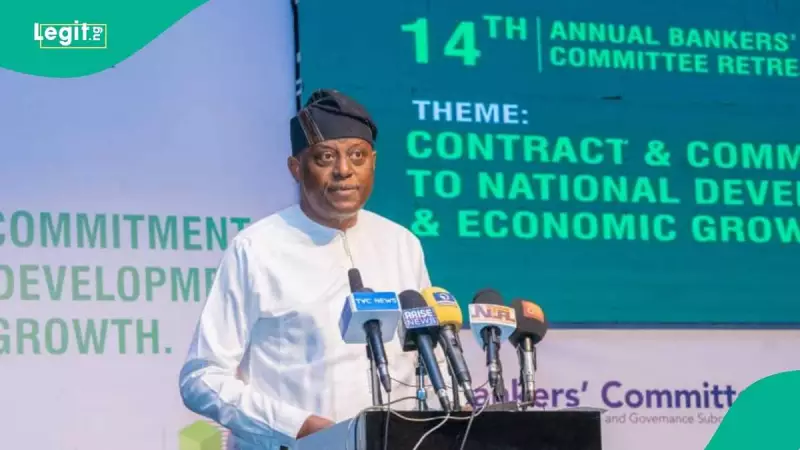
The driving force behind this impending shake-up is the 31 March 2026 deadline for recapitalisation mandated by the CBN, led by Governor Olayemi Cardoso. While most Tier-1 banks had successfully met the revised capital threshold by the end of 2025, smaller Tier-2 and other lenders are now in a race against time. With limited options for raising fresh equity and facing steep compliance costs, strategic mergers have become a critical survival tactic.
This projection comes from credit rating agency DataPro in its 2026 Banking Sector Prospects in Nigeria report. The agency's Enterprise Risk Management analyst, Idris Shittu, confirmed that the recapitalisation drive has created a highly active environment for mergers and acquisitions. He noted that three major bank mergers are expected before the end of the first quarter, triggering intense "war room" discussions focused on deal execution and regulatory approvals.
Triple Threat: Regulatory, Capital, and Tech Pressures
Beyond the immediate capital challenge, Nigerian banks are navigating a perfect storm of headwinds in 2026.
First, regulatory tightening continues with the Cash Reserve Ratio (CRR) for commercial banks remaining at a constrictive 45%, which locks up nearly half of all naira deposits and severely limits liquidity.
Second, the pressure to consolidate brings its own execution and integration risks, occurring at a time when many balance sheets are already under strain.
Third, and perhaps most disruptive, is the relentless advance of financial technology (fintech). Firms like Moniepoint and Opay are rapidly capturing market share, particularly among small businesses and younger retail customers. In response, Shittu predicts that 2026 will be a turning point where traditional Nigerian banks must evolve into lifestyle "super-apps," bundling services like payments, travel bookings, and everyday commerce to remain competitive.
Post-Merger Integration: The Biggest Risk
While consolidation may create stronger capital buffers, DataPro warns that it introduces significant post-merger risks. Shittu highlighted IT system harmonisation, cultural alignment, and the migration of non-performing loans as critical pressure points. Poor management of these integration challenges could strain management capacity and disrupt operations, especially in mergers between institutions with differing risk cultures and business models. The report cautions that lessons from past consolidation exercises, like the 2005 reforms, underscore the dangers of inadequate planning.
A More Concentrated, Resilient Future?
Looking ahead, DataPro expects the total number of banks in Nigeria to shrink by the end of 2026, resulting in a more concentrated industry. The firm believes this could lead to a more resilient banking system capable of supporting larger transactions and Nigeria's long-term ambition to build a $1 trillion economy.
In a contrasting, more optimistic view, PwC Nigeria identified financial services as a major growth driver in its Nigeria Economic Outlook – January 2026. The firm pointed to recapitalisation, fintech regulation reforms, and potential secondary listings by Nigerian banks on global exchanges as factors boosting investor confidence. PwC also projected that rising demand for modern financial products and an expanding credit market, with a projected capital market size of N262 trillion, will sustain growth across banking, fintech, and insurance sectors this year.
Separately, PwC's outlook projected that the naira will remain broadly stable against the US dollar in 2026, trading within the N1,440–1,500/$1 range, underpinned by ongoing CBN reforms and improved foreign exchange liquidity.




