
Activists Urge Nigerian Government to Ensure Gender Justice and Economic Independence for Women
Nigerian government at all levels have been strongly urged to intentionally ensure that Nigerian women are socially protected and have equal access to political and economic resources. This call was made by gender activists and stakeholders who emphasized the need for more inclusive and deliberate policies that would guarantee justice for women across the nation.
Conference Highlights Need for Women's Policy Framework
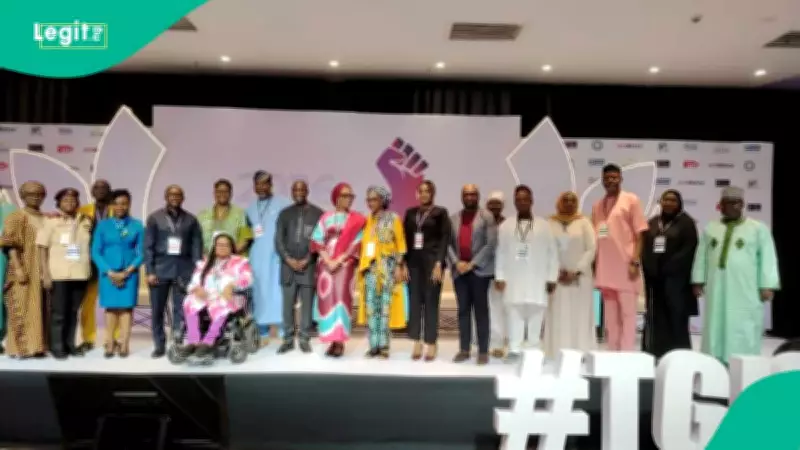
The resolution emerged on Thursday, March 5, 2026, in Abuja during the 5th Transformative Gender Justice Conference. The event was organized by Christian Aid in collaboration with the Side-by-Side Movement and the African Centre for Leadership, Strategy and Development, alongside partners including PLAN International Nigeria, Inclusive Friends, Yar'adua Foundation, ACT Alliance, and JONAPWD.
Dr. Adedayo Benjamins-Laniyi, the pioneer Mandate Secretary of the Women Affairs Secretariat in the Federal Capital Territory (FCT), addressed the gathering. Speaking on the theme "Unlocking Women's Economic Power: The Government's Pathway to Gender-Responsive Financial Inclusion," she stressed that gender justice requires critical consideration of the economic architecture. This architecture must address access for empowerment and redesign systems to ensure inclusivity.
"Nigerian women are economically active, but many remain financially excluded," Benjamins-Laniyi lamented. She highlighted that women face exclusion from formal credit, asset ownership, scalable enterprise support, and policy conversations that shape economic frameworks.
Call for Strategic Women's Policy Framework
The gender activist called for a Women's Policy Framework that would move women's issues from scattered interventions to coordinated, measurable, and accountable systems reform. According to her, this policy "will not only be symbolic. It will be strategic, data-informed, and economically grounded." She emphasized that economic empowerment must be institutionalized rather than improvised.
"When a woman has access to finance, she negotiates differently. When she controls assets, she influences differently. When she scales her enterprise, she transforms her household and her community," Benjamins-Laniyi stated, underscoring the transformative power of economic independence.
Nigeria Lagging in Gender Indices
Dr. Otive Igbuzor, the founding Executive Director of the Centre, also spoke at the event, noting that when women participate in governance, there is increased acceleration of development. However, he lamented that Nigeria is lagging behind in fully engaging the potential of women in politics and the economic space.
"Nigeria is faring very poorly in gender indices," Igbuzor stated while speaking with newsmen. He stressed that for the country to experience accelerated development, deliberate efforts must be made to empower women politically and economically.
"My message to the citizens is that they should recognize that gender justice is not a favor done to women. To men is that men should be part of correcting the gender injustice against women. It's not a question of whether it is necessary. It is an imperative," Igbuzor emphasized, calling for collective action.
Male Feminists Network Initiative
The conference also highlighted ongoing initiatives to combat gender-based violence. Recall that over 3,200 Nigerian men were trained as feminist allies through the Male Feminists Network project, which aims to empower men in dismantling patriarchy in Nigeria. This initiative launched the world's first online course for Male Feminism and GBV prevention.
The African Centre for Leadership, Strategy and Development launched the Male Feminists Network (MFN) to mobilize men in the fight against gender-based violence. Igbuzor noted that the MFN will train 1,000 male leaders and build a network of 10,000 certified male feminists to champion equality. Women leaders, including Dr. Margaret Fagboyo, hailed the initiative as a transformative step toward building an inclusive society.
Participants at the conference stressed that gender justice is essential for national development and requires the involvement of men as allies. The call for government action on social protection and economic independence for women remains a critical issue as Nigeria seeks to address gender disparities and promote inclusive growth.




