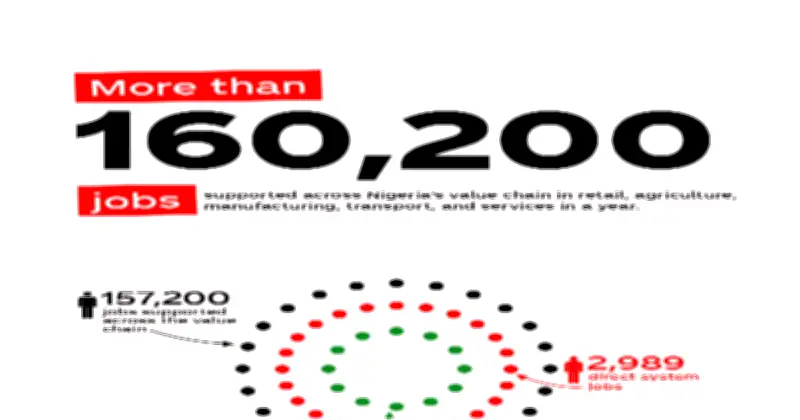
The Coca-Cola System in Nigeria supported over 160,200 livelihoods and added $1 billion to the country's economy in a single year, according to a 2024 Socio-Economic Impact study commissioned by the Coca-Cola System and conducted by global consultancy Steward Redqueen.
The study found that the system paid $601 million to local Nigerian suppliers and directly employed 2,989 people. The remaining 157,200 jobs were supported across the wider value chain, including retailers, distributors, truck drivers, farmers, and restaurant owners.
Job Multiplier Effect
For every one direct job created by the Coca-Cola System in Nigeria, it supports 53 more jobs across the economy, the study revealed. This multiplier effect extends to neighbourhood shops that stock Coca-Cola products, vendors selling from coolers, and maintenance officers who repair chillers.
Coca-Cola first arrived in Nigeria in 1951, and the company has since built a business that now touches everyday Nigerian livelihoods, from market stalls in Lagos to boreholes in Borno State.
Local Sourcing and Recycling Initiatives
The Coca-Cola System sources most of its ingredients and packaging locally, meaning the $601 million paid to Nigerian suppliers circulates within Nigerian agriculture, manufacturing, and logistics sectors rather than being exported.
The Apapa Packaging Collection Hub, launched in 2025 as part of Coca-Cola's push toward a circular economy, processes up to 13,000 metric tonnes of PET plastic annually and is expected to support about 1,000 informal waste collectors. The system has also supported several recycling initiatives across the country that have helped communities become cleaner and transformed lives economically.
Water and Sanitation Projects
In Borno State, the Coca-Cola Foundation's S-WASH initiative has reached more than 16,000 people in six communities with improved water, sanitation, and hygiene services, including boreholes, handwashing stations, healthcare facilities, and schools. Women have been trained as hygiene promoters, and youth as maintenance artisans.
For 25 communities dependent on the Otamiri River in Imo State as their water source, the system has helped ensure improved water access and security. The system restored over 15,000 cubic meters of riparian buffers along the riverbanks to guard against pollution and enhance natural filtration, impacting an estimated 2.5 million people. The project has incorporated modern asset management practices into the operational frameworks of local community committees and the Imo State Water Board.
Future Investment Plans
The Coca-Cola System has announced plans to invest $1 billion in Nigeria over the next five years, hinged on a stable economic environment. There is also a $25 million Africa-wide water initiative running through 2030, covering 20 markets, including Nigeria.
With a single year supporting more than 160,000 jobs and generating $1 billion in economic activity, the scale of the Coca-Cola System's impact across Nigeria is expected to grow over time.