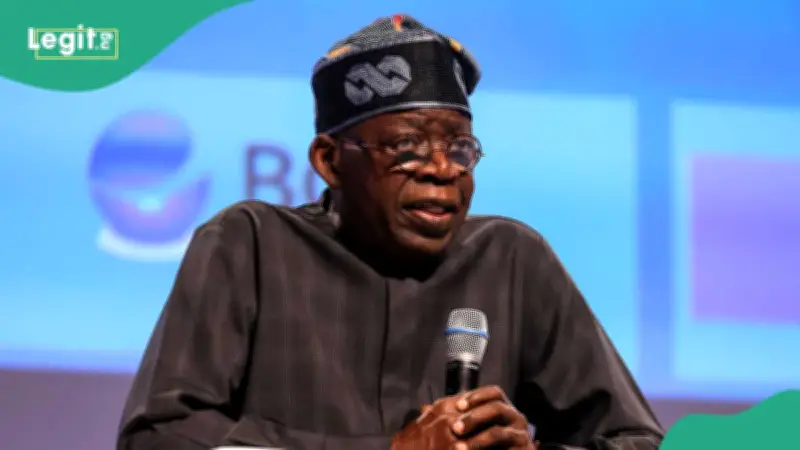
President Bola Tinubu announced on Saturday, September 19, 2026, that transport fares have fallen by between 31% and 81% in seven states and the Federal Capital Territory (FCT) following the rollout of compressed natural gas (CNG) and electric buses. The president shared the figures on his official X account alongside an infographic titled “Cheaper transport, real savings,” citing state governments and the Presidential Initiative on CNG and Electric Vehicles (PI-CNG & EV) as sources.
Steepest Fare Reductions Recorded in Borno and Oyo
Borno recorded the largest reduction among the states cited. On routes where commercial operators charge between N300 and N600, CNG-powered and electric buses now charge N50 to N100. In Oyo, CNG buses operating under Pacesetter Transport reduced the Lagos-Ibadan fare from about N8,000 to N3,200 during the initial deployment, a 60% reduction.
Adamawa also recorded up to a 50% reduction, including a route where fares fell from N8,000 to N4,000. In Enugu, 100 CNG buses have been deployed, with the Enugu-Nsukka fare falling from N2,500 to N1,500, a 40% reduction. Niger State commuters on the Suleja-Abuja route now pay N550 instead of about N800, representing a 31% reduction.

Plateau and Abia Expand CNG and Electric Bus Services
In Plateau, government-supported buses carry about 13,000 commuters daily for N200, compared with more than N500 charged by private operators. Abia has also deployed 40 electric buses with fares subsidised by 50%. Tinubu said these are not projections, adding, “These are not projections. Nigerians are already experiencing these savings.”
In Abuja, a partnership with the National Union of Road Transport Workers has produced a 40% reduction on several routes. The Area 1-Gwagwalada fare fell from N1,500 to N900, while the Nyanya route dropped from N700 to N420. The Wuse fare declined from N400 to N240.
National Expansion and Conversion Milestones
Tinubu said other states were also expanding alternative-energy transport. Edo has 50 CNG buses in active service, while Kano has converted more than 1,000 commercial vehicles. Delta, Kwara and Lagos are expanding CNG transport services, while Akwa Ibom has received 50 CNG buses. Nasarawa has more than 30 CNG buses, alongside a conversion centre and refuelling station, Punch reports.
Tinubu said more than 120,000 vehicles had been converted to CNG, while Nigeria now has over 400 certified conversion centres and more than 90 refuelling stations. He said governors agreed on August 27 that measurable fare reductions should reach more Nigerians from October 1.
Economic Gains Yet to Improve Living Standards
Earlier, Legit.ng reported that the Centre for the Promotion of Private Enterprise (CPPE) has said the economic gains recorded under President Tinubu's reform programme have not yet translated into better living conditions for ordinary Nigerians. CPPE Chief Executive Officer, Dr Muda Yusuf, acknowledged improvements in key economic indicators, including government revenues, foreign exchange market stability, external reserves, trade surplus and investor confidence.
According to Yusuf, Nigeria’s real Gross Domestic Product growth rose to 3.89% in the first quarter of 2026. The fare reductions are part of the government's efforts to ease transportation costs, with further measurable reductions expected from October 1.