The modern nation of Nigeria was shaped by colonial actions rather than ancient discovery. In 1897, British journalist Flora Shaw suggested the name Nigeria, and in 1914, Lord Frederick Lugard merged the Northern and Southern protectorates into one country. These two events form the core answer to who discovered Nigeria as a country.
Who coined the name Nigeria?
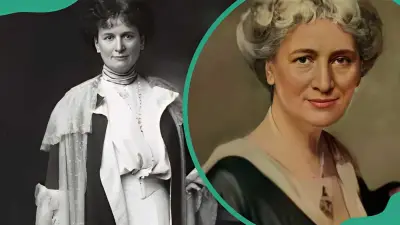
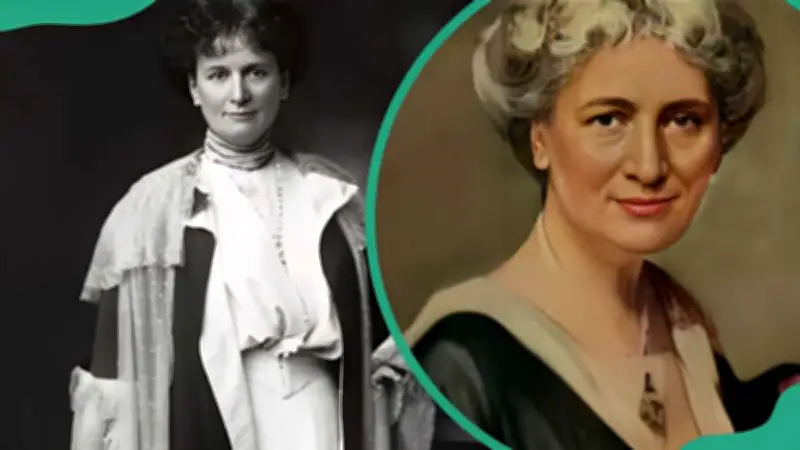
The United Kingdom’s National Portrait Gallery and an essay published by The Times on 8 January 1897 trace the origin of the term "Nigeria" to British journalist Flora Shaw, who was a colonial editor of The Times. She later became known as Lady Lugard after marrying Lord Fredrick Lugard, a British administrator. Shaw is said to have coined the name from "River Niger Area," a term British colonialists used for the region. She combined "Niger" and "Area" to create "Nigeria."
In the 1897 article, Flora Shaw wrote: "The name Nigeria applying to no other part of Africa may without offence to any neighbors be accepted as coextensive with the territories over which the Royal Niger Company has extended British influence, and may serve to differentiate them equally from the colonies of Lagos and the Niger Protectorate on the coast and from the French territories of the Upper Niger."

Who first discovered Nigeria?
Scholars argue that Flora Shaw may not have been the first to use the term. A book published in 1862, Life in the Niger by William Cole, mentioned "Nigerians" in two places, including a description of "his trip with five Nigerians." This publication came 31 years before Shaw's 1897 article. Additionally, Richard Burton, a British explorer and writer, used the term "Nigerian" in his 1863 article My Wanderings in West Africa: A Visit to the Renowned Cities of Warri and Benin. Burton wrote: "The skin is mostly black; some, however, are fair and reddish, a thing everywhere to be observed among Nigerian tribes."
Despite this evidence, authentic historical records show that Lord Frederic Lugard, Governor General of both the Northern and Southern Protectorates, adopted the name Nigeria 17 years after Shaw published her article. He used the term when he fused the Southern Nigeria Protectorate and the Northern Nigeria Protectorate in 1914.
What was Nigeria called before it was Nigeria?
Before Flora Shaw allegedly suggested the name Nigeria, the region around the Niger was called the "River Niger Area," "Royal Niger Company Territories," "Niger Empire," "Central Sudan," "Niger Sudan," and "Hausa Territories."
Who discovered the River Niger?
Scottish explorer Mungo Park discovered the River Niger. He travelled overland from the Gambia in 1795 and reached the Niger near Ségou in July 1796, establishing that the river flowed eastward.

Facts about Flora Shaw (Lady Lugard)
- She was born on 19 December 1852 in Woolwich, England.
- Her full name was Dame Flora Louise Shaw.
- She was a British journalist and writer.
- Flora served as an editor at The Times.
- She wrote five novels, four for children and one for young adults (1878–1886).
- In 1886, she participated in the Brussels conference on the struggle against slavery, as the only female representative.
- She married Lord Frederic Lugard on 10 June 1902; the couple had no children.
- Flora accompanied Lugard when he served as Governor of Hong Kong (1907–1912) and Governor-General of Nigeria (1914–1919).
- In 1928, Lugard was named Baron, and she became Lady Lugard.
- During the First World War, she founded the Lady Lugard Hospitality Committee and helped establish the War Refugees Committee for Belgian refugees.
- In 1918, she was appointed Dame Commander of the Order of the British Empire.
- Flora died of pneumonia on 25 January 1929 in Surrey, England, at age 76.
What is the main history of Nigeria?
Nigeria’s history begins with ancient kingdoms and empires such as Nok, Benin, and Oyo. These societies built strong trade networks, advanced art, and cultural traditions. Colonial influence arrived in the 19th century. In 1914, Lord Frederick Lugard united the Northern and Southern protectorates, starting the history of Nigeria from 1914 to the present day. Nigeria gained independence from Britain in 1960. Since then, it has faced military rule, civil war, and eventually returned to democracy in 1999.
How old is Nigeria since its independence?
Nigeria gained independence from Britain on October 1, 1960. This makes the country 65 years old in 2025. Every year on October 1, Nigerians celebrate Independence Day.
Where is Nigeria located?
Nigeria is located in West Africa, bordered by Niger to the north, Chad to the northeast, Cameroon to the east, and Benin to the west. To the south, it has a coastline along the Atlantic Ocean, specifically the Gulf of Guinea.
Where are Nigerians originally from?
Nigerians are originally from diverse ethnic and cultural groups. The three largest ethnic groups are the Hausa-Fulani in the north, the Yoruba in the southwest, and the Igbo in the southeast. There are also many other groups, such as Tiv, Kanuri, Ibibio, and Edo. This diversity explains Nigeria’s nickname as the "Giant of Africa."
Who were the first Nigerians?
Long before the 15th century, the Igbo Kingdom of Nri, Benin Kingdom, Yoruba city-states (including the Kingdom of Ife), Hausa States, Igala Kingdom, and Nupe lived around the Niger River. During the pre-colonial period (16th to 18th centuries), powerful West African kingdoms like the Oyo Empire, Kanem-Bornu Empire, Hausa-Fulani Kingdoms, and the Igbo kingdom of Onitsha dominated the region.
Who explored Nigeria?
João de Santarém, Lopo Gonçalves, Pero Escobar, Fernão do Pó, and other Portuguese explorers explored West Africa in 1472 while seeking a sea route to Asia. They established trade with the Benin Kingdom, Lagos, and other coastal regions. Scottish explorers like Mungo Park explored between the 1700s and early 1800s. By that time, the Portuguese had developed an organised slave trade and exported over 3.5 million Africans, mainly to America.
When was the first slave trade in Nigeria?
The Transatlantic Slave Trade began in the late 15th century in Nigeria. Traders from European ports set out towards Africa's west coast, where they bought people in exchange for goods. Most enslaved people were sold to work on plantations in Brazil and the Caribbean; a smaller percentage went to North America and other parts of South and Central America. The voyage across the Atlantic, known as the Middle Passage, generally took 6 to 8 weeks.
When did the British first go to Nigeria?
British influence in the Niger River region began with the prohibition of the slave trade to British subjects in 1807. British forces occupied Lagos in 1851 and formally annexed it in 1865. After the 1884 Berlin conference, where Africa was divided among European powers, Nigeria was colonised by the British. The country became a British protectorate in 1901, and Africans were forced to adopt Western education, learn English, convert to Christianity, export cash crops, use new forms of money, and adopt modern transportation and communication methods.
Who sold Nigeria to the British?
Nigeria was not sold in the literal sense. The British gradually took control through treaties, conquest, and colonisation. Local rulers sometimes signed trade or protection agreements with the British in exchange for weapons, money, or power. These agreements, combined with military force, allowed Britain to dominate the region and eventually unify it as a single colony.
When did Nigeria gain independence from the UK?
The colonisation period lasted until 1 October 1960, when Nigeria gained independence. Today, 371 tribes are in the Federal Republic of Nigeria, and they speak over 500 languages. English is the official language countrywide, including schools. The story of Nigeria’s creation is tied to both naming and unification: Flora Shaw gave the country its name in 1897, and Lord Lugard completed the amalgamation in 1914.