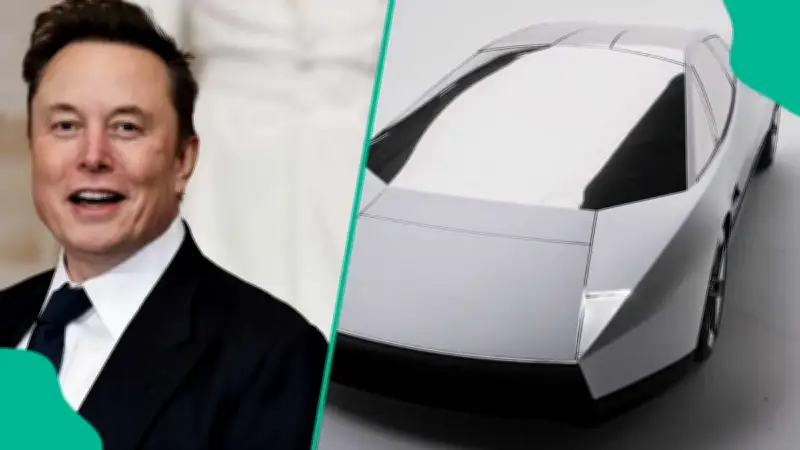
Elon Musk is associated with nine major business ventures, including Zip2, PayPal, SpaceX, Tesla, Starlink, Neuralink, The Boring Company, xAI, and the Tesla Roadster. On Thursday, October 15, 2026, Tesla unveiled a redesigned Roadster fitted with rocket-style thrusters developed with SpaceX. The demonstration showed the car briefly lifting into the air, turning, and landing. Tesla said production would begin in 2028, although the demonstration did not establish that the vehicle could sustain long-distance flight like an aircraft.
Zip2 and PayPal: Early Digital Foundations
Musk co-founded Zip2 with his brother, Kimbal, in 1995. The company provided online business directories, city guides, and maps that helped newspapers establish a presence on the internet. Compaq acquired Zip2 in 1999 in a deal worth more than $300 million, giving Musk funds to pursue other ventures. The company helped commercialise digital directories but did not invent online mapping.
In 1999, Musk founded X.com, an online financial services company. It later merged with Confinity, which operated a digital payment service, and the combined business became PayPal. eBay acquired PayPal in 2002 for $1.5 billion in stock. Musk was among its largest shareholders, and the proceeds helped finance subsequent investments.
SpaceX and Tesla: Reusable Rockets and Electric Vehicles
Founded by Musk in 2002, SpaceX aims to reduce space transportation costs. Its Falcon 9 rockets use reusable boosters that return to Earth and land after launch. The company also developed the Dragon spacecraft for transporting cargo and astronauts. Its Starship programme targets missions involving Earth orbit, the Moon, and Mars.
Musk joined Tesla as an early investor in 2004 and became chief executive in 2008. The company introduced the Roadster in 2008 before expanding its lineup to include the Model S, Model X, Model 3, and Model Y. Tesla did not invent electric cars. Its contribution has been commercialising electric vehicles, battery technology, charging infrastructure, and driver-assistance systems at scale. It also develops energy storage products.
Starlink, Neuralink, and The Boring Company
Starlink is SpaceX's satellite internet service, designed to provide broadband connectivity in areas with limited or unreliable conventional infrastructure. It uses satellites in low Earth orbit and ground terminals to connect users, offering an alternative to internet services dependent on extensive terrestrial networks.
Founded in 2016, Neuralink develops technology intended to connect the human brain with computers and other devices. Its implants record neural activity, while software interprets signals to enable device control. The company aims to help people with paralysis interact with digital technology. However, brain-computer interfaces remain an evolving field, with important questions surrounding safety, privacy, and long-term effects.
Musk founded The Boring Company to develop tunnels and alternative transport routes beneath congested cities. One of its projects, the Vegas Loop, uses underground tunnels and vehicles to transport passengers between destinations. The approach seeks to create additional transport capacity without relying entirely on surface roads.
xAI, Grok, and the Flying Car Ambition
Musk founded xAI in 2023 to develop artificial intelligence systems. Its product, Grok, is an AI assistant associated with his social media platform, X. The company competes in a market where AI systems are used to answer questions, generate content, analyse information, and assist with everyday tasks.
Unveiled on October 15, 2026, the redesigned Roadster features rocket-style thrusters developed with SpaceX. During the demonstration, the vehicle lifted briefly into the air, turned, and landed. Tesla said production was planned for 2028. However, the demonstration showed short airborne manoeuvres rather than sustained flight over long distances. From digital payments to rockets and artificial intelligence, Musk's ventures span several industries. While he has helped lead and finance major technological developments, many of the resulting innovations reflect the work of engineers, scientists, and teams beyond Musk himself.