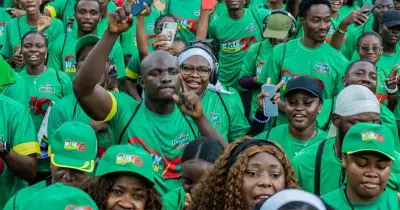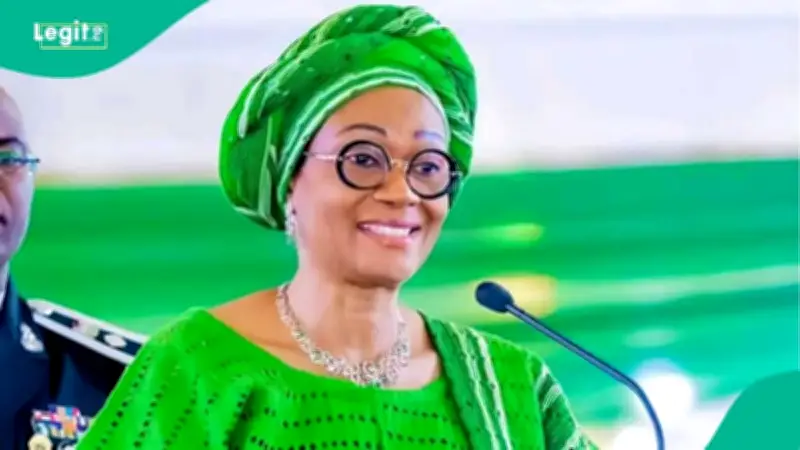
First Lady Oluremi Tinubu has launched a N2 billion Learners Retention Support Programme that will provide N20,000 each to 100,000 girls in its first phase, alongside the distribution of two million packs of sanitary towels to girls in public basic education schools across Nigeria.
The flag-off ceremony took place at the State House Conference Centre, Abuja, to mark the International Day of the Girl Child 2026, according to The Punch. Mrs Tinubu declared that no Nigerian girl should be denied access to education because of menstrual hygiene challenges or her family's inability to afford basic school materials.
N2bn Programme Targets 100,000 Girls Nationwide
Under the N2 billion programme, each of the 100,000 beneficiaries in the first phase will receive N20,000 to help remove financial barriers to school attendance and retention. The distribution covers all 36 states and the Federal Capital Territory.
The current exercise, tagged "Flow with Confidence 2.0," builds on the first Flow with Confidence initiative launched by her Renewed Hope Initiative on October 2, 2025, when a year's supply of disposable sanitary pads was given to 370,000 schoolgirls in rural communities. The current programme is being implemented by the Universal Basic Education Commission (UBEC).
Addressing Menstrual Hygiene and Stigma
"Keeping our girls in school requires us to recognise and address the challenges that affect their education, especially those in rural communities, who often miss school because they do not have access to sanitary products," Mrs Tinubu said.
She charged governors' wives, education commissioners and chairmen of State Universal Basic Education Boards to ensure transparent and accountable distribution of the materials. She also urged traditional rulers and religious leaders to challenge the stigma surrounding menstruation.
UBEC and Ministers Pledge Sustained Support
Education Minister Dr Tunji Alausa said UBEC would make provision for sanitary towels in its annual budgets, while the World Bank-supported Adolescent Girls Initiative for Learning and Empowerment (AGILE) would sustain menstrual hygiene support throughout the life of that project. He noted that the earlier target of reaching 370,000 girls had been met and that the latest round would extend the programme's reach further.
UBEC Executive Secretary Aisha Garba said the two million packs would be distributed alongside school bags, shoes, exercise books, mathematical sets and writing materials. She added that UBEC had built more than 4,000 classrooms in under three years, distributed learning materials to over three million pupils and returned more than 700,000 out-of-school children to formal education.
Dropout and Early Marriage Link
UBEC Governing Board Chairman Tanko Al-Makura warned that girls from poor households are often the first to lose access to schooling when families face hardship, drawing a direct link between school dropout and early marriage.
"A girl rarely leaves school on the day she is married. She leaves weeks and months before, one missed day at a time, until there is nothing left to hold her," he said.
Education Lead at the British High Commission, Ian Attfield, said UK-supported programmes had helped more than 1.5 million additional girls access schooling in northern Nigeria since 2012. He highlighted the $1.2 billion AGILE programme, which is expanding secondary school access for girls across 21 states.
In a related development, the federal government unveiled the $1 billion Household Prosperity and Economic Social Protection Project (HOPE-SP) in Abuja. Minister Bernard Doro said the project marks a shift away from temporary palliatives toward coordinated, sustainable support for vulnerable Nigerians. A new national system called OHOPRS will bring humanitarian response and poverty reduction under one unified framework for the first time.