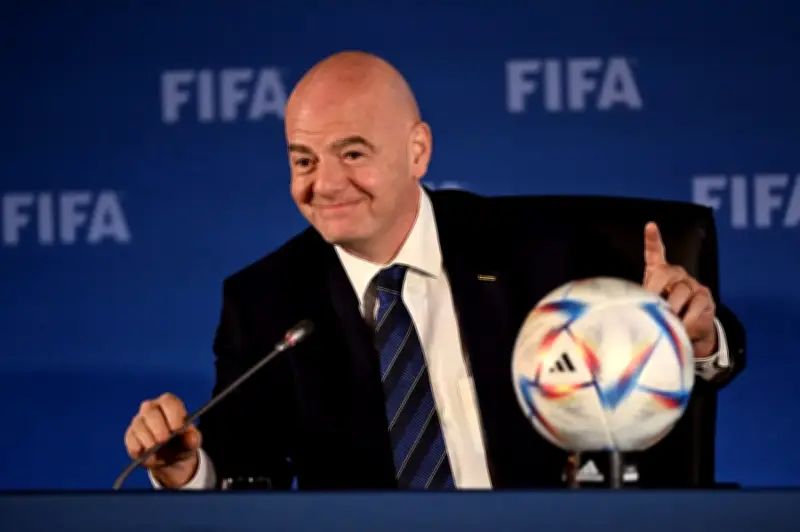
FIFA has proposed the creation of a new $20 billion commercial arm designed to centralize the sale of media and marketing rights for all its tournaments, a move that has drawn sharp criticism from UEFA over governance and transparency concerns. The proposal, revealed in a confidential document circulated to member associations, aims to pool commercial assets such as World Cup broadcasting rights and sponsorship deals into a single entity controlled by the world football governing body.
Details of the FIFA Commercial Entity
According to the proposal, the new commercial vehicle would manage all FIFA tournament rights for the next decade, with projected revenues of up to $20 billion over a 10-year cycle. FIFA argues that centralization would streamline negotiations, maximize revenue, and ensure equitable distribution among its 211 member associations. The entity would replace the current system where individual tournaments are marketed separately, often through external agencies.
FIFA President Gianni Infantino has championed the plan, stating that it would “unlock the full potential of FIFA’s competitions” and provide a stable financial foundation for global football development. The proposal includes a governance structure where FIFA retains majority control, with minority shares potentially offered to private investors or regional confederations.
UEFA Raises Governance Red Flags
UEFA, the governing body of European football, has expressed serious reservations. In a letter to FIFA, UEFA President Aleksander Ceferin warned that the plan could concentrate excessive power in FIFA’s hands, undermining checks and balances. “We have serious concerns about the concentration of power and lack of transparency in this proposed structure,” Ceferin wrote. “Such a move risks creating a conflict of interest, as FIFA would both regulate the sport and control its primary revenue stream.”
UEFA also fears that the centralization could marginalize regional confederations and their own commercial rights, particularly for European competitions like the Champions League, which are not part of the FIFA proposal. The European body argues that the new entity might prioritize FIFA’s interests over those of member associations, potentially reducing funds available for grassroots development.
Reactions from Other Confederations
The six confederations are divided. The Asian Football Confederation (AFC) has signaled tentative support, viewing the plan as a way to increase revenue for developing nations. Meanwhile, the South American CONMEBOL has raised concerns similar to UEFA’s, demanding clearer safeguards. The African Football Confederation (CAF) has not yet taken an official stance but has indicated interest in the potential funding boost.
Several national federations, particularly from smaller countries, see the initiative as a means to secure more predictable income. “For us, a guaranteed share of $20 billion would transform football in our country,” said an anonymous official from a lower-ranked FIFA member. “But we need to ensure the governance is right.”
Timeline and Next Steps
FIFA has scheduled a special congress for later this year to vote on the proposal. A two-thirds majority of member associations is required for approval. If passed, the commercial arm could begin operations as early as 2027. However, UEFA has hinted at legal challenges if the plan proceeds without substantial reforms.
The proposal comes amid broader debates about FIFA’s financial practices. Critics point to past controversies, including corruption scandals and opaque accounting, as reasons for caution. Proponents counter that a centralized model is common in other sports leagues, such as the NFL and NBA, and has proven effective.
Impact on the Football Economy
If implemented, the $20 billion entity would reshape football’s commercial landscape. FIFA currently earns roughly $7 billion per World Cup cycle; the new entity would bundle rights for all tournaments, including the Women’s World Cup, Club World Cup, and youth competitions. Analysts estimate that centralization could increase overall revenue by 15-20%, but warn that it may also reduce competition among broadcasters and sponsors.
The controversy highlights the ongoing tension between FIFA’s role as a regulator and its commercial ambitions. As the vote approaches, all eyes are on whether UEFA can rally enough opposition—or secure concessions—to alter the proposal’s trajectory.