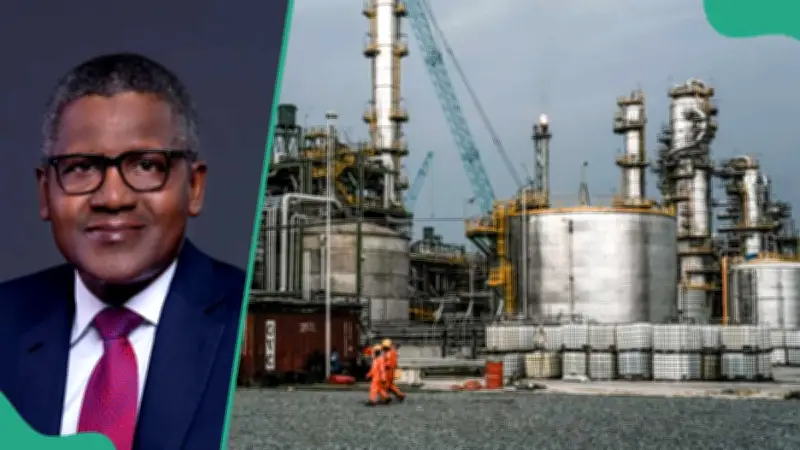
Nigeria currently operates more than ten oil refinery facilities across different regions, ranging from large NNPC plants to smaller modular operations. Several NNPC refineries have completed rehabilitation investments but are yet to reach full, consistent production capacity. Private refineries, including Dangote and smaller modular plants, are contributing to Nigeria's refining landscape alongside state-owned facilities.
Refining Landscape in 2026
Nigeria's refining industry is undergoing significant changes, with major refineries either operating, undergoing rehabilitation, restarting operations, or under construction as the country seeks to increase domestic petroleum production. Data from the OPEC Annual Statistical Bulletin 2026, the Nigerian Midstream and Downstream Petroleum Regulatory Authority (NMDPRA) June 2026 Fact Sheet, and company research showed the status and capacities of major refining facilities across Nigeria.
The facilities range from the 650,000 barrels per day (bpd) Dangote Petroleum Refinery to smaller modular refineries with capacities of about 1,000bpd. This diversity reflects a mix of large-scale industrial projects and smaller, flexible units designed to serve local markets.

Major Refineries and Their Status
1. Dangote Petroleum Refinery – 650,000bpd
The Dangote Petroleum Refinery in Lagos State has a refining capacity of 650,000 barrels per day. The facility is currently operational and is Nigeria's largest refinery by capacity.
2. BUA Refinery – Under construction
The BUA Refinery in Akwa Ibom State is currently under construction. The project is expected to add new refining capacity to Nigeria's downstream petroleum sector when completed.
3. Port Harcourt Refinery (New) – 150,000bpd
The new Port Harcourt Refinery, operated by NNPC, is located in Rivers State and has a capacity of 150,000bpd. The facility is operating inconsistently, while rehabilitation work remains ongoing.
4. Warri Refinery and Petrochemicals – 125,000bpd
The Warri Refinery and Petrochemicals in Delta State has a capacity of 125,000bpd. Its rehabilitation investment has been completed, while the refinery is currently undergoing the process of restarting operations.
5. Kaduna Refinery and Petrochemicals
The Kaduna Refinery and Petrochemicals is located in Kaduna State. The refinery's rehabilitation has been completed, while NNPC is seeking equity partners for the facility.
6. Port Harcourt Refinery (Old) – 60,000bpd
The old Port Harcourt Refinery in Rivers State has a capacity of 60,000bpd. The rehabilitation investment for the facility has been completed.
Modular and Other Refineries
7. Escravos GTL – 33,000bpd
The Escravos Gas-to-Liquids (GTL) facility in Delta State has a capacity of 33,000bpd. The facility is currently operating.
8. Azikel Petroleum – 12,000bpd
The Azikel Petroleum refinery in Bayelsa State has a capacity of 12,000bpd. The refinery is currently under construction.
9. Aradel Refinery – 11,000bpd
The Aradel Refinery, formerly known as Niger Delta Refinery, is located in Rivers State and has a capacity of 11,000bpd. The facility is currently operating as a modular refinery.
10. Waltersmith Refinery – 5,000bpd
The Waltersmith Refinery in Imo State has a capacity of 5,000bpd. The facility is currently operating as a modular refinery.
11. OMSA, Pillar and Astek (OPAC) – 10,000bpd
The OMSA, Pillar and Astek (OPAC) facilities in Delta State have a combined capacity of 10,000bpd. The facilities are currently operating as modular refineries.
12. Edo Refinery and Petrochemicals – 1,000bpd
The Edo Refinery and Petrochemicals in Edo State has a capacity of 1,000bpd. The refinery is currently operating.

Petrol Landing Cost and Market Context
Earlier, Legit.ng reported that Nigeria's cost of importing petrol has climbed to N1,420 per litre. The figure, which reflects the estimated cost of bringing Premium Motor Spirit (PMS) into Nigeria, including the international product price, shipping, insurance, and related charges, now sits N70 above Dangote Petroleum Refinery's current gantry price of N1,350 per litre.
This cost differential highlights the ongoing challenges in Nigeria's downstream sector, as the country continues to balance domestic refining capacity with import needs. The operational status of these refineries will play a critical role in shaping Nigeria's fuel supply and pricing in the coming months.