Across Nigeria today, millions of citizens are building businesses, accessing services, creating jobs, and unlocking opportunities through technology. From digital payments and e-commerce to healthcare platforms, education tools, logistics systems, and enterprise solutions, technology is increasingly shaping how Nigerians live, work, and participate in the economy. Behind every digital solution lies a critical foundation: infrastructure. Reliable data storage, cloud computing capacity, secure connectivity, and resilient digital systems have become essential drivers of modern economic growth and national competitiveness.
Today, however, the stakes have risen dramatically. The world is in the midst of a race, not for oil or minerals, but for compute: the processing power that trains artificial intelligence, runs digital economies, and increasingly determines which nations lead and which follow in the twenty-first century. Without these foundations, innovation cannot scale efficiently, businesses face higher operating costs, and economies risk being left behind in an AI-driven global order.
At the Nigeria Sovereign Investment Authority (NSIA), we recognise that investing in infrastructure today must also mean investing in the digital and artificial intelligence foundations of tomorrow's economy. As Nigeria's sovereign investment institution, NSIA's mandate is anchored on creating long-term value through strategic investments that strengthen economic resilience, unlock opportunity, and support sustainable national development. Increasingly, technology is central to that mandate – not merely as a standalone sector, but as a cross-cutting enabler of productivity, inclusion, innovation, and enterprise across the broader economy.
NSIA's long-term investment horizon enables the Authority to participate in strategic sectors where patient capital and institutional credibility are required to unlock transformational infrastructure and innovation opportunities. This strategic direction informs NSIA's approach to digital infrastructure, innovation support, and technology-focused capital deployment through initiatives such as the KASI Hyperscale Data Centre, the NSIA Prize for Innovation (NPI), the NSIA–JICA Impact Investment Fund, and the Future Generations Fund's exposure to venture capital and private equity managers investing in high-growth technology businesses.
KASI Hyperscale Data Centre: Building Nigeria's Digital Infrastructure Backbone
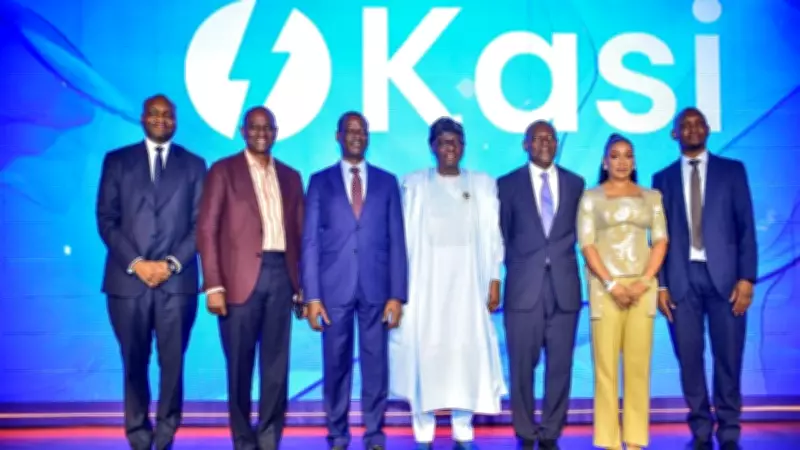
The KASI Hyperscale Data Centre is an indigenous, large-scale digital infrastructure platform providing co-location, cloud computing, storage, virtualisation, AI workload processing, high-performance GPU compute capabilities, and disaster recovery services to enterprises across critical sectors including financial services, telecommunications, healthcare, education, and government. Designed to function as Nigeria's first AI factory, KASI will house the GPU clusters that power artificial intelligence, the same hardware that trains large language models, runs medical diagnostic tools, enables fraud detection systems, and drives smart logistics platforms.
KASI was conceived to address the gap in the market where financial sector players, government institutions, and e-commerce companies continue to spend significant FX resources for offshore data computing and storage services. Upon full development, the KASI campus is expected to comprise multiple facilities with a combined capacity of approximately 100MW, positioning it among the largest hyperscale and AI-ready data centre developments in Africa. Designed in line with global hyperscale infrastructure standards, the project reflects the scale of investment required to support Nigeria's transition toward a data-driven, AI-enabled economy.
Globally, the intersection of compute infrastructure and artificial intelligence is increasingly recognised as a primary driver of economic growth. Nations investing deliberately in AI-ready infrastructure are pulling ahead, attracting foreign direct investment, fostering high-value innovation clusters, and creating quality employment that young populations urgently need. The KASI hyperscale data centre in Lagos will provide the much-needed technology backbone to meet local as well as international demand from global hyper-scalers such as Google, Amazon, and Meta, as well as banks, insurance companies, and a wide range of companies in Nigeria.
While data centres are often viewed as highly technical assets, their economic impact is both broad and transformational. They power secure financial transactions, enable digital public services, support enterprise efficiency, strengthen cybersecurity resilience, and provide the infrastructure upon which modern innovation and AI ecosystems are built. With KASI's AI compute capabilities, Nigerian fintech companies will be able to build and run AI-powered credit scoring models without routing sensitive customer data through foreign servers. Healthcare institutions can develop diagnostic tools trained on Nigerian patient populations. The agricultural sector can access precision analytics and smart supply chain optimisation. Security agencies gain access to AI-assisted threat detection capabilities. These are not hypothetical possibilities; they are near-term realities made possible by locally hosted AI infrastructure.
For millions of Nigerians, however, the impact of digital infrastructure is experienced in practical everyday ways: faster digital payments, more reliable banking services, improved access to online education and healthcare platforms, better connectivity for businesses, and greater opportunities for entrepreneurs building technology-enabled solutions. As more economic activity moves online, the strength of a nation's digital infrastructure increasingly shapes the quality of opportunity available to its citizens.
Consistent with the Authority's focus on catalytic investments to enable socio-economic advancement and through the investment in KASI Hyperscale Data Centre, NSIA is focused on enabling faster and more reliable digital services across industries, attracting foreign direct investments by creating local infrastructure for global cloud and technology firms, import substitution and foreign exchange savings by reducing reliance on offshore data hosting and cloud services, direct and indirect job creation in construction, operations and across the wider digital ecosystem, revenue expansion through new enterprise activity enabled by digital infrastructure, as well as startup and SME scaling by lowering the cost and barriers to digital innovation.
Beyond direct infrastructure development, NSIA's investments across the technology ecosystem also contribute to the creation of high-value jobs in engineering, software development, cybersecurity, cloud services, data analytics, digital operations, and innovation-led enterprises. As Nigeria's digital economy expands and AI systems become embedded in financial services, healthcare, manufacturing, and government, the importance of locally hosted, secure, and scalable infrastructure becomes increasingly critical, not only for efficiency, but also for data sovereignty, cybersecurity resilience, and long-term national competitiveness.
Data sovereignty is no longer merely a policy aspiration; it is a strategic economic asset. Every Nigerian dataset processed on Nigerian infrastructure, under Nigerian law and regulation, is data that builds Nigerian capability rather than subsidising capability elsewhere. KASI is, fundamentally, sovereignty infrastructure. In an increasingly digital global economy, countries that control and scale their digital infrastructure are better positioned to attract investment, retain enterprise value locally, and compete effectively in global markets.
For NSIA, this investment represents a deliberate expansion of infrastructure investment into the digital and AI domain, recognising that future economic growth will be driven as much by data, compute capacity, artificial intelligence, and connectivity as by traditional physical infrastructure. Nigeria must get in front of the AI revolution, not follow behind it, and KASI is the foundational step in ensuring the country is positioned to lead rather than merely participate in the AI-driven economy of the future.
Investing in People and Innovation Ecosystems
Digital transformation is not only about infrastructure. It is equally about people. Nigeria is home to one of the most dynamic and entrepreneurial youth populations in the world. Across the country, innovators are developing solutions in financial inclusion, healthcare delivery, agriculture, education, logistics, and climate resilience. What many of these innovators require is not simply talent, but access – access to capital, mentorship, institutional support, and platforms that enable ideas to scale sustainably.
It is in recognition of this opportunity that NSIA established the NSIA Prize for Innovation (NPI), a flagship initiative designed to identify and support homegrown solutions with the potential for transformative social and economic impact. Over successive editions, the programme has supported emerging entrepreneurs through structured capacity building, mentorship, peer-learning platforms, and ecosystem engagement designed to strengthen innovation capability and improve the scalability of early-stage ventures with the potential for transformative impact.
Importantly, initiatives such as NPI are not only about supporting startups; they are about strengthening confidence in Nigerian innovation and building pathways for globally competitive solutions to emerge from within our ecosystem. NPI therefore remains one of the Authority's important platforms for expanding the Nigerian technology ecosystem, nurturing a pipeline of technology-enabled solutions to critical national challenges, supporting youth entrepreneurship, and contributing to innovation-led job creation.
Deploying Growth Capital Across the Technology Lifecycle
Beyond direct infrastructure and innovation platforms, NSIA is also addressing one of the most important constraints in Africa's technology ecosystem: the shortage of patient growth capital. Through the Future Generations Fund (FGF), NSIA has deployed capital to venture capital and private equity managers focused on high-growth technology sectors. This approach supports experienced fund managers, attracts additional institutional capital into the ecosystem, and contributes to the development of deeper private capital markets across Africa.
NSIA's investment philosophy recognises that capital must be deployed systematically across the lifecycle of growth companies. Venture capital provides early-stage support to high-potential businesses, while private equity provides the growth capital required for more mature companies to scale operations, strengthen governance, expand markets, and build long-term resilience. Through these investments, NSIA has exposure to companies operating across critical areas of the digital economy, including telecommunications infrastructure, broadband connectivity, cloud services, cybersecurity, enterprise technology, and digital platforms supporting commerce and productivity.
These investments have contributed to the deployment of critical IT infrastructure that supports enterprise growth, digital adoption, and economic participation. They have also provided NSIA with valuable market insights and operational experience that informed the development of strategic infrastructure investments such as KASI. This reflects an important strategic advantage within NSIA's investment framework: the ability to create synergies between the Future Generations Fund and the Nigeria Infrastructure Fund. While the FGF provides exposure to technology-enabled businesses and evolving market opportunities, the Nigeria Infrastructure Fund enables direct investment into infrastructure assets that address systemic bottlenecks across the economy. Together, these platforms allow NSIA to support both the enterprises driving Nigeria's digital economy and the infrastructure required for those enterprises to scale sustainably.
Strategic Partnerships for Innovation-Led Growth
NSIA also recognises that sustainable innovation ecosystems require strong partnerships. To deepen impact and expand access to early-stage capital, NSIA partnered with the Japan International Cooperation Agency (JICA) to establish a US$50 million Impact Innovation Fund focused on supporting technology-enabled businesses addressing critical social and economic challenges across priority sectors. The Fund reflects a growing global recognition that innovation and entrepreneurship are central drivers of economic transformation, and that patient, long-term capital is essential to enabling African startups to scale sustainably.
It also addresses one of the most persistent barriers facing innovators across the continent: access to growth capital capable of supporting businesses through critical stages of scale, market expansion, and institutional development. Partnerships such as this are important because they bridge local innovation with global expertise, strengthen institutional capacity, and create broader opportunities for Nigerian entrepreneurs and businesses to compete and collaborate internationally.
Conclusion
At NSIA, we remain firmly committed to the view that strategic technology investment is ultimately an investment in people – in their ideas, their enterprises, their productivity, and their future opportunities. Whether through digital infrastructure such as the KASI Hyperscale Data Centre, innovation platforms such as the NSIA Prize for Innovation, strategic partnerships such as the NSIA–JICA Impact Innovation Fund, or the Future Generations Fund's exposure to venture capital and private equity managers backing high-growth technology businesses, our objective remains clear.
We are working to help build an ecosystem where innovation can thrive, AI capabilities can be developed and deployed on Nigerian soil, businesses can scale, institutional capital can deepen, and Nigeria can compete confidently, and lead decisively, in an increasingly AI-driven global economy. The age of artificial intelligence is not coming; it is here. And through investments like KASI, NSIA is ensuring that Nigeria is not merely a spectator but a builder, a host, and a leader in this transformational era.