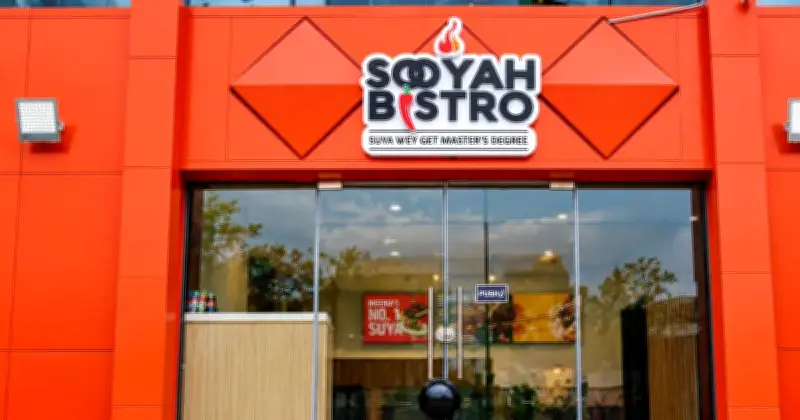
Sooyah Bistro has grown from a ₦20,000 start into a quick-service restaurant (QSR) empire valued at over ₦5 billion, according to founder insights shared in an interview with Pulse Nigeria. The company formalised Nigeria's traditional street suya, building a business that now operates more than ten branches across Lagos and Ibadan. The founder detailed how strict unit economics, private cold chains, and smart menu engineering fueled the transformation.
Spotting the Opportunity in Nigeria's Suya Market
When evaluating the Nigerian food landscape in 2018, the founder identified suya as a major consumer opportunity despite the market being largely informal and fragmented. Suya was the nation's most widely consumed street delicacy, yet it remained confined to an informal market marked by unpredictable hygiene, evening-only hours, and inconsistent quality. The founder recognised that street food did not need to stay tethered to roadside stalls, as an expanding urban consumer class wanted authentic flavours in clean, dependable environments.
By deconstructing the core flavour profile through proprietary yaji blends and smoking methods, Sooyah Bistro moved beyond newspaper-wrapped skewers into an expansive culinary category featuring suya burgers, wraps, bowls, and pasta. Tapping into substantial daytime demand for lunches, quick snacking, and corporate catering transformed a night-time street habit into a viable, all-day commercial category.
Balancing Affordability and Margins
Macroeconomic pressures like currency devaluations, food inflation, and soaring tariffs forced Sooyah Bistro to pivot from aggressive physical expansion to operational resilience and unit economics. The founder acknowledged that rising living costs affect customers' pockets, so the menu is structured so that great flavour is accessible to everyone, regardless of budget. Dining is designed to fit every rhythm of the day and every pocket.
The entry tier delivers bold, authentic flavours through everyday favourites like 3K Chow, value rice boxes, chicken suya toast, and single skewers of freshly grilled beef, chicken, or tozo suya. The mid-tier lineup includes loaded suya burgers, saucy shawarmas, cheesy melts, and smokey suya jollof bowls. Premium platters feature mega power bites, loaded chicken and chips trays, and bumper suya boxes made for feasting, catering to celebrations and gatherings.
Overcoming Structural Challenges in Nigerian QSR
Nigerian QSR operators face severe structural hurdles like unstable power, cold chain failures, high turnover, and supply chain fragmentation. Rather than waiting for external relief, resilient brands build internal defences. Sooyah Bistro protects margins against spoilage by establishing private cold chains with vacuum packaging and decentralised freezing. To counter high staff turnover and scale reliably, recipes and workflows are strictly standardised so that food quality never relies on an individual cook's memory. Automated point-of-sale systems that decrement raw ingredients in real time stop internal leakage before it erodes profitability.
Operating across Lagos and Ibadan highlights two distinct market dynamics. In Lagos, consumers prioritise convenience, ordering heavily via delivery apps to avoid traffic and spending more on premium combos. This comes with steep commercial rents, high service charges, and a fluid workforce prone to frequent job-hopping. In contrast, Ibadan diners are value-driven, favouring portion size, dine-in experiences, and communal meals. Commercial leases in Ibadan are 40 to 60 percent lower, allowing for larger seating layouts at lower capital cost, paired with a more stable, loyal workforce that reduces costly staff turnover.
Key Turning Points and Funding Strategy
Growing from ₦20,000 to an enterprise valued above ₦5 billion was driven by four key operational shifts. First, validating physical retail by moving from home pop-ups to a dedicated container outlet proved that consumers would seek out an elevated suya experience. Second, establishing a centralised commissary for butchery, spice blending, and vacuum packaging eliminated recipe variances and inventory waste across branches. Third, the brand paired third-party delivery partnerships with proprietary digital ordering channels to drive volume without the capital burden of expansive dining rooms. Finally, transitioning from founder-led operations to an experienced executive leadership team across supply chain, finance, and quality control created the governance needed for institutional scale.
Sooyah Bistro grew without selling away control by adhering to strict cash-flow discipline. For the early years of operation, nearly every kobo of operating profit was ploughed back into the company to secure kitchen machinery, fund central production, and open new locations, avoiding the temptation to draw company revenue for personal luxury. The company also pioneered low-capital modular outlets such as customised shipping containers and express pickup counters instead of sinking hundreds of millions into heavy brick-and-mortar builds, bringing payback horizons down to twelve to eighteen months.
Financial Discipline and Menu Engineering
The founder warned that long queues do not guarantee cash flow, and expanding simply because of foot traffic is a common trap. Today, Sooyah Bistro operates over ten branches because growth, sustainability, and profitability are guaranteed before opening another door. Store-level EBITDA must confirm the first branch is truly profitable after accounting for rent, power, spoilage, and labour. The payback period on fit-out costs should not exceed twenty-four months based on actual operating cash flow. Prime cost, combined food and direct labour, must sit below sixty percent of revenue; otherwise expansion simply scales losses. The new branch requires four to six months of dedicated operating reserves so it does not cannibalise the original site during ramp-up.
Increasing customer spend in a cautious economy relies on smart menu engineering rather than blunt price increases. Sooyah Bistro drives basket size through value bundles, pairing core suya items with seasoned sides and branded drinks at price points that reward diners. At checkout, low-friction add-ons like fried plantain, speciality dips, extra cheese, and extra protein cuts offer customisation whilst delivering gross margins above seventy percent. Physical boards and digital ordering screens are laid out so high-margin signature items and natural pairings capture visual attention first.
Reflecting on the journey from ₦20,000 to a business valued at more than ₦5 billion, the founder outlined three key mistakes to avoid. If restarting today, the first six months would be strictly asset-light, spending capital entirely on quality ingredients and clean packaging, cooking from home and taking pre-orders via WhatsApp and social media for office deliveries to keep fixed costs at zero. From months seven to eighteen, reinvestment would go into a shared cloud kitchen or an express pickup counter in a commercial district, partnering with local dispatch riders to build consistent delivery volume without signing expensive leases. Between months nineteen and twenty-four, supply contracts would be locked down and proprietary seasoning blends standardised before committing to a permanent site.
The core lesson for any Nigerian founder is that growth is driven by cash conversion, not hype or foot traffic. Food businesses rarely fail because the meals lack appeal; they collapse when liquidity runs dry. Protecting operating cash, understanding unit economics, and building processes that function without constant physical presence are essential for sustainable scale.