Nigeria's SEC Discloses $96 Billion Crypto Transaction Volume, Cites New Regulatory Law
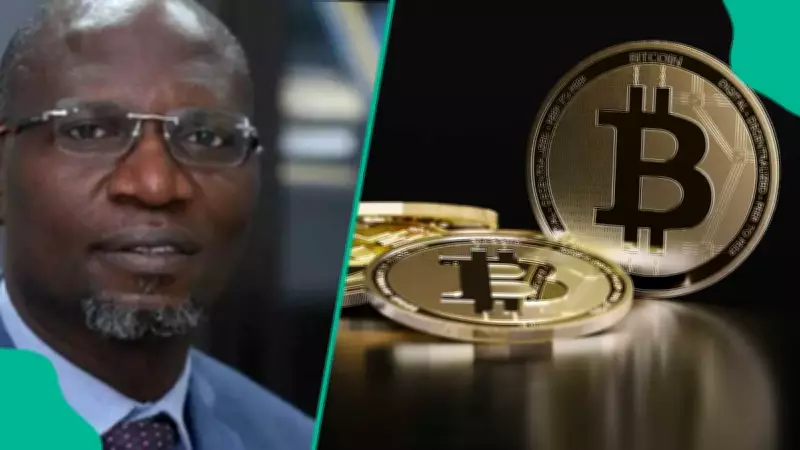
The Securities and Exchange Commission (SEC) of Nigeria has revealed that the country recorded approximately $96 billion in cryptocurrency and other virtual asset transactions, highlighting the rapid expansion of the digital finance space. This disclosure was made by Emomotimi Agama, the Director-General of the SEC, during a Citizens and Stakeholders Engagement Session organized by the Federal Ministry of Finance in Abuja on Monday, as reported by PUNCH.
Regulatory Oversight Strengthened by New Legislation
Agama emphasized that the significant scale of activity in Nigeria's digital asset ecosystem necessitates stronger regulatory oversight. He explained that the recent Investment and Securities Act 2025 has expanded the SEC's authority to regulate digital assets and other financial technologies. This law reaffirms the SEC as the apex regulator of the capital market while introducing measures to monitor systemic risks and align Nigeria with global best practices in financial regulation.
Capital Market Growth and Performance
The SEC boss noted that the Nigerian capital market continues to support investments across key sectors of the economy. In 2024, the commission approved about N3.68 trillion in new capital market issues, covering both equity and fixed income instruments. Additionally, more than 31 banks raised funds through the capital market during a recent recapitalization exercise to meet new requirements. Agama highlighted strong growth in market performance, with total market capitalization rising from about N55 trillion in 2024 to roughly N127 trillion currently. The ratio of market capitalization to GDP increased from approximately 13 percent to 33 percent, reflecting an improved contribution to the economy.
Investor Protection and Fraud Prevention Efforts
Agama stated that the SEC has intensified efforts to protect investors and sustain confidence in the market. The commission issued over 90 advisory notices warning Nigerians about suspicious investment schemes and risky financial offers. The regulator is collaborating with the Nigeria Police Force to investigate and prosecute fraudulent operators, including those behind Ponzi schemes. He warned that many victims invest through unregistered platforms promising unrealistic returns and advised Nigerians to verify investment opportunities with the SEC to avoid scams.
Infrastructure Financing and Government Initiatives
The SEC DG explained that the capital market has played a crucial role in financing infrastructure through bond issuances by state governments. Projects such as markets and stadiums have been funded via subnational bonds, with investors protected by the Irrevocable Standing Payment Order system, which ensures repayment from states' allocations. Agama added that the SEC has established an Office of Municipal Fund Development to assist state and local governments in accessing funding for grassroots projects. Furthermore, the commission supported the launch of a Mortgage Refinancing and Infrastructure Fund aimed at addressing Nigeria's housing deficit by enabling access to long-term, single-digit mortgage financing.
Government Budget Challenges and Crypto Study
At the same event, a Permanent Secretary at the Federal Ministry of Finance addressed concerns about federal budget implementation. He noted that Nigeria has struggled to meet its oil production benchmark of about 2.1 million barrels per day, while fluctuations in global crude prices have affected revenue. Although the budget benchmark was set at $75 per barrel, prices dropped below $60 at some points, reducing government income. Rising debt servicing costs and increased salary obligations have also put pressure on available funds.
In related developments, the Central Bank of Nigeria (CBN) confirmed that the federal government is studying stablecoins, digital currencies pegged to real-world assets like the US dollar or naira, as part of efforts to modernize the financial system. The CBN governor, Olayemi Cardoso, stated that the apex bank, in partnership with the Ministry of Finance and other key agencies, has set up dedicated working groups to explore a viable regulatory and operational framework for stablecoin adoption in Nigeria. This marks a potential shift from previous restrictions on cryptocurrency-related transactions in the banking sector.