Nigeria is at a stage of its development where it cannot afford to scare away capital. The country needs investors to finance factories, roads, power projects, housing, technology, agriculture, logistics and other businesses capable of creating jobs and expanding the tax base. The government cannot fund all of these investments on its own.
Nigeria's infrastructure deficit is enormous, while millions of young people enter the labour market every year. Businesses need affordable credit to expand, and the country needs foreign and domestic investors willing to commit capital for the long term. That makes the investment climate particularly important.
Investors Are Watching the Risk
Investors looking at Nigeria are not simply asking how much profit they can make. They are also asking how much risk they are taking to make that profit. A country perceived as politically stable, institutionally predictable and relatively peaceful can make a stronger case for long-term investment than one repeatedly associated with political confrontation, violence and uncertainty.
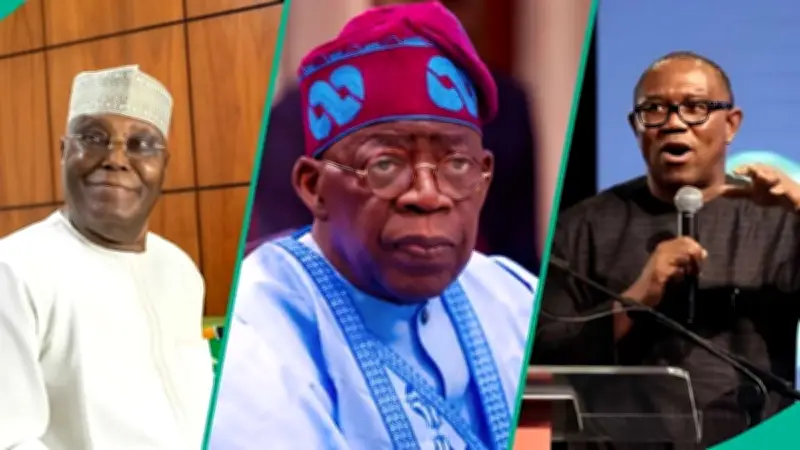
This is why the rhetoric surrounding elections matters, particularly as Nigeria approaches the 2027 general election. When political disagreements routinely produce threats, restrictions, intimidation, destruction of campaign materials or clashes between supporters, investors may interpret these events as signals of a broader risk environment.
The danger is not that every investor will immediately abandon Nigeria because of one political incident. The greater danger is cumulative.
Perception Can Influence the Cost of Capital
Nigeria's recent credit-rating upgrade by S&P Global Ratings from 'B-' to 'B', its first upgrade in 14 years, citing economic reforms, stronger external buffers and expanding domestic refining capacity is good news. This progress makes stability even more important ahead of the 2027 general election. Nigeria still remains in speculative-grade territory, meaning political uncertainty or violence could undermine efforts to attract the long-term capital needed to sustain its economic reforms.
One troubling headline may have little effect. Hundreds of stories over months and years can create a much more powerful perception of risk. And perception matters in financial markets.
If investors demand additional compensation for taking Nigerian risk, the cost is ultimately reflected in the price of capital. This means the government may pay more to borrow. Companies may face higher financing costs. Banks may become more cautious about lending. Investors may demand higher returns before committing money to long-term projects. That is particularly damaging for a country that desperately needs investment.
Nigeria's Political and Economic Challenges Are Connected
It is important for political parties to compete without violence. Opposition candidates should be able to campaign within the law. Supporters should be discouraged from attacking opponents or destroying campaign materials. Security agencies should protect political actors and voters impartially, while institutions should enforce electoral rules consistently.
The cost of political tension could extend beyond elections, affecting borrowing costs, investment decisions and Nigeria's economic growth.
The 2027 Election and Investor Confidence
Nigeria needs an election environment that tells investors that political competition does not automatically mean instability. That message is bigger than the 2027 general election. It is about whether Nigeria can create the predictable environment required to attract the capital needed to transform its economy.
The country is competing with other emerging markets for a limited pool of global investment. Capital can move to countries where investors believe the risk-adjusted return is more attractive. Nigeria therefore should not be voluntarily adding a political risk premium to an economy that is already asking investors to navigate inflation, exchange-rate movements, infrastructure constraints and other structural challenges.
Nigeria needs investment, not more uncertainty. The country needs more investment, not another reason for investors to hesitate. It needs more factories, not more uncertainty. It needs more jobs, not more money spent managing political tension. And it needs an election season that demonstrates that political competition and economic development can coexist.
The ultimate cost of a violent or hostile political environment may therefore not be visible on election day. It could appear months later in the interest rate on a loan, the yield demanded by a bond investor, the cost of financing a factory or the investment decision that is quietly made somewhere else. That is the cost Nigeria should be trying to avoid.