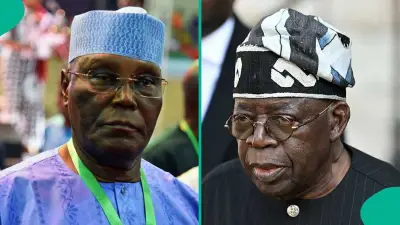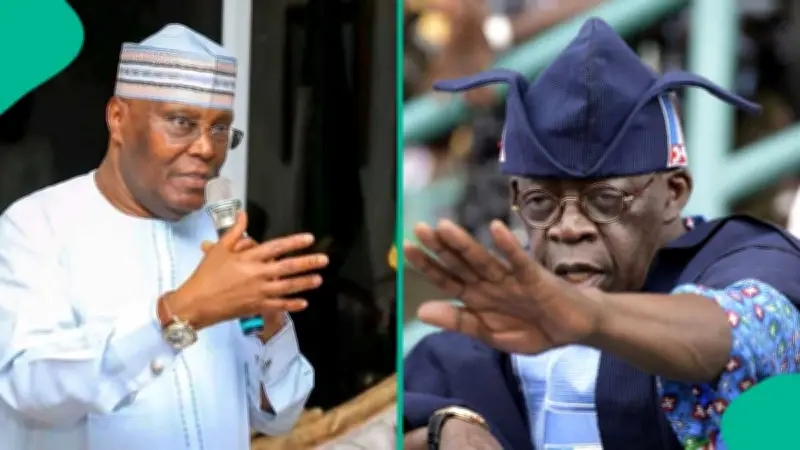
Former Vice President Atiku Abubakar has accused President Bola Tinubu's administration of hollowing out Nigeria's economy by exporting raw materials, citing a 106% surge in raw material exports to ₦3.84 trillion in the first half of 2026, while unsold manufactured goods climbed to about ₦2.14 trillion.
Atiku, the presidential candidate of the African Democratic Congress (ADC), said the figures indicate a collapse in purchasing power, with Nigerian families unable to afford locally produced goods despite full factory shelves. His Senior Special Assistant on Public Communication, Phrank Shaibu, issued a statement on Tuesday, September 15, 2026, made available to Legit.ng.
Raw Material Exports Double Amid Unsold Goods
Nigeria's raw material exports rose 106% from ₦1.86 trillion in the first half of 2025 to ₦3.84 trillion in the first half of 2026. At the same time, unsold manufactured goods climbed to roughly ₦2.14 trillion, a figure Atiku described as evidence of collapsing consumer demand.

“The ships are leaving our ports full, but the pockets of Nigerians are empty,” Atiku said. “Government celebrates exports and trade surpluses while families are cutting meals, businesses are counting unsold stock, and manufacturers are struggling to keep their gates open.”
Atiku argued that the core problem is not exporting as such, but exporting at the lowest point of the production chain. He said Nigeria sends out cocoa beans rather than chocolate, hides rather than leather goods, and cotton rather than garments, allowing other countries to capture most of the value from resources mined or grown on Nigerian soil.
Atiku Blames Fuel Costs, Tariffs, and Naira Weakness
“That is not how prosperous nations are built. Nigeria must stop behaving like a loading bay for raw materials,” Atiku said. He also blamed higher fuel costs, rising electricity tariffs, expensive credit, and a weaker naira for squeezing manufacturers and consumers simultaneously, leaving factory shelves full while household budgets run dry.
Atiku's Economic Recovery Plan would lower production costs through affordable long-term finance, industrial clusters, agro-processing, and mineral processing support. He outlined a production-linked fuel subsidy that would apply only to petroleum products refined inside Nigeria, tied to verified output, domestic supply, and a measurable benefit to consumers.
“No production, no subsidy. No domestic supply, no subsidy. No measurable benefit to Nigerians, no subsidy,” he said.
A proposed $10 billion financing programme targeting young entrepreneurs and start-ups would support businesses across agriculture, manufacturing, processing, packaging, logistics, and technology, he added.
Atiku Contrasts Himself with Tinubu
“When we process more of what we produce, manufacture more of what we consume and export more finished Nigerian goods, we earn more foreign exchange, reduce pressure on the dollar and strengthen the naira from the productive side of the economy,” Atiku said.
He closed with a direct contrast to the current administration: “Tinubu made Nigeria expensive. Atiku will make Nigeria affordable again.”
In related remarks, Legit.ng also reported that Atiku accused the Tinubu administration of failing to account for Federation Account deductions and oil revenues since 2023. He pointed to June 2025 FAAC figures showing ₦4.232 trillion in gross revenue against ₦1.818 trillion distributed.
Atiku also compared current fuel prices to the Yar'Adua era, when petrol sold at ₦65 per litre even as crude oil traded near $147 per barrel.