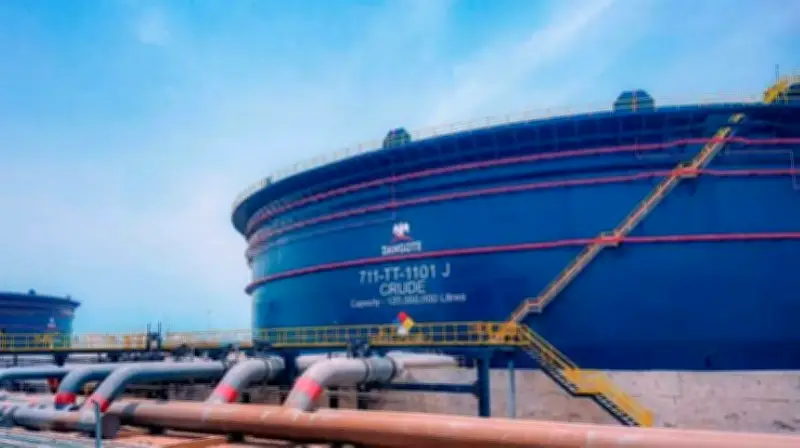
The Dangote Refinery is set to list on the Nigerian Exchange on September 14 with a valuation exceeding N70 trillion, but a detailed review of the offer suggests potential investors should proceed with caution. The IPO, which offers approximately 4 billion shares representing about 3% of the company at N525 per share, has generated significant market excitement, especially following the oversubscription of its previous private placement. However, analysts point to several red flags, including a recent history of losses and profitability that appears tied to the temporary fallout of the Iran-American war.
Valuation Concerns and Founder's Upside
The N70 trillion valuation is being questioned, particularly when compared to the refinery's reported construction cost of $20 billion. The IPO places the company at $49 billion, meaning founder Aliko Dangote has already captured substantial upside—a reward for the challenges he faced during construction. For new investors to achieve a 100% return comparable to the founder's within the same period, the refinery would need to generate profits of around 100 billion, which analysts describe as a 'stretch' given external factors.
According to the analysis, the refinery recorded a full-year after-tax loss of $476 million (N2.23 trillion) in 2024. It also suffered a $410 million third-party commodity hedging loss in early 2026, which was offset by intra-group derivatives. These losses were later reversed when the company declared a profit before tax of N1.6 billion, driven directly by the fallout of the Iran-American war. The analyst warns that once the war ends and markets stabilise, this profitability could be impacted, unless one keeps 'praying for more wars.'

IPO Structure and Minority Shareholder Position
The offer price of N525 with a minimum of 10 shares allows ordinary Nigerians to participate with just N5,250. However, the analyst notes that this structure appears designed to dilute block holders, preventing any threat of an 'Otedola-type uprising.' Despite selling only 3% to the public, Dangote retains over 80% of the firm through four different investment vehicles. This means retail investors, even if they 'gather like soldier ant,' will never gain control of the company.
Some analysts have argued that the stock is overpriced by over 100% of its real market value. Using enterprise value to EBITDA, the fair market price should be N324. The analyst points out that Dangote spent 10 years building the refinery, absorbed construction overruns, and also built a fertiliser factory within the same project to reach the $20 billion cost. He then transferred the combined cost to the refinery while keeping the fertiliser business 100% for himself, without bearing the cost.
Dividend Yield and Market Pressure
Looking ahead, the analyst expects the first audited accounts in March next year to reveal that the company cannot pay beyond a 2% yield, unlike MTN which has paid 5%. This is because the refinery's profit cannot support a dividend of at least N26 per share, assuming there is no other rally making it as profitable as currently seen. For comparison, GT Bank at N130 is expected to pay a minimum of N13 to N14.
Another concern is the private placement sold at N490, which was mostly taken up by non-traditional investors such as friends, family, and politicians. These investors are likely to dump their shares once listed, putting pressure on the open market price. The P/E ratio of 13.5 is also flagged as suspect, given that the standard P/E should be at least 10. The earnings per share of N38.74 provides an earnings yield of 7.38%, which is far lower than what one might get from other investments, though still powerful at the entry price of N525.
Recommendations for Different Investor Classes
For the retail investor, the analyst describes it as a good buy, especially for those with a mid-to-long-term horizon. He warns against using house rent money, dowry, or school fees, as losses could be painful. The investment horizon should be mid-to-long-term, meaning those above 60 years old should 'waka pass' as they may not recoup their investment within the P/E timeframe, unless buying for inheritance purposes. For the young and aggressive investor with a marathoner outlook, this is a strong buy.

For institutional investors and high-net-worth individuals, the analyst sees a strong opportunity to build generational wealth given its liquidity potential. However, both classes of investors are advised to treat this with a 3 to 5 year investment horizon, not as a quick flip position. Large-ticket investors should enter with caution. The analyst promises a virtual session on this matter with AVA Capital, which is free to attend.