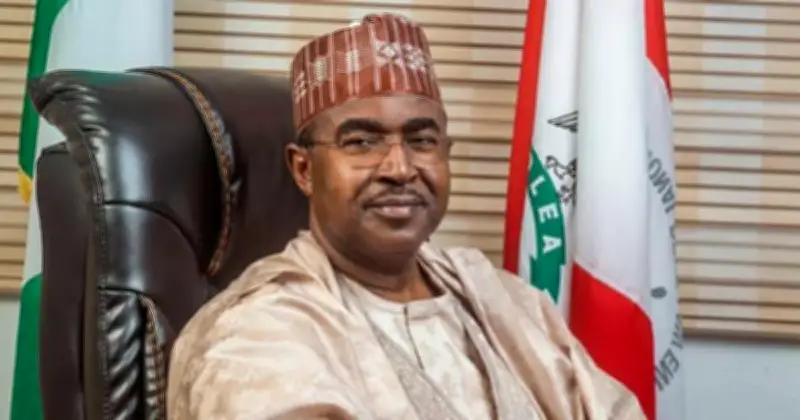
Mohammed Buba Marwa, the former Lagos State military governor who survived a bomb attack in 1996 and gave Nigerians the popular “Keke Marwa” tricycles, turned 73 on Wednesday, September 9, 2026. The retired Brigadier-General marked another milestone in a public service journey spanning more than five decades.
From Military Roots to Lagos Leadership
Born on September 9, 1953, in Kaduna, Marwa grew up in a military family and followed that path, joining the Nigerian Army after his education at the Nigerian Military School and the Nigerian Defence Academy. He was commissioned into the Army in 1973 and went on to hold several military and diplomatic positions, including serving as Aide-de-Camp to former Chief of Army Staff, Lieutenant-General Theophilus Danjuma, and as Academic Registrar of the Nigerian Defence Academy.
Before becoming widely known in Lagos, Marwa had already served as the military governor of the old Borno State from 1990 to 1992. He later served in diplomatic roles before returning to governance in Lagos State.

Surviving the 1996 Bomb Attack
In August 1996, during Nigeria’s military era, Marwa was appointed the Military Administrator of Lagos State, a position he held until 1999. His time in Lagos became the defining chapter of his public career. One of the moments that shaped his Lagos story came on December 16, 1996, when a bomb exploded along his route to work. Marwa later described the incident as a bomb blast that narrowly missed him and remained one of the most unforgettable moments of his time as governor.
In an interview years later, he recalled that he had maintained a regular routine and did not initially believe the incident was an assassination attempt. “Every day I normally leave my Isaac John residence to go to work at 8am more or less and I took the same route believing there was no threat,” he said.
Initiatives and the Keke Marwa Legacy
Despite the attack, Marwa continued with his administration and became known for his aggressive approach to tackling some of Lagos’ biggest challenges at the time. His government introduced several initiatives that supporters still associate with his name, including “Operation Sweep,” a security operation aimed at reducing crime in the state, and “Operation 250 Roads,” which focused on improving road infrastructure. His administration also worked on public health, housing and other urban development projects.
One of the most lasting symbols of his Lagos years remains the tricycle transport system popularly called “Keke Marwa.” The tricycles became associated with him because they were introduced during his administration as part of efforts to provide alternative transportation options for Lagos residents. Over time, the name “Keke Marwa” became a household expression, with many Nigerians using it long after he left office.
NDLEA and Later Career
After leaving Lagos government in 1999, Marwa remained active in public life. Decades later, he returned to national prominence when he was appointed Chairman of the National Drug Law Enforcement Agency (NDLEA) in 2021, taking charge of Nigeria’s fight against drug trafficking and abuse. At the NDLEA, Marwa brought the same enforcement-driven approach associated with his Lagos years, leading campaigns against illicit drugs and pushing for stronger public awareness around substance abuse.
Today, his name carries different meanings for different Nigerians. To some, he is the former military governor who brought visible changes to Lagos. To others, he is the man behind the famous “Keke Marwa” that became part of Nigeria’s transport culture. For many, he remains a public figure whose career has stretched across military service, governance, diplomacy and national security. From surviving a bomb attack during his time as Lagos governor to becoming one of Nigeria’s most recognisable public servants, Mohammed Buba Marwa’s journey remains one of the country’s most unusual political and administrative stories.