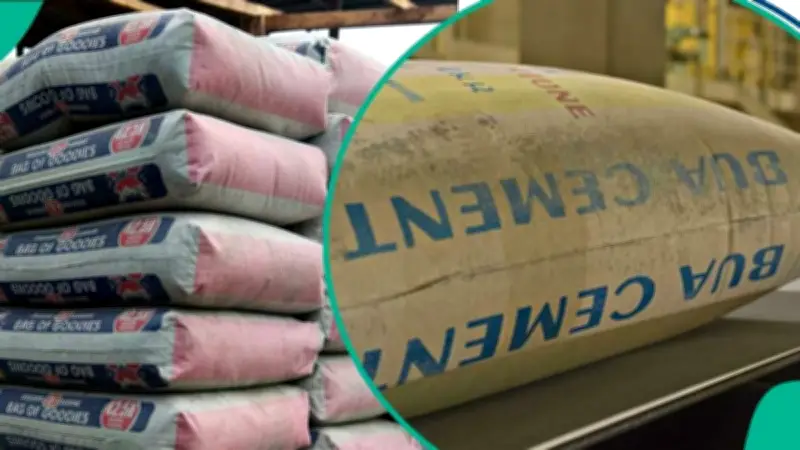
Cement prices in Nigeria remain elevated, with a 50kg bag selling for between ₦12,000 and ₦15,000 in many markets, according to a September 1, 2026 market report. This continues to pressure builders, contractors, and Nigerians planning construction projects, even as some brands show slight moderation from earlier highs.
Current Cement Prices by Brand
Recent market quotations show indicative prices for a 50kg bag: Dangote Cement at ₦12,000, BUA Cement at ₦12,000, Mangal Cement at ₦12,000, Lafarge/HBM Cement at ₦12,000, and Linma White Cement at ₦14,000. These figures, based on the September 1 report, can vary by location, transportation costs, dealer margins, and supply conditions.
July industry data painted a more expensive picture. CementNet reported retail prices of ₦12,000 to ₦15,000, with Dangote selling for about ₦13,000–₦15,000, BUA at ₦12,000–₦14,500, and HBM Nigeria, formerly Lafarge Africa, at ₦12,000–₦13,500.
Price Trends and Market Context
The latest figures suggest cement prices may have eased from the highest quotations seen earlier in the year, but the broader trend remains upward. In July, The Guardian reported that a 50kg bag typically sold for ₦12,500–₦15,000 across major markets including Lagos, Abuja, and Abia.
The Federal Competition and Consumer Protection Commission (FCCPC) also reported that prices had reached between ₦13,000 and ₦15,000 in some locations during the first half of 2026. This means the current ₦12,000–₦14,000 quotations for several major brands should be viewed as some market-level moderation rather than a broad collapse in cement prices.
Why Cement Prices Remain High
High energy and transportation costs continue to weigh heavily on the industry. Cement manufacturing requires significant amounts of energy, while moving cement from factories and depots to retail markets adds further costs. Location plays an important role, with buyers in areas farther from production centres paying substantially more due to haulage and distribution expenses.
The situation is significant because Nigeria has substantial cement production capacity, yet retail prices remain high. The Guardian reported that domestic production exceeds consumption, with surplus output exported to neighbouring countries.
Impact on Nigerians and Next Steps
For prospective homeowners, contractors, and property developers, cement remains one of the biggest construction-cost pressures. At ₦12,000 per bag, 100 bags would cost about ₦1.2 million. At ₦15,000, the same quantity would cost ₦1.5 million, before transportation and other construction expenses.
For now, the clearest picture is that cement prices remain high and have risen considerably over the course of 2026, despite some recent moderation in selected markets. Builders should compare prices across authorised dealers and locations before making large purchases, as significant differences can exist between depot, wholesale, and retail prices.
Legit.ng earlier reported that Dangote Cement, BUA Cement, and other major manufacturers are reviewing their pricing as the FCCPC investigates possible manipulation in Nigeria's cement market. The commission said on Tuesday, August 18, 2026, that its three-month industry-wide investigation uncovered concerns over the sharp rise in cement prices despite Nigeria's huge limestone deposits, significant local production capacity, and reported excess supply.