
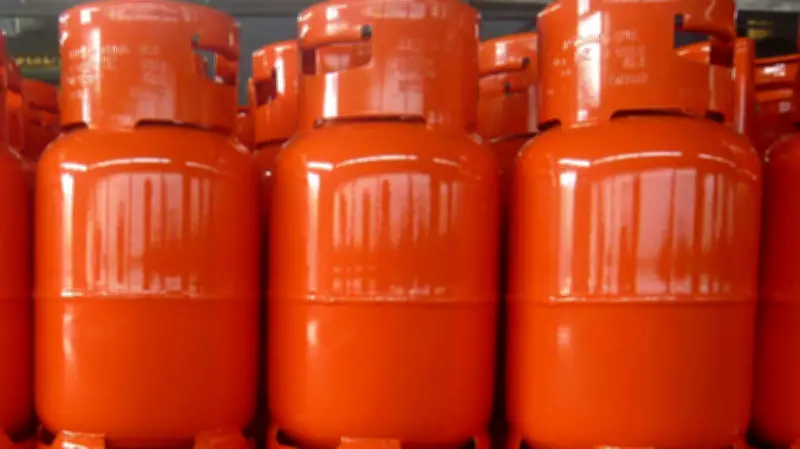
Cooking gas, also known as liquefied petroleum gas (LPG), is increasingly becoming a luxury item for many Nigerian households as retail prices have surged across the country. Checks by The Guardian reveal that the cost has reached as high as N2,000 per kilogramme (kg) in some areas, intensifying the burden on families already grappling with rising food prices, transportation costs, and electricity challenges.
Price Variations Across States
Consumers in Lagos and Ogun states reported significant price disparities. In Ijagemo, Lagos, residents said cooking gas sells for about N2,000 per kg, making it one of the most expensive locations visited. In Ejigbo and Isolo, refill stations charge around N1,700 per kg, while residents in Egbeda and Agege reported prices near N1,500 per kg. In Ota, Ogun state, some consumers purchased gas at N1,700 per kg, though a few outlets still offered it at N1,500.
Impact on Families
Funmilayo Adebayo, a mother of four living in Ijegemo, expressed her shock at the price hike. “Refilling gas used to be something we planned for normally, but now you have to calculate everything. At N2,000 per kilogramme, many families cannot afford it anymore,” she said. She noted that meals requiring longer cooking times, such as beans and local delicacies, are gradually disappearing from weekly menus due to the high cost.
Sodiq Lawal, a resident of Ejigbo, shared similar concerns. “Every week, there is fear that the price will rise again. You go to one vendor and hear N1,700, another place may be higher. It is affecting everyone because cooking cannot stop,” he said.
Challenges for Small Businesses
Small business operators who rely heavily on gas are facing even greater difficulties. Rukayat Bello, who runs a roadside food business in Isolo, explained that the price increase is shrinking her profit margins. “I use gas every day. If the price rises, it affects the food I sell. Customers complain when prices increase, but they do not know what we face when buying cooking gas,” she said.
In Egbeda, where prices were relatively lower at about N1,500 per kg, residents said the cost remains far above what many families consider affordable. Chinedu Okafor, a civil servant, noted that price differences across communities create confusion. “You can buy at one price in one area and another price elsewhere. But generally, it is expensive everywhere. The burden is on ordinary Nigerians,” he said.
Industry Concerns
The price surge comes amid concerns from LPG industry stakeholders over supply challenges, foreign exchange pressures, logistics costs, and market uncertainties affecting distribution. Industry operators have repeatedly warned that persistent increases could slow the country's drive toward wider adoption of cleaner cooking fuels. For many households, however, the immediate concern is the rising cost, as cooking gas, once promoted as an affordable alternative energy source, steadily moves beyond the reach of average Nigerians.




