
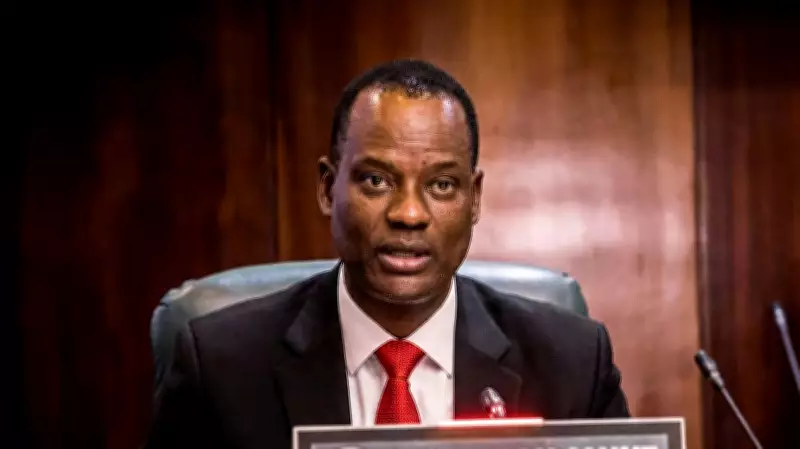
The Minister of Finance, Taiwo Oyedele, has been at the center of a robust defense of the government's fiscal policies. In a detailed response to critics, Tanimu Yakubu, Director-General of the Budget Office of the Federation, argues that much of the opposition rhetoric confuses accounting identities with ideological slogans and mistakes macroeconomic intervention for recklessness.
Understanding Deficits and Debt
Yakubu asserts that a modern economy is not managed through market romanticism but through theory, evidence, history, and context. He criticizes those who speak glibly about deficits and debt as revealing economic illiteracy disguised as moral outrage. According to him, no serious economist—from Keynes to Samuelson, from Krugman to Stiglitz—has argued that governments should retreat into fiscal paralysis during periods of structural imbalance. The central insight of modern macroeconomics is that when private demand weakens or markets fail, the state must intervene counter-cyclically to restore equilibrium.
Government Spending and Private Sector Income
Yakubu points out that government borrowing is not money disappearing into a void. Government expenditure becomes somebody else's income, circulating through the economy as contractor revenues, household income, supplier payments, corporate earnings, pension assets, and tax receipts. He notes that one sector's deficit is another sector's surplus, and critics who condemn public borrowing often benefit from the improved liquidity and business activity driven by fiscal injections.
Historical Context Matters
Many liabilities now weaponized against the current administration were accumulated over years, including periods when President Tinubu was not in office. Yakubu argues that compressing decades of structural dysfunction into a single political narrative is propaganda, not analysis. Nigeria's fiscal vulnerabilities are the product of decades of fuel subsidy distortions, chronic underinvestment, oil dependency, exchange-rate misalignment, insecurity, weak productivity growth, and persistent revenue underperformance.
Debt in Context
Serious economists assess debt sustainability, service capacity, composition, maturity structures, currency exposure, and debt-to-GDP ratios. By global standards, Nigeria's debt-to-GDP ratio remains modest at 36.9 percent as of December 2025. Comparatively, the United States carries debt above 120 percent of GDP, Japan above 250 percent, and Singapore above 170 percent. The real Nigerian challenge is weak revenue mobilisation and productive deployment of borrowed resources. The solution is economic expansion, export growth, productivity enhancement, tax-base broadening, and structural transformation.
Nature of Economic Reform
No country reforms an economy painlessly. Yakubu cites examples from China under Deng Xiaoping, India during 1991 reforms, South Korea during industrial restructuring, and Indonesia after the Asian Financial Crisis. Every serious reform programme produces temporary dislocation before stabilisation gains emerge. What critics describe as “hardship” is often the unavoidable transitional cost of dismantling decades of accumulated distortions.
Due Process and Democratic Responsibility
Yakubu expresses concern over the tendency to convert allegations into convictions before investigations conclude. He emphasizes that a mature democracy distinguishes between allegation and evidence, inquiry and guilt, accusation and proof. Collapsing these distinctions undermines constitutional order and weaponizes suspicion.
To be continued tomorrow. Tanimu is the Director-General of the Budget Office of the Federation.




