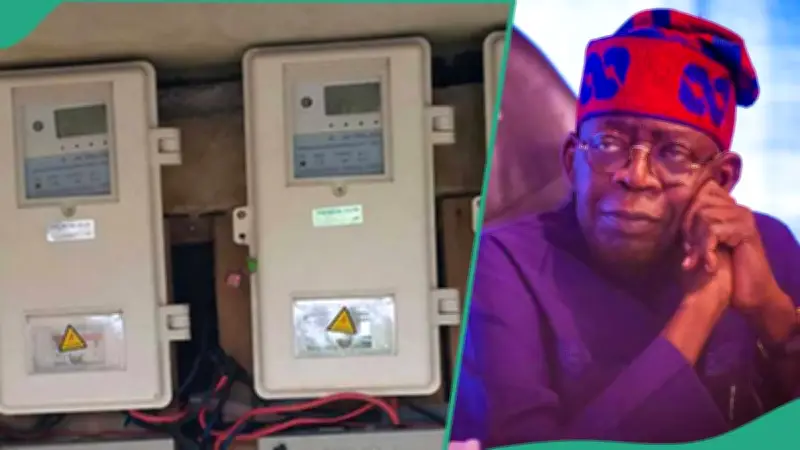
The Federal Government has announced plans to deploy seven million electricity meters across Nigeria in a renewed push to eliminate estimated billing, boost revenue collection, and strengthen confidence in the country's power sector.
Metering Initiative Details
Speaking at an energy conference organized by the Nigerian-British Chamber of Commerce in Lagos, the Special Adviser to the President on Energy, Olu Verheijen, stated that the initiative will be executed through the Presidential Metering Initiative and a separate program supported by the World Bank. She emphasized that metering protects consumers by reducing estimated billing and building the commercial discipline required for investment.
National metering coverage has risen to about 57%, reflecting progress in addressing the long-standing metering gap affecting millions of electricity consumers.
Drive to End Estimated Billing
The large-scale meter rollout is designed to protect consumers from arbitrary billing practices while improving transparency across the electricity market. Officials noted that wider metering coverage will help distribution companies improve revenue collection and create the commercial stability needed to attract more investment into the sector.
Estimated billing has been a controversial issue in Nigeria's power industry for years, causing frequent disputes between customers and distribution companies. Authorities believe the expanded metering program will help rebuild trust and improve service delivery across the value chain.
N4 Trillion Debt Settlement Program
As part of broader reforms, the Federal Government has approved a debt reduction scheme valued at up to N4 trillion to clear verified liabilities owed to electricity generation companies and gas suppliers. Verheijen disclosed that settlement agreements worth approximately N2.3 trillion have already been executed. The first bond issuance of N501 billion under the program attracted strong investor demand, while a second tranche worth N729 billion is expected to be launched soon. The government described the intervention as a critical step toward restoring liquidity and improving the sector's financial health.
Tariff Reforms Expected to Cut Subsidy Burden
Alongside metering and debt restructuring efforts, the government is implementing tariff reforms aimed at improving cost recovery within the electricity market. About 45% of the market now operates under cost-reflective tariffs tied to service quality standards, while subsidy mechanisms are being redesigned to shield vulnerable consumers.
Officials said the reforms could reduce projected electricity subsidy spending by roughly N1 trillion, creating room for increased investment in infrastructure and other social development programs. The administration maintains that the combined reforms are intended to build a more sustainable, investor-friendly, and reliable power sector for Nigeria.