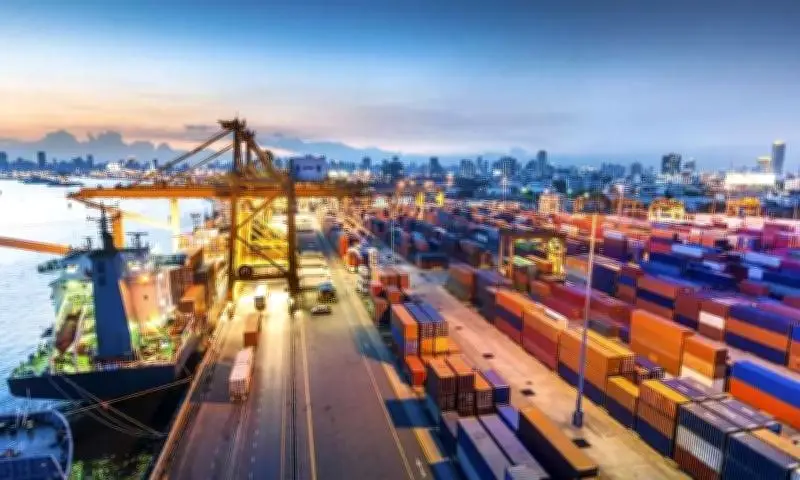
The World Trade Organization (WTO) reported that global goods trade surged to $13.7 trillion in 2025, driven by strong demand for artificial intelligence (AI) technologies and electric vehicles (EVs). The figure represents a significant increase from previous years, reflecting robust global economic activity and shifting consumer preferences.
Record-Breaking Trade Volumes
According to the WTO's latest Global Trade Outlook and Statistics report, merchandise trade volumes grew by 3.9% in 2025, surpassing initial projections. The surge was led by Asia, which saw exports rise by 5.2%, while North America and Europe recorded more moderate growth of 2.8% and 2.1% respectively.
The report highlights that the expansion was not uniform across all sectors. High-tech goods, particularly semiconductors and AI-related equipment, experienced double-digit growth, with global exports of these products increasing by 18% year-on-year. Similarly, electric vehicle exports soared by 22%, as countries accelerated their transition to greener transportation.
AI and EV Demand Reshaping Trade Patterns
The WTO attributes the trade boom to the rapid adoption of AI technologies and the global push for decarbonization. "The surge in global goods trade is a clear signal that the world economy is adapting to new technological realities," said a WTO spokesperson. "AI and electric vehicles are not just consumer trends; they are driving fundamental changes in how goods are produced and traded."
China remained the largest exporter of goods, accounting for 18% of global exports, followed by the United States and Germany. However, emerging economies like Vietnam and India saw the fastest growth rates, with exports expanding by 12% and 9% respectively, as multinational companies diversified their supply chains.
Impact on Global Supply Chains
The report also notes that the trade surge has led to increased pressure on global supply chains, particularly for critical minerals used in EV batteries and rare earth elements essential for AI hardware. The WTO warns that trade restrictions and geopolitical tensions could threaten future growth, urging member nations to maintain open markets.
Looking ahead, the WTO projects that global goods trade will continue to grow at a moderate pace of 3.2% in 2026, assuming no major disruptions. The organization emphasizes that sustained investment in digital infrastructure and green technologies will be crucial to maintaining this momentum.