
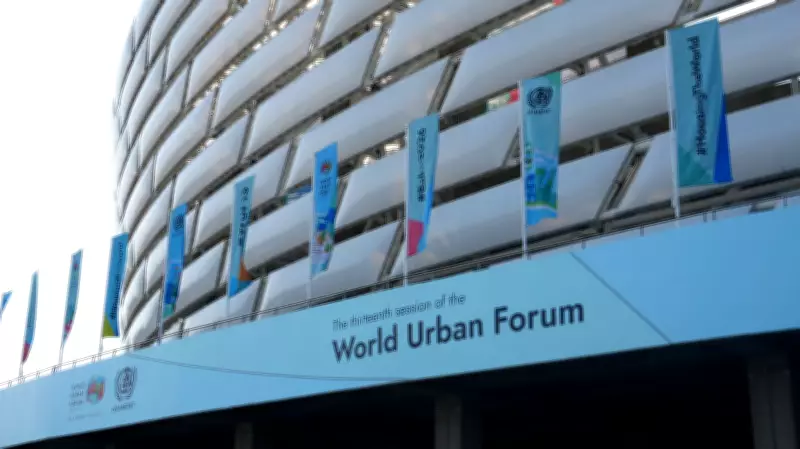
Global attention will shift to Baku, Azerbaijan, this week as world leaders, urban planners, housing experts, financial institutions, and development agencies gather for the 13th session of the World Urban Forum (WUF13). The event comes amid growing concerns over the worsening global housing crisis and the future of rapidly expanding cities. Organized by the United Nations Human Settlements Programme, the forum is held under the theme: “Housing the World: Safe and Resilient Cities and Communities,” reflecting increasing global anxiety over housing shortages, climate vulnerability, informal settlements, and urban inequality.
Critical Moment for Cities
The high-level gathering occurs at a critical moment when cities worldwide face mounting pressure from population growth, migration, rising construction costs, environmental disasters, and economic instability. According to UN estimates released before the summit, billions of people globally lack access to adequate housing, while over one billion residents live in slums and informal settlements with limited access to water, sanitation, healthcare, and transportation infrastructure. Urban experts indicate that discussions in Baku will focus on how cities can become more inclusive, climate-resilient, and economically sustainable amid growing global uncertainties.
Relevance to Developing Countries
For many developing countries, particularly in Africa, the issues discussed at WUF13 are daily realities. Cities are expanding faster than infrastructure and public services can keep pace, leading to overcrowding, rising rents, worsening traffic congestion, and increasing environmental risks. Nigeria, one of the fastest urbanizing nations globally, is expected to monitor the conference outcomes closely as Lagos, Abuja, Kano, and Port Harcourt continue to grapple with housing shortages, informal settlements, and weak urban planning systems. Participants will examine how governments can balance urban renewal with social inclusion, especially in low-income communities vulnerable to forced displacement and climate disasters.
Key Discussion Points
Housing experts argue that resilience must go beyond physical infrastructure to include social protection, economic opportunities, and community participation in urban planning decisions. Another major issue is financing affordable housing, as many countries struggle with high inflation, expensive mortgages, and rising building material costs that push decent housing beyond reach for millions. Delegates will explore innovative funding models, public-private partnerships, and policy reforms to expand access to affordable housing while improving urban infrastructure.
Climate Adaptation
Climate adaptation is expected to feature prominently at the summit. Recent floods, heatwaves, and environmental disasters across various regions have exposed the vulnerability of poorly planned cities. Experts argue that safer and resilient cities require stronger building regulations, integrated land-use planning, improved drainage systems, renewable energy adoption, and investment in sustainable public transportation. The conference will also showcase global examples of successful slum upgrading, smart-city initiatives, and community-driven urban regeneration programs that can be replicated in emerging economies.
Nigerian Perspectives
Nigerian town planners believe WUF13 presents an opportunity for governments to move beyond policy declarations toward practical implementation of the New Urban Agenda and the Sustainable Development Goals related to housing and urban development. They stress the need for stronger international cooperation, increased climate financing, and expanded support for infrastructure development. Dr. Moses Ogunleye, former President of the Association of Town Planning Consultants of Nigeria (ATOPCON), called for policies that guarantee inclusion of low-income residents in urban development processes without displacement. He emphasized that African cities require “progressive and forward-looking planning, not a staccato system,” and that urban planning must anticipate future challenges and respond proactively, backed by effective and sustainable funding mechanisms.
Housing Finance and Building Materials
Regarding sustainable housing finance and reducing building material costs, Ogunleye stated that the private sector’s role as an engine of growth in housing delivery remains critical. He explained that the building materials production system must be strengthened to improve efficiency and reduce dependence on imported products, which poses a major challenge for less-developed countries. “The public sector should rework the housing finance system for more funds to be mobilized through single-digit credit facilities,” he said. Ogunleye, a former Chairman of the Lagos chapter of the Nigerian Institute of Town Planners (NITP), also noted that Nigeria’s mortgage structure remains weak and requires urgent revitalization to support large-scale housing delivery. He called for greater emphasis on housing provision for low-income earners and the no-income category.
Urban Governance
Ogunleye stressed the need for a well-coordinated and efficient urban management system in Nigeria, lamenting overlapping governance structures in many cities. “What we have today is a situation where between six and 10 different governments or authorities are controlling or managing a single city,” he said. He cited instances where one state government and multiple local councils take critical decisions affecting the same urban space, creating planning inconsistencies and inefficiencies. He called for delineation of city limits to ensure effective urban and city management, warning that cities cannot be allowed to grow endlessly without proper delimitation and coordinated governance.
Strategies for Inclusive Urban Development
Mr. Gbenga Ashiru, former National Secretary of NITP, noted that city managers dealing with rapid urbanization, housing shortages, and climate risks must adopt balanced strategies that improve safety and resilience while protecting low-income residents from displacement. He emphasized inclusive urban planning, where communities, especially low-income residents, are actively involved in decision-making processes. Participatory planning ensures development projects reflect real needs and reduce forced displacement. Ashiru recommended community consultations before redevelopment projects, using Community Development Associations (CDAs) and traditional institutions to promote inclusiveness. He also advocated participatory budgeting for neighborhood improvements and a bottom-up approach in policy formulation and implementation.
Protecting Informal Settlements
Ashiru called for protecting informal settlements through upgrading rather than demolition, describing them as part of the urbanization process. On affordable housing policies, he urged governments to implement measures like inclusionary zoning, rent stabilization, and public-private partnerships. Inclusionary zoning would require developers to provide affordable housing units within new developments, while rent stabilization policies would prevent sudden rent increases that can force residents out. He also stressed climate-resilient infrastructure, including flood control systems, improved drainage networks, urban wetlands, parks, permeable surfaces, and climate-resilient housing designs.
Land Tenure and Transit-Oriented Development
Ashiru advocated secure land tenure for low-income residents through land titling programs, community land trusts, and long-term occupancy rights. He also promoted transit-oriented development, building housing close to public transportation to reduce commuting costs and discourage urban sprawl. He emphasized strengthening local governance and data-driven planning systems, deploying Geographic Information System (GIS) mapping for flood-prone areas and informal settlements, establishing early warning systems for disasters, and implementing integrated urban development plans. “To build safer, resilient and affordable cities without displacing low-income residents, city managers must combine inclusive planning, affordable housing policies, in-situ upgrading, climate-resilient infrastructure, secure land tenure, transit-oriented development and data-driven governance,” he said.
Call for National Priority
Dr. David Olawale, former National Publicity Secretary of NITP, advocated sustainable settlement planning for the informal sector, stressing inclusive urban development policies that cater to all categories of residents. He urged the government and private sector to collaborate to mobilize adequate finance for mortgage provision and infrastructure development to address growing housing challenges. Olawale urged all levels of government to make housing provision a major national priority, noting that access to decent shelter promotes social inclusion and gives citizens a stronger sense of belonging. He maintained that sustainable housing policies and infrastructure investment remain critical to improving living conditions, especially for low-income earners and informal sector operators.




